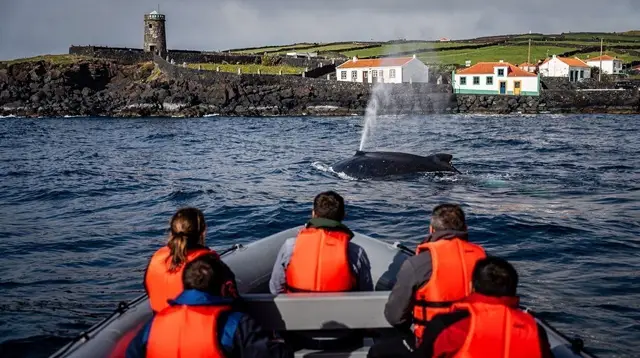
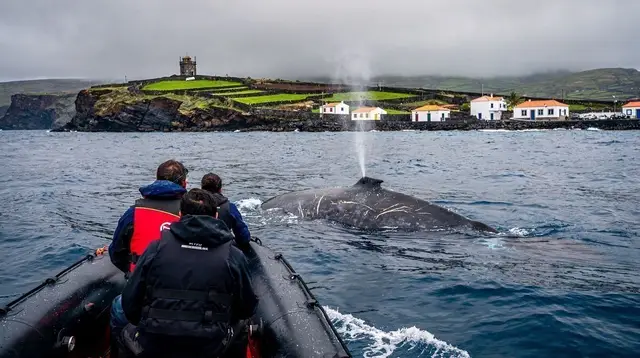
Explore the Azores island by island
Nine islands scattered across the mid-Atlantic, and each one built around something the others don't have: Sao Miguel's twin crater lake and tea plantations, Pico's 2,351-metre volcano and UNESCO-listed vineyards, Faial's sailors' marina, and five more with their own crater, cave or coastline.
Must-visit areas
The islands every first-time visitor should build a trip around — Sao Miguel's Sete Cidades crater lake and Furnas thermal valley, and Terceira's UNESCO-listed Angra do Heroismo.

Angra do Heroísmo: Terceira's Historic Capital by the Sea
Explore Angra do Heroísmo's UNESCO old town, harbour and Monte Brasil headland — the walkable historic capital where most Terceira trips begin.

Faial, the Blue Island of the Azores
Faial, the Azores' Blue Island: Horta's Atlantic harbour, the central Caldeira and the 1957 Capelinhos volcano, plus summer hydrangeas in bloom.

Flores: Waterfalls at the Western Edge of Europe
Flores island's waterfalls, crater lakes, the Rocha dos Bordões and Fajã Grande, at the far western edge of the Azores archipelago.

Furnas, São Miguel: Volcanic Valley of Hot Springs and Cozido
Furnas is São Miguel's volcanic valley, where fumaroles heat cozido underground and hot springs steam beside a green crater lake.

Graciosa: The White Island and the Hidden Caldeira do Enxofre
Graciosa, the Azores' white island: windmills, the Furna do Enxofre, and why no tours are sold online for this quiet UNESCO biosphere isle.

Horta: Faial's Historic Sailors' Port
Horta's marina has welcomed transatlantic sailors for generations. Where to walk, what the painted quay means, and how to plan your time on Faial.

Montanha do Pico: Climbing Portugal's Highest Peak
Portugal's highest peak at 2,351m: what climbing Montanha do Pico really involves, why registration is mandatory, and whether it suits you.

Pico Island: The Mountain, the Whales and the UNESCO Vineyards
Pico Island travel guide: climbing Portugal's highest peak, Madalena and Lajes do Pico, whale watching, and UNESCO-listed vineyard landscape of currais.

Ponta Delgada
Ponta Delgada is São Miguel's basalt-paved capital and the Azores' main gateway. Here's what the city is, its neighborhoods, and where to stay.

Santa Maria: Sun, Red Desert and Baía de São Lourenço
Santa Maria, the Azores' sunniest island: real sand beaches, the red-clay Barreiro da Faneca and Baía de São Lourenço.

São Jorge Island Guide: The Azores' Ridge Between Pico and Faial
São Jorge, the Azores' narrow ridge island: geography, cheese economy, ferries to Pico and Faial, weather, and how many days to plan.

São Miguel: The Azores' Green Island of Craters and Springs
Why São Miguel, the Azores' largest island, is most travelers' first stop: crater lakes, thermal valleys and Europe's only tea plantations.

Sete Cidades: The Twin Crater Lakes of São Miguel
Plan your visit to Sete Cidades: the caldera village, Lagoa Azul and Lagoa Verde, and viewpoints like Vista do Rei on São Miguel, Azores.

Terceira: The Azores Island of History and Tradition
Terceira: UNESCO-listed Angra do Heroísmo, volcanic caves and centuries-old festivals — the Azores' island of history, not whale watching.
More to explore
Islands for a second trip or a longer first one — the volcano and vineyards of Pico, the marina town of Faial, the ridge villages of Sao Jorge, and the quieter western and eastern groups.

Algar do Carvão, Terceira
Inside Terceira's Algar do Carvão: a 90-metre volcanic chimney with silica stalactites, plus hours, access tips, and how to plan a half-day around it.

Capelinhos: The Volcano That Buried a Lighthouse
Capelinhos volcano on Faial: the 1957-58 eruption that buried a lighthouse and reshaped the island's western tip into a grey, lunar landscape.

Corvo: Europe's Westernmost Inhabited Island
Corvo island: 400 people, one village, a crater that swallows the land, and the westernmost point of Europe. What a day trip from Flores actually finds.

The Fajãs of São Jorge: Santo Cristo, Vimes and the Rest
Where São Jorge's fajãs are, how each one is reached, and why Santo Cristo and Vimes make such different day trips on the island.

Gorreana Tea Plantation
Europe's oldest working tea plantation, on São Miguel's north coast: free factory tour, tasting room, and rows of tea bushes facing the Atlantic.

Lagoa do Fogo: São Miguel's Hidden Crater Lake
Lagoa do Fogo is São Miguel's crater lake at 575m, reached only on foot from miradouros — how to fit this volcanic site into your plan.

Lajes do Pico: Whaling History on Pico Island
Lajes do Pico's whaling museum, old harbor and captains' houses tell the story of Pico's whaling past, ended in the 1980s and now purely heritage.

Madalena, Pico: The Ferry Town Gateway to the Island
Madalena is Pico's ferry port to Faial and its most common base: black lava at Cachorro, car rental, and easy access across the island.

Nordeste: São Miguel's Green, Quiet East Coast
Nordeste is São Miguel's rural east: coastal miradouros, the Parque das Fontes and quiet backroads for a slower day beyond Ponta Delgada.

Praia da Vitória: Terceira's Beach Town Near the Airport
Praia da Vitória is Terceira's beach town near Lajes Airport - long sandy shores, easy access, and a relaxed base close to Angra do Heroísmo.

Ribeira Grande, São Miguel
Ribeira Grande's historic streets, Salto do Cabrito waterfall, Caldeira Velha hot springs and the quiet northern road to Lagoa do Fogo, São Miguel.

Santa Cruz das Flores: Gateway to Flores Island
Santa Cruz das Flores is Flores Island's airport town and logistics base -- where to land, rent a car, and sleep before heading west.

Velas: Your Gateway to São Jorge
Velas is São Jorge's port and airport town — where to start before heading to the ridge, the fajãs or the ferry to Faial and Pico.

Vila Franca do Campo
Vila Franca do Campo on São Miguel's south coast: the town, its former-capital history, and the crater islet offshore — plus when the crossing actually.
Off the beaten path

Biscoitos
Biscoitos on Terceira's north coast: natural pools in black lava rock, vineyards grown in stone currais, and a small wine museum.

Caldeira do Faial: Faial's Volcanic Crater
How to visit Faial's 400m-deep crater: roadside miradouro, rim trail, and Parque Natural do Faial in half a day.

Calheta, São Jorge
Calheta is São Jorge's cheese-making heart on the north coast, and the natural base for reaching the island's eastern fajãs.

Caloura: São Miguel's Quiet South-Coast Sunset Stop
A small fishing village on São Miguel's south coast, known for volcanic rock pools, a tiny marina, and a top spot for sunset.

Capelas: A Quiet North Coast Stop on São Miguel
Capelas is a small north-coast village on São Miguel with a black-rock natural pool and a parish church — a short stop, not a full day out.

Criação Velha: Pico's UNESCO Vineyard Landscape
Criação Velha is the most photographed stretch of Pico's UNESCO vineyard landscape: black lava-stone currais between Madalena and the sea.

Fajã Grande: Flores' Waterfall Village at the Edge of Europe
Fajã Grande on Flores: the Poço do Bacalhau waterfall, the coastal trail to Fajãzinha, where to stay, and how to plan your visit.

Furna do Enxofre: Inside Graciosa's Volcanic Crater
Furna do Enxofre on Graciosa: a staircase into a volcanic crater, a lake, sulfur fumes, and Europe's largest known volcanic cave chamber.

Lagoa: São Miguel's South Coast Port Town
Lagoa, São Miguel: a small south-coast port town with a black-sand beach — distinct from the inland Lagoa do Fogo crater lake.

Monte Brasil: Angra's Volcanic Peninsula
Free trails, sea-view miradouros and a 16th-century fortress on the wooded peninsula enclosing Angra do Heroísmo's bay on Terceira.

Mosteiros
Mosteiros on São Miguel's west coast: black volcanic sea pools, Atlantic swells and one of the island's best sunsets, best kept for late afternoon.

Povoação, São Miguel's First Settlement
Povoação sits on São Miguel's east coast between Furnas and Nordeste — a quiet fishing town tied to the island's earliest settlement.

São Roque do Pico
São Roque do Pico, Pico Island's other whaling village, home to the old Fábrica da Baleia whale-processing plant turned museum.

Vila do Porto, Santa Maria: The Azores' Oldest Town
Vila do Porto is the Azores' oldest town and Santa Maria's airport gateway - a walkable historic base for exploring the archipelago's sunniest island.
Good to know about the Azores and its islands
The Azores archipelago spans nine volcanic islands scattered across the mid-Atlantic, roughly 1,500 km west of Lisbon, and this hub explains where to look across the three groups they fall into, since almost no visit covers all nine and inter-island flights on SATA Air Açores or Atlânticoline ferries decide the itinerary far more than road distance ever could.
The eastern group holds São Miguel, the largest island and most travellers' first stop, home to Ponta Delgada, the twin crater lakes of Sete Cidades, the emerald-and-blue Lagoa do Fogo, the thermal valley of Furnas with its cozido cooked in volcanic ground and the Poça da Dona Beija hot springs, the Gorreana and Porto Formoso tea plantations — the only ones grown in Europe — the islet off Vila Franca do Campo, and the quieter Nordeste coastline; Santa Maria, the driest and sunniest island, adds proper sand beaches around the Baía de São Lourenço.
The central group covers Terceira, whose Angra do Heroísmo is a UNESCO World Heritage old town, alongside the walk-in volcanic chimney of the Algar do Carvão, the Mistérios Negros lava fields, and Biscoitos with its rope-pulled touradas à corda; Graciosa, the calmest of the nine and home to the Furna do Enxofre, where no activity is sold online and a visit has to be arranged locally; São Jorge, an island-long ridge cut by cliff-foot fajã platforms and known for its cured cheese;
Pico, dominated by the 2,351 m Montanha do Pico, mainland Portugal's highest point though the island itself sits in the Atlantic, its UNESCO-listed currais vineyard landscape, and the whaling history around Lajes do Pico; and Faial, where Horta's yacht-painted marina, the Peter Café Sport, the Caldeira crater and the Capelinhos volcano that emerged from the sea in 1957-58 sit within a short drive of each other. The western group, Flores and Corvo, is the furthest and hardest to reach, reserved for waterfalls, Fajã Grande, the Poço da Ribeira do Ferreiro and Rocha dos Bordões on Flores, and the roughly 400 residents of Corvo at Europe's westernmost point.
Each destination page below sets out what a visit to that island actually involves, since a lava-cave afternoon on Terceira and a whale-watching morning off Pico are both called "the Azores" but share almost nothing beyond the ocean between them.
Frequently asked questions about the Azores and its islands
Which Azores islands can I combine on a single trip?
São Miguel works well as a base on its own, and Faial and Pico pair naturally since a short ferry links Horta and Madalena across the strait between them; reaching Terceira, São Jorge, Santa Maria or the western group of Flores and Corvo instead means booking a separate SATA Air Açores flight, so a trip covering more than two or three islands needs real planning rather than a same-day hop.
What's the difference between São Miguel and Pico?
São Miguel is the largest island and the usual first stop, built around Ponta Delgada, the Sete Cidades crater lakes and the Furnas thermal valley, while Pico is a single volcano rising to 2,351 m above a vineyard landscape of stone-walled currais and a whaling-era harbour at Lajes do Pico — a hiking-and-wine island rather than a sightseeing hub.
How do I get between the islands?
Inter-island flights run on SATA Air Açores, and Atlânticoline ferries connect several islands within each group, most reliably the short Faial-Pico crossing; ferry links to the western group of Flores and Corvo are seasonal and can be cancelled by weather, so they're best treated as fragile rather than fixed.
Can I book activities on Graciosa online?
No — Graciosa is the calmest of the nine islands and, unlike the rest of the archipelago, has no activities sold online through the usual booking platforms; visits to sites such as the Furna do Enxofre are arranged locally once on the island.
Is São Jorge worth visiting if I've already seen São Miguel?
Yes — the two share almost nothing. São Jorge's identity is its fajãs, the narrow platforms of land at the foot of its cliffs, and its cured cheese, neither of which exists on São Miguel, whose highlights are crater lakes, thermal springs and tea plantations instead.
tours.whale-watching
Verified deep-linked GetYourGuide tours. Book through these links and we earn a small commission at no cost to you.
GetYourGuide does not provide a product photo for this activity — the image shows the meeting point, photographed by us.