An Island Built on History, Not on Wildlife
Terceira is the island in the Azores that visitors tend to underestimate before they arrive and rearrange their schedule around once they’ve walked its capital. It sits in the archipelago’s central group, alongside Faial, Pico, São Jorge and Graciosa, and it is the second most populated island after São Miguel — but its pull has little to do with numbers. Terceira’s case rests on three things that don’t really exist in this combination anywhere else in the Azores: a UNESCO World Heritage town built by four centuries of transatlantic shipping traffic, a volcanic cave you descend into rather than walk past, and a set of village festivals — the touradas a corda — that are still run for the community, not staged for tourists.
This page is the island-level overview: what Terceira is, who it suits, and how it tends to fit into a wider Azores trip. For the detail of any single site, follow the links out — this is deliberately the wide-angle version.
Where Terceira Sits in the Azores
Terceira belongs to the central group of the nine Azorean islands, roughly in the middle of the archipelago, a short hop by air from São Miguel and connected by seasonal ferry links to the rest of the central group in summer. Its name — literally “third” — reflects its place in the original order of discovery. Today it functions as a secondary hub for the Azores: it has its own international airport (Lajes), a NATO and US air base with a long shared history, and enough scale to feel like a real, lived-in place rather than a stop built for visitors.
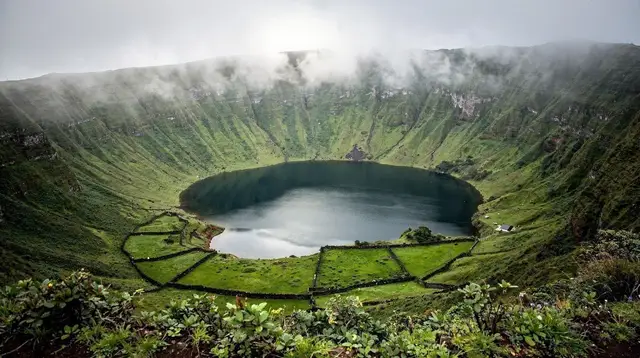
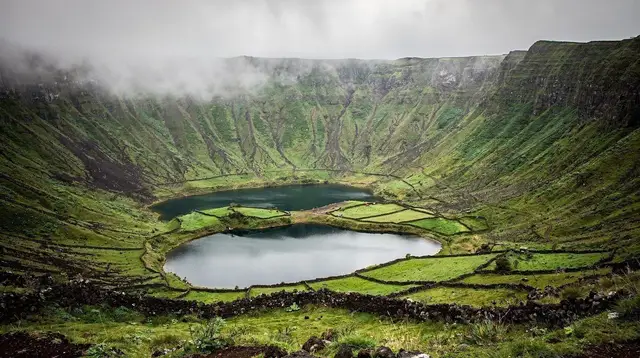
The island’s shape is broadly oval, with a central highland plateau, an old caldera (Santa Bárbara) at its western end, and a coastline that alternates between low black-rock shore and dramatic sea cliffs. Angra do Heroísmo sits on the south coast, roughly at the island’s midpoint, and functions as both the historical centre and the natural base for a visit.
Angra do Heroísmo: The Reason Terceira Is on the Map
Angra do Heroísmo earned its place on the UNESCO World Heritage list in 1983, recognised for its role as one of the Atlantic’s most important ports of call between the 15th and 19th centuries — ships crossing between Europe, Africa and the Americas stopped here to resupply and shelter, and the town’s layout, churches, forts and merchant houses still reflect that era of wealth and traffic. Monte Brasil, the volcanic headland that shelters the bay, is worth the climb for the view alone, looking down over the old town’s tiled roofs and the harbour that made it valuable in the first place.
This page won’t try to walk you through Angra street by street — the dedicated guide to Angra do Heroísmo does that, and the Angra do Heroísmo UNESCO guide covers the UNESCO listing and what it actually protects. What matters at island level is that Angra isn’t a add-on stop: for most visitors it is the reason Terceira earns a place on the itinerary at all, and it rewards an unhurried half-day to full day rather than a drive-through.
Underground: The Algar do Carvão
Terceira’s volcanic side shows up most dramatically not on the surface but below it. The Algar do Carvão is a volcanic chimney — an old vent you descend via stairs cut into the rock, down through a chamber lined with strange mineral formations to a small lake at the bottom. It’s one of the few places in the world where you can walk directly down the throat of a volcano, and it sits comfortably alongside the more famous lava caves and craters found elsewhere in the Azores, without duplicating them.
Terceira does not have the fajãs that define São Jorge, and it isn’t the island to come to for crater lake scenery on the scale of São Miguel’s Sete Cidades — its underground volcanism is the standout instead. The full detail on visiting — access, what to bring, how long to allow — is on the Algar do Carvão guide.
Biscoitos: Vines in the Lava
On the island’s north coast, the village of Biscoitos gives Terceira its answer to Pico’s UNESCO-listed vineyard landscape, on a smaller and less formalised scale. Vines here are planted directly into pockets of volcanic soil and sheltered by low stone walls built from the same black basalt that covers the shore — a defence against Atlantic wind and salt spray rather than decoration.
The coastline itself is striking: black lava platforms and natural rock pools sit right at the water’s edge, and swimming here, weather permitting, is one of the more memorable ways to spend an afternoon on the island. For the wine side specifically, the Azores wine guide places Biscoitos in the context of Azorean winemaking as a whole; for the place itself, see Biscoitos.
Touradas a Corda: A Living Tradition, Not a Show
If Angra is Terceira’s built heritage, the touradas a corda are its living one. These are bull runs through village streets, where the animal is restrained by a long rope held by a team of handlers rather than released loose — a meaningfully different, more controlled tradition than Spanish-style bull running, though it still carries real risk for participants who choose to run close to the animal.
They’re tied to the summer festival calendar, most often to celebrations of the Divino Espírito Santo, the Holy Spirit devotion that structures much of Terceira’s — and the wider Azores’ — community life through the warmer months, and the schedule shifts by parish rather than following a single island-wide date. This is not staged for visitors, which is part of what makes it worth understanding before you watch one: The guide to Terceira’s bull running covers how it works, where it happens, and how to watch safely and respectfully. The Azores religious festivals guide covers the wider festival calendar this tradition sits inside.
What Terceira Isn’t
It’s worth being direct about the comparisons that trip visitors up, because Terceira gets folded into general “Azores” expectations that don’t actually apply to it. It has no fajãs — those lava-shelf platforms belong specifically to São Jorge, and nothing on Terceira resembles them. It is not the archipelago’s whale-watching island: that reputation, built on resident sperm whales and a still-active network of shore-based vigia lookouts, belongs to Pico and Faial, and Terceira’s marine-wildlife options are secondary rather than central to a visit.
And while it shares the Azores’ volcanic origin with every other island in the chain, its defining landscape feature is underground (the Algar do Carvão) and urban (Angra), not a crater lake or a hiking trail network the way São Miguel or Flores are typically framed. Coming to Terceira expecting São Miguel’s hot springs or Pico’s marine life head-on will leave you disappointed in the wrong direction; coming for a UNESCO town, a walk-in volcano and a set of festivals still run for the community it serves tends to deliver exactly what’s promised.
Getting There and Around
Terceira’s Lajes Airport connects to São Miguel and other Azorean islands via SATA Air Açores, with flight times of under an hour from Ponta Delgada, and to mainland Portugal on a more seasonal basis through Azores Airlines. In summer, Atlânticoline ferries extend the central-group network to link Terceira with Graciosa, São Jorge, Pico and Faial, though — unlike the short Pico-Faial “Triangle” crossing, which runs year-round — this wider central-group network operates only from June to September and should never be assumed available outside that window.
Once on the island, a rental car is close to essential. Angra do Heroísmo itself is compact and walkable, but everything else — Biscoitos, the Algar do Carvão, the south coast, the highland plateau around Santa Bárbara — sits well beyond convenient public transport, and Terceira’s roads, like the rest of the archipelago’s, run narrow and can turn foggy on higher ground with little warning.
Driving conventions match the rest of Portugal: right-hand side of the road, and caution around livestock that sometimes wander onto rural routes. General planning guidance on car hire and driving across the islands is at the car rental in the Azores guide, and inter-island flight timing is covered at the SATA inter-island flights guide.
How Many Days Terceira Needs
| Length of stay | What it covers |
|---|---|
| 1 full day | Angra do Heroísmo highlights and Monte Brasil, at a brisk pace |
| 2 days | Angra properly, plus the Algar do Carvão or Biscoitos |
| 3 to 4 days | Angra, the Algar do Carvão, Biscoitos, the south coast and at least one quieter village |
| 5+ days | The above at an unhurried pace, plus a full circuit of the highland interior |
Three to four days is the sweet spot for most itineraries: enough to let Angra do Heroísmo breathe rather than rush it, and enough to add the cave and the vineyard coast without turning the trip into a checklist. A short weekend stop of one to two days still works if Terceira is a secondary stop on a longer Azores route — see Terceira in 3 Days for a structured plan, or Azores in 10 Days: Three Islands if Terceira is one leg of a multi-island trip.
Terceira Compared to Other Azores Islands
| If you want… | Consider instead |
|---|---|
| Hot springs and thermal bathing | São Miguel (Furnas) |
| Whale and dolphin watching | Pico or Faial |
| Lava-shelf coastal villages (fajãs) | São Jorge |
| The Azores’ highest mountain | Pico |
| UNESCO town + walk-in volcano + festivals | Terceira |
The direct comparison against São Miguel — still the island most first-time visitors default to — is worked through in more depth at São Miguel vs Terceira, and a broader framework for choosing between islands is at Which Azores Island to Visit.
When to Visit
Terceira follows the same broad Azorean pattern as the rest of the archipelago: mild year-round temperatures thanks to the Gulf Stream, high humidity and cloud cover in every season, and no dry season in the way the Canary Islands or Madeira have one.
What shifts the calendar on Terceira specifically is the festival season: the touradas a corda and the wider Divino Espírito Santo celebrations run through the summer months, so visiting between June and September puts you in reach of both drier weather on average and the island’s liveliest social calendar. Outside that window Terceira is quieter and greener, with Angra do Heroísmo’s architecture arguably more atmospheric under a grey Atlantic sky, but without the festival energy that defines the island’s summer identity.
Booking a Day on Terceira
Most visitors split their time between independent exploring — walking Angra do Heroísmo at their own pace, driving to Biscoitos for a swim — and one or two guided days that cover ground a rental car alone doesn’t make easy, particularly the island’s south coast and highland interior. A full-day guided loop is the most efficient way to see the south coast in one go: this full-day tour around Terceira covers Angra do Heroísmo, the Algar do Carvão and the island’s coastal viewpoints in a single organised day, which suits visitors with two to three days total on the island.
For a slower, more food-and-wine focused day, a full-day tour built around a Terceira vineyard visit and wine tasting gets you into the Biscoitos landscape with someone who can explain the lava-stone currais on the spot, rather than reading about them from a roadside pull-off. A similar format built around local honey and cheese producers instead — this honey, mountains and cheese day tour — works well as a second day for visitors who want the island’s food traditions alongside its history.
Walkers have a couple of narrower, half-day options worth knowing about: a guided hike on the Rocha do Chambre trail gets you up into Terceira’s volcanic highland scenery away from the coast, which the south-coast and vineyard tours above don’t cover.
Practical Notes Before You Go
Terceira sits in the same UTC-1 time zone as the rest of the Azores — one hour behind mainland Portugal, including Lisbon, which matters most for connecting flights routed through the mainland. As an autonomous region of Portugal, it’s inside the EU, the Schengen area and the eurozone, so entry requirements and currency follow standard Portuguese rules; there’s no separate visa or currency step specific to Terceira or the wider archipelago.
Weather deserves the same caution here as anywhere in the Azores: expect the local saying about “four seasons in one day” to hold, with fast-moving Atlantic fronts capable of turning a clear morning into an afternoon downpour and back again. Pack for layers and rain rather than trusting a single morning forecast, particularly if a highland walk or an open-air festival is on the plan.
Frequently Asked Questions About Visiting Terceira
Is Terceira worth visiting in the Azores?
Yes, if you’re drawn to history rather than wildlife. Terceira centres on Angra do Heroísmo, a UNESCO World Heritage town, alongside a volcanic cave system, lava-soil vineyards and living traditions like the touradas a corda. It pairs well with Pico or São Miguel on a longer itinerary, but it is not a whale-watching hub.
How many days do you need on Terceira?
Three to four days is enough to see Angra do Heroísmo properly, visit the Algar do Carvão, drive the Biscoitos coastline and take in one or two smaller villages, without rushing. Two full days covers the essentials if you’re combining Terceira with another island.
Is Terceira better than São Miguel for a first Azores trip?
They serve different interests rather than one being simply better. São Miguel offers hot springs, crater lakes and the widest range of bookable activities in one island; Terceira offers denser history, a UNESCO town centre and a slower, more architectural pace. Many itineraries combine both.
Can you see whales and dolphins from Terceira?
Some operators run marine trips from Terceira, but the island is not the archipelago’s main whale-watching base. That reputation belongs to Pico and Faial, where the old vigia lookout network and resident sperm whale population make sightings far more central to the visitor experience. General background on whale watching across the islands is at the whale watching in the Azores guide.
What is Terceira famous for?
Angra do Heroísmo, a UNESCO World Heritage port town; the Algar do Carvão, a volcanic chimney you can descend into; Biscoitos, where vines grow in lava-stone enclosures; and the touradas a corda, bull runs on a rope through village streets, tied to the Divino Espírito Santo festival calendar.
Do you need a car on Terceira?
A rental car is close to essential for seeing the island beyond Angra do Heroísmo itself. Public transport between villages is limited, and sites like Biscoitos, the Algar do Carvão and the south coast viewpoints sit well outside walking range of the capital.
When are the touradas a corda held on Terceira?
They run through the summer festival season, mostly tied to village celebrations of the Divino Espírito Santo between roughly May and September, with the calendar varying by parish each year rather than following one fixed island-wide date.