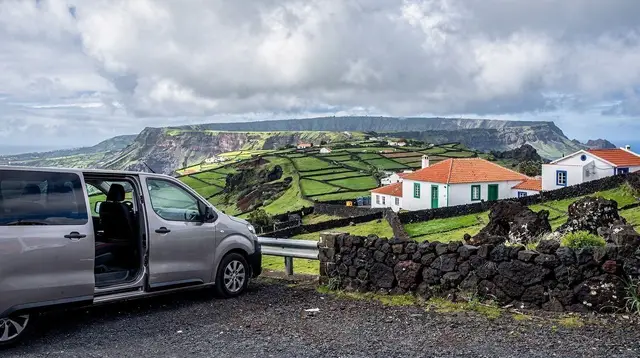
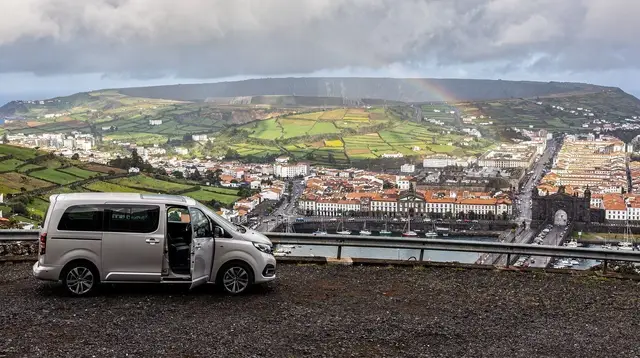
São Miguel vs Terceira: Which Azores Island Should You Choose?
Should I visit São Miguel or Terceira on a short Azores trip?
Choose São Miguel for crater lakes, volcanic hot springs and a working tea plantation, all reachable within a short drive of each other on the largest and most visited island. Choose Terceira for a compact UNESCO-listed historic centre, the Algar do Carvão lava chimney and the local tradition of touradas a corda, at a noticeably slower pace. A first trip of three to four days usually works better on one island than split between both.
Two islands, two very different versions of the Azores
Ask three people which Azores island to visit first and you will likely hear two names more than any others: São Miguel and Terceira. Both sit within a short regional flight of each other, both are easy to reach from mainland Portugal, and both are genuinely rewarding on their own. But they are not variations on the same trip.
São Miguel is the archipelago’s largest island, a landscape of crater lakes, steaming hot springs and a working tea plantation spread across a long, hilly island that rewards several days of driving. Terceira is smaller and calmer, built around a single UNESCO World Heritage city, an extraordinary lava chimney you climb down into, and a living tradition of village bullfighting that has nothing to do with sightseeing at all.
This guide compares only these two islands, for the traveller who has a short window — a long weekend or a working week — and has already narrowed the choice down to São Miguel or Terceira specifically. If you are still weighing all nine islands against each other, or wondering whether to base yourself on one island versus stringing several together, those are different questions with their own answers elsewhere on the site. Here, the question is narrower and more practical: given limited time, which of these two fits your trip better?
São Miguel in brief: craters, hot springs and tea
São Miguel is the Azores that most people picture without knowing it. Its interior is dominated by volcanic craters, the best known being Sete Cidades, where two lakes — one traditionally described as blue, one as green — sit inside a single vast caldera you can view from several miradouros along the rim.
Further east, the valley around Furnas is the island’s other headline draw: a cluster of fumaroles, mineral-rich hot pools and the extraordinary local dish, cozido das Furnas, a meat and vegetable stew cooked for hours in the ground itself using volcanic heat. Nowhere else in the Azores does anything quite like it, and our Azores hot springs guide and dedicated cozido das Furnas guide go into the practical detail — reservations, hours, what to bring.
São Miguel is also the only island in the archipelago with a commercially operating tea plantation, Gorreana, whose green fields are as photogenic as they are unusual for a European destination — worth a stop even if tea itself is not the point of your trip.
Beyond Furnas and Sete Cidades, the island offers a genuinely wide spread of landscapes in a single afternoon’s drive: the acid-green caldera lake of Lagoa do Fogo sitting at altitude in the island’s centre, black-sand coves, and a coastline that alternates between cliffs and small fishing harbours. For a first-time visitor with limited time, this concentration of very different landscapes on one island is the main practical argument in São Miguel’s favour — you are rarely more than an hour’s drive from the next headline sight.
For getting a first physical feel for the island, a guided loop such as the São Miguel West Tour covers several of these landmarks in a single day, which suits a visitor working with only three or four days on the ground.
Terceira in brief: Angra do Heroísmo, lava tubes and touradas
Terceira works differently. Its single most important sight is not a crater or a spring but a city: Angra do Heroísmo, whose historic centre has been inscribed as a UNESCO World Heritage Site since 1983, in recognition of its role as a major port of call on the maritime routes between Europe, Africa and the Americas during the age of exploration. Colourful facades, a fortified hill at Monte Brasil overlooking the bay, and a compact, walkable street plan make Angra a city best explored on foot over a day or two, at a pace closer to a European city break than an island road trip. Our Angra do Heroísmo UNESCO guide covers the historic centre in more depth.
Terceira’s other headline attraction is entirely different in character: the Algar do Carvão, an extinct volcanic chimney you descend into via a staircase, arriving at a chamber with its own small lake and a covering of green moss and ferns that thrives on the humidity trapped underground. It has no real equivalent on São Miguel, and our Algar do Carvão guide explains what to expect on the descent. Nearby, the vineyards of Biscoitos — vines planted directly into hollows in the volcanic rock, with no soil in the conventional sense — add a wine-growing tradition distinct from Pico’s currais, on a smaller and more low-key scale.
Terceira is also, culturally, the most distinctive island in the archipelago because of its festival calendar. The Divino Espírito Santo celebrations run through much of the year, and the island is known across the Azores for touradas a corda — bulls run through village streets attached to a long rope held by handlers, a tradition rooted in community life rather than staged for visitors.
It is worth reading before you go, since the etiquette and safety expectations differ from anything else in the archipelago; our guide to Terceira’s bull-running tradition explains how it actually works. A half-day loop such as the Half Day Terceira Island Tour is a practical way to combine Angra’s historic centre with a first look at the island’s rural interior.
São Miguel vs Terceira at a glance
| São Miguel | Terceira | |
|---|---|---|
| Island group | Eastern | Central |
| Size and pace | Largest island, several days of driving | Compact, largely walkable around Angra |
| Signature landscape | Crater lakes, hot springs, tea fields | Historic city, lava chimney, coastal cliffs |
| Headline activity | Bathing in thermal pools at Furnas | Descending into the Algar do Carvão |
| Cultural draw | Working landscapes: tea, cozido | UNESCO city, touradas a corda, festivals |
| Best suited to | First-timers wanting variety in one place | Visitors wanting depth over breadth |
| Typical minimum stay | 4-5 days to see it properly | 2-3 days for the essentials |
| Wine tradition | Not a wine island | Biscoitos vineyards (smaller scale than Pico) |
| Flight connections | Main international gateway (Ponta Delgada) | Regular regional flights, seasonal long-haul |
Scenery and outdoor activities
If your trip is built around hiking, crater views and volcanic scenery, São Miguel is the stronger choice by a clear margin. Its interior alternates between calderas, crater lakes and forested ridgelines, and trails around Lagoa do Fogo or Sete Cidades give walkers genuine variety within a single day. A guided outing like the São Miguel Lagoa do Fogo Hike is a practical way to get onto the trails without needing to plan the logistics yourself, and a jeep-based route covering the island’s back roads and viewpoints suits travellers who want ground covered quickly.
Terceira’s terrain is gentler and less oriented around hiking. Its outdoor highlight is underground rather than on a ridgeline — the Algar do Carvão — supplemented by coastal walks around Monte Brasil and boat-based activity along the island’s south coast. A From Terceira 3 Hour Caves Tour pairs well with a day otherwise spent in Angra, and gives a sense of the island’s volcanic underpinnings without requiring a full hiking itinerary. If open-water time matters more to your trip than trail mileage, Terceira’s coastline also lends itself to a slower afternoon on the water rather than a day of climbing.
History, culture and everyday life
This is where the two islands diverge most clearly. São Miguel’s cultural interest is largely tied to its working landscapes — a tea plantation still in commercial production, thermal springs used daily by both visitors and locals, and a dish, the cozido, that is cooked using the ground itself rather than a stove. It is culture expressed through land and food rather than architecture.
Terceira’s cultural weight sits instead in its built heritage and its festival life. Angra do Heroísmo’s UNESCO status recognises centuries of maritime history, and the city’s architecture, churches and fortifications reward slow, on-foot exploration in a way no part of São Miguel quite matches. Layered on top of that is a festival calendar — the Divino Espírito Santo processions and the touradas a corda — that runs through the local year and gives Terceira a sense of lived tradition that a shorter visitor mostly observes from the edges rather than participates in.
Neither approach is better in the abstract. A visitor drawn to walkable historic centres, festivals and a slower rhythm will likely prefer Terceira; a visitor who wants craters, springs and a wider spread of natural sights in a shorter time will likely prefer São Miguel.
Getting there and getting between the islands
São Miguel’s Ponta Delgada airport is the Azores’ main international gateway, meaning most visitors arrive there regardless of which other island they eventually visit — it is the default starting point for the whole archipelago. Terceira has its own airport with regular regional connections and seasonal direct flights to mainland Portugal, but fewer international routes than Ponta Delgada. Our guide to inter-island flights covers frequency and booking in more detail.
Moving between São Miguel and Terceira means a short regional flight; there is no ferry connecting the eastern and central island groups, and even within the central group, inter-island ferries only run a limited seasonal schedule outside the core Pico-Faial-São Jorge route. In practice this means a same-day combination of both islands is not realistic — treat São Miguel and Terceira as two separate trips, or accept a genuine travel day if you insist on combining them.
Car rental is close to essential on both islands if you want to get beyond the main town: São Miguel’s sights are spread across a long island that rewards a hire car, while Terceira’s compact size means a car is useful for reaching Biscoitos and Algar do Carvão but less critical for a visit centred purely on Angra do Heroísmo itself, which is comfortably walkable.
Budget and length of stay
| São Miguel | Terceira | |
|---|---|---|
| Recommended minimum | 4-5 days | 2-3 days |
| Ideal for | First-timers, families, nature-focused trips | History-focused, slower-paced, repeat visitors |
| Accommodation base | Ponta Delgada or Furnas | Angra do Heroísmo |
| Typical daily pace | Active, multiple stops per day | Slower, fewer stops, more time per site |
Because São Miguel’s sights are more numerous and more spread out, a rushed one or two day visit tends to feel like a checklist rather than a trip; four to five days lets the island breathe. Terceira’s more compact geography means two to three focused days cover the essentials without feeling hurried, which makes it a better fit for a genuinely short window such as a long weekend.
So which island fits your trip?
If your priority list includes crater lakes, hot springs, varied landscapes and you have four or more days available, São Miguel is very likely the better use of your time — it is also the practical default, since most international flights land there first. If your priority list is a walkable historic city, a genuinely unusual volcanic descent, and a slower, more traditional atmosphere, and you have two to three focused days, Terceira fits that brief more precisely than São Miguel does. Splitting a short trip evenly between both usually means neither island gets the time it deserves — better to choose deliberately and go deep on one, saving the other for a future visit.
São Miguel vs Terceira: your questions answered
Which island is better for a first-time visitor with only three or four days?
São Miguel usually wins for a first short trip, because a single island gives you crater lakes, hot springs, a working tea plantation and a genuine cozido lunch within an hour or two of each other. Terceira rewards a slower pace built around Angra do Heroísmo, so it suits a visitor who wants one deeply explored island rather than a long checklist of sights.
Does Terceira have hot springs or a tea plantation like São Miguel?
No. The volcanically heated pools around Furnas and the Gorreana tea plantation are particularities of São Miguel alone; Terceira has neither. Terceira’s signature volcanic feature is the Algar do Carvão, an extinct lava chimney you descend into rather than bathe in.
Can I see both São Miguel and Terceira in one long weekend?
It is possible but tight. Inter-island flights connect Ponta Delgada and Terceira in well under an hour, but adding a second island to a three or four day trip usually costs a full travel day and shortens the stay on each, so most visitors get more out of committing to one island for a first visit.
Which island is better for hiking and volcanic scenery?
São Miguel has the wider range, from the twin crater lakes of Sete Cidades to the green caldera of Lagoa do Fogo. Terceira’s landscape is gentler and centred on Monte Brasil and the underground Algar do Carvão rather than open hiking trails, so hikers usually lean toward São Miguel.
Is Terceira quieter and less touristy than São Miguel?
Yes, in general. São Miguel receives the bulk of the archipelago’s flights and tour operators, while Terceira’s rhythm is set by Angra do Heroísmo’s UNESCO-listed streets, local festivals and touradas a corda rather than large-scale sightseeing infrastructure.
Which island has the better food and drink?
They differ rather than compete. São Miguel is the place for the slow-cooked cozido das Furnas and Gorreana’s plantation-grown tea; Terceira’s strengths are its wine tradition around Biscoitos and an everyday, community-driven food culture tied closely to its religious festivals.
How do I get between São Miguel and Terceira?
By air. Regional flights link Ponta Delgada and Terceira several times a day on one of the archipelago’s busiest inter-island routes. There is no ferry link between the two, since Terceira sits in the central island group and São Miguel in the eastern group, well over 100 km apart by sea.
Popular Azores experiences on GetYourGuide
Verified deep-linked GetYourGuide tours. Book through these links and we earn a small commission at no cost to you.
GetYourGuide does not provide a product photo for this activity — the image shows the meeting point, photographed by us.