Things to do in the Azores
From climbing Pico before sunrise and soaking in the thermal pools of Furnas to watching resident sperm whales off Horta and walking the fajas below Sao Jorge's cliffs, the Azores pack an unusual range of experiences into nine small volcanic islands.
Signature experiences
The categories that define a first trip to the Azores — whale and dolphin watching, the crater lakes and thermal valleys of Sao Miguel, and the ascent of Pico.

Photography and Viewpoints
The best angles on Sao Miguel's Sete Cidades and Lagoa do Fogo, Pico's crater and Faial's Capelinhos volcano, plus practical notes on Atlantic fog, light and access times.
1 guide
whale-watching
3 guides
hot-springs-thermal
4 guides
Wine Tasting
Tastings among Pico's UNESCO-listed currais, vines grown low behind black volcanic-stone walls to break the Atlantic wind, best timed to the harvest when the vineyards turn colour against the lava.
2 guides
food-gastronomy
5 guides
Traditions and Crafts
Terceira's touradas a corda, where a bull runs loose on a rope through the streets, Horta's scrimshaw whalebone carving, and the Festas do Espirito Santo held on every island each summer.
1 guide
Canyoning in the Azores
Abseiling and sliding down the volcanic ribeiras of Sao Miguel and Flores, fed by rain year-round, with routes graded for first-timers through to experienced canyoners.
1 guide
coasteering-adventure
1 guide
diving-snorkeling
3 guides
Kayaking and Paddling
Sea kayaking along volcanic coastlines and out to islets like Vila Franca do Campo, plus calm paddling across the twin crater lake at Sete Cidades and the lake at Furnas.
1 guide
beaches-natural-pools
2 guides
surfing-watersports
1 guide
fishing-charters
1 guide
sailing-yachting
1 guide
boat-tours
2 guides
island-hopping
3 guides
climbing-summits
2 guides
hiking-trails
6 guides
caves-lava-tubes
4 guides
volcanoes-craters
4 guides
jeep-4x4-tours
1 guide
Cycling and E-Biking
Flat rides around Ponta Delgada's waterfront and the lake circuits at Sete Cidades and Furnas, plus e-bike routes into Sao Miguel's tea country and along Terceira's coast roads.
1 guide
Wildlife and Nature
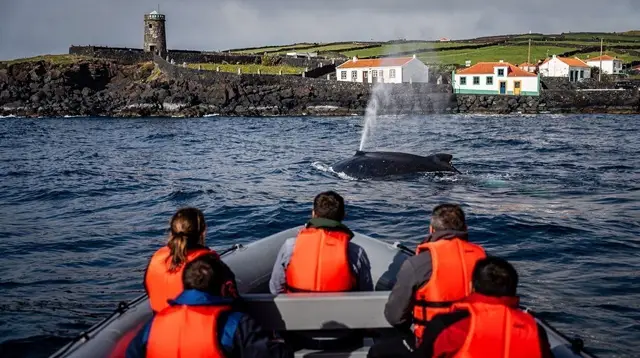
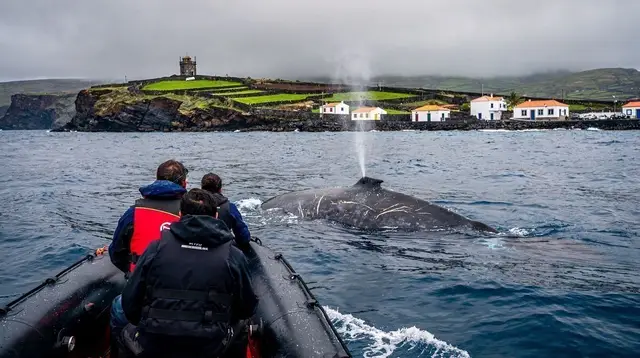
Resident sperm whales and common and bottlenose dolphins seen off the islands year-round, migratory blue and fin whales passing in spring, plus the crater lakes and laurel forest reserves of Sao Miguel and Flores — no sighting is ever guaranteed.
3 guides
Spa and Wellness
Natural thermal pools at Furnas, including Poca da Dona Beija, and other volcanic-heated spa stops on Sao Miguel, a slower counterpoint to a day spent hiking or boating.
1 guide
History and Heritage
Angra do Heroismo's UNESCO-listed old town on Terceira, one of the Atlantic's oldest ports, alongside Faial and Pico's whaling history and centuries of Portuguese settlement across the archipelago.
3 guides
shore-excursions
1 guide
Ponta Delgada and Town Sightseeing
Ponta Delgada's black-and-white cobbled streets and 18th-century city gates, Angra do Heroismo's colonial core, and Horta's marina walls painted by passing sailors, each small enough to cross on foot.
3 guides
Private Tours
Guided, small-group and one-on-one tours of Sao Miguel and inter-island trips to Pico, Faial and Terceira, set to your own pace and pickup time.
1 guide
Day Trips
On Sao Miguel, Furnas is around 60 km from Ponta Delgada and Sete Cidades barely 30 km, close enough for a single day; reaching any other island means booking a flight or ferry first.
2 guidesMore ways to experience the region
Specialist interests and practical planning — wine tasting on Pico, inter-island flights and ferries, and the comparisons every first-time visitor searches for.

Trip Planning
The euro, Schengen entry, a UTC-1 time zone one hour behind mainland Portugal, and other practical basics for putting together an Azores itinerary.
20 guides
Sao Miguel vs Pico and More
Side-by-side comparisons for the choices visitors face most often, starting with Sao Miguel against Pico, plus Faial against Sao Jorge and which island to pick as a first-timer's base.
11 guides
Best Time to Visit
How calmer summer seas, spring's passing whales, and a wet, changeable climate with "four seasons in a day" year-round shape what's worth doing across the islands.
9 guides
Getting Around
How to move between the islands: SATA Air Acores flights and Atlanticoline ferries, with crossings to the western group often disrupted by weather, plus car hire, close to essential once you land on any island.
8 guides
Family Activities
Practical picks for travelling with children: the flat lakeside walk at Sete Cidades, the natural thermal pools at Furnas, and boat trips sized for younger passengers.
2 guidesBrowse by destination
Tours and activities organised by where you're headed — the best of each city and region.
Good to know about things to do in the Azores
The Azores things-to-do hub is organised into a wide range of categories, because the right day here depends entirely on which island you're on. Whale and dolphin watching gets some of the most detailed treatment, since resident sperm whales and common bottlenose dolphins are seen year-round from boats out of Ponta Delgada, Horta and Lajes do Pico, with migratory blue and fin whales passing through in spring — no operator can promise a sighting, and this hub says so plainly rather than implying otherwise.
Hiking covers the trilhos that lace every island, from the crater rim above Sete Cidades to the fajãs of São Jorge and the waterfalls of Flores, distinct from the levadas found on Madeira despite four place names the two archipelagos happen to share. Volcanic geology is grouped separately from ordinary sightseeing because it solves a different problem — descending into the Algar do Carvão's chimney on Terceira, standing over the Furna do Enxofre on Graciosa, or walking the abandoned lighthouse at Capelinhos on Faial rather than admiring scenery from a viewpoint. Thermal springs and hot pools cover Furnas' Poça da Dona Beija and Parque Terra Nostra on São Miguel.
Wine and tea tasting cover Pico's UNESCO-listed currais landscape and the Gorreana and Porto Formoso plantations, Europe's only tea grown commercially. Mountain ascents cover the climb up Montanha do Pico, which needs advance registration rather than being a casual walk-up.
Diving, canyoning, cycling, surfing, sport fishing, birdwatching, museums, culture and heritage, food and drink, family activities, multi-day tours, transport, private tours, seasonal notes, planning and comparisons round out the hub, working through the questions travellers actually ask — which island to base on, whether a whale-watching trip is worth booking twice, and how the ascent of Pico compares with an easier fajã walk on São Jorge.
Frequently asked questions about things to do in the Azores
What are the main categories of things to do in the Azores?
This hub groups activities into categories including whale and dolphin watching, hiking, volcanic geology and caves, thermal springs, wine and tea tasting, the ascent of Pico, diving and canyoning, cycling, birdwatching, museums, culture and heritage, food and drink, family activities, multi-day tours, transport, private tours, seasonal notes, planning and comparisons. Most visitors lean heavily on four or five of them, and which ones depends almost entirely on which island they're on.
Why are trilhos different from Madeira's levadas?
Trilhos are waymarked footpaths that follow craters, coastlines and fajãs rather than the irrigation channels that define Madeira's levadas; the two archipelagos even share four place names — São Jorge, Faial, Calheta and São Vicente — that refer to entirely different locations, which trips up plenty of first-time researchers.
Is a whale sighting guaranteed on a boat trip?
No operator can guarantee one. Resident sperm whales and common bottlenose dolphins are seen through most of the year off São Miguel, Faial and Pico, and migratory baleen whales pass through in spring, but sightings depend on the sea and the day, not a schedule.
Do I need a permit to climb Montanha do Pico?
Yes — the ascent of mainland Portugal's highest point, at 2,351 m, requires registering in advance rather than simply starting up the trail, unlike most of the archipelago's other hikes.
Which category covers the Furna do Enxofre?
Volcanic geology, alongside the Algar do Carvão on Terceira; unlike most of the archipelago's sites, the Furna do Enxofre sits on Graciosa, where no activity is sold online and a visit is arranged locally.
tours.whale-watching
Verified deep-linked GetYourGuide tours. Book through these links and we earn a small commission at no cost to you.
GetYourGuide does not provide a product photo for this activity — the image shows the meeting point, photographed by us.