Travel tips for the Azores
Everything you need to know before visiting the Azores — money, inter-island transport, the weather and when to go.
Planning essentials
Visas, budgets, packing, eSIMs and the cultural etiquette worth knowing before you land.

Accessibility in the Azores for Travelers with Limited Mobility

Azores Daily Budget: What a Day Really Costs

Azores Honeymoon Guide: Choosing Islands and Moments for Two

Azores Packing List: What to Pack for Any Season

Azores Visa and Entry Requirements

Booking Azores Tours in Advance: What to Reserve Early

Common Mistakes in the Azores

Free Things to Do in the Azores

Health and Pharmacies in the Azores: A Practical Guide

How Many Days Do You Need in the Azores?

Is the Azores Safe? A Realistic Travel Safety Guide

Language in the Azores: Portuguese, Useful Phrases and English Levels

Money and Payments in the Azores

Rainy Day Activities in the Azores

Responsible Travel in the Azores: A Practical Guide

SIM Cards and Internet in the Azores

Solo Travel in the Azores: Is It Feasible?

Tipping and Etiquette in the Azores

Where to Stay in the Azores: A Multi-Island Strategy

Which Azores Island Should You Visit First?
Getting around
Hiring a car on every island, and why booking inter-island flights or ferries early matters more here than almost anywhere else, especially towards the western group.

Car Rental in the Azores: An Island-by-Island Guide

Driving in the Azores: What You Need to Know

Flights to the Azores Explained

Getting to the Azores: Flights, Airports and First Steps

Inter-Island Ferries in the Azores: Atlânticoline Routes and Schedules

Inter-Island Flights in the Azores: The SATA Network

Ponta Delgada Airport: The Complete Practical Guide

Public Transport in the Azores: Buses, Taxis and Life Without a Car
When to go
A high season from June to September, quieter shoulder months either side, and a climate that stays changeable whatever month you land. Month-by-month guides to what to expect.

Azores Festivals Calendar

Azores Hydrangea Season: When and Where to See Them

Azores in Autumn: Weather, Crowds and What to Expect

Azores Weather Month by Month

Best Time to Visit the Azores

Spring in the Azores: What March to May Actually Brings

The Azores in Summer: A Season Overview

The Azores in Winter: What to Really Expect (Dec-Feb)

When to See Whales and Dolphins in the Azores: A Month-by-Month Calendar
Good to know about travel tips for the Azores
The Azores have no entry rules beyond what applies to Portugal and the rest of the Schengen area, but a handful of practical points shape every trip through the archipelago. The official currency is the euro, and as an autonomous region of Portugal the islands sit inside the EU and the Schengen area, so there's no separate visa or border check to plan around — though the clock does shift: the Azores run on UTC-1, one hour behind mainland Portugal, easy to forget when booking a flight connection through Lisbon.
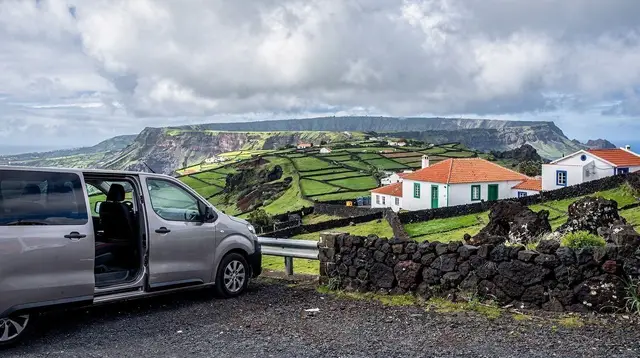
A rental car is close to essential on every island, since public transport between the scattered villages and trailheads is limited, and each island needs its own car or driver rather than one rental covering the whole trip. Moving between islands means either a SATA Air Açores flight or an Atlânticoline ferry, and the ferries serving the western group of Flores and Corvo are the most fragile link in the network, seasonal and quick to cancel in rough weather. The climate is oceanic and humid with no real dry season — locals describe "four seasons in a day" — so a rain layer belongs in the bag whatever the forecast says and whatever the month.
Hydrangeas bloom across the islands in summer, which is also the busiest season for both visitors and whale-watching boats; resident sperm whales and common bottlenose dolphins are seen year-round, while migratory baleen whales pass mostly through the spring, and no operator can promise a sighting on a given day. The volcanic coastline means natural pools cut into the lava, at spots like Furnas or along São Miguel and other islands, are as much a part of swimming here as any stretch of sand, and Santa Maria is the exception with genuine sand beaches.
Frequently asked questions about travel tips for the Azores
Do I need a visa to visit the Azores?
No — the Azores are an autonomous region of Portugal, inside the EU and the Schengen area, so the same entry rules apply as for the Portuguese mainland; visitors from the EU, the UK, the United States and Canada don't need a visa for stays of up to 90 days.
What time zone are the Azores in?
UTC-1, one hour behind mainland Portugal including Lisbon, which is easy to miss when booking a connecting flight.
Do I need a rental car in the Azores?
On almost every island, yes — public transport between villages, trailheads and viewpoints is limited, and since each island is reached separately by flight or ferry, the rental is arranged per island rather than once for the whole trip.
Is a whale sighting guaranteed if I book a boat tour?
No — resident sperm whales and common bottlenose dolphins are seen through most of the year and migratory baleen whales pass through mostly in spring, but no operator can guarantee a sighting on any single outing.
When do the hydrangeas bloom in the Azores?
In summer, when the islands' hedgerows and roadsides turn blue and pink with them — also the busiest season for visitors and for whale-watching boats alike.
Trip-planning essentials on GetYourGuide
Verified deep-linked GetYourGuide tours. Book through these links and we earn a small commission at no cost to you.
GetYourGuide does not provide a product photo for this activity — the image shows the meeting point, photographed by us.