Azores Daily Budget: What a Day Really Costs
How much should I budget per day in the Azores?
Expect roughly 70 to 100 EUR per person per day for a mid-range trip on one island, covering a guesthouse room, a rental car share, meals and one paid activity. Budget travelers can get closer to 45 to 60 EUR, while island-hopping across two or three islands adds extra ferry or flight costs on top of this daily figure.
Why There Is No Single Azores Daily Budget
Ask how much a day in the Azores costs and the honest answer is: it depends which Azores you mean. The nine islands share a currency, the euro, and the same EU/Schengen framework, but they do not share a cost structure. A traveler based in Ponta Delgada for a week spends very differently from one stitching together São Miguel, Pico and Faial in the same ten days. The single biggest variable is not the hotel you pick, it is how many islands you touch and how you move between them.
This page walks through the real line items — accommodation, the rental car that is close to mandatory on every island, fuel, meals, and paid activities — in euros, and shows how the total shifts once ferries or flights enter the picture. It does not compare the Azores to Madeira or the Canaries (see Azores vs Madeira for that), and it does not answer the broader “is this destination expensive” question in the abstract (that’s covered in Is the Azores Expensive).
It also assumes you already have a rough day count in mind; if not, start with How Many Days in the Azores first. What follows is purely the euro-by-euro breakdown for whatever number of island-days you land on.
The Big Trap: Treating the Archipelago as One Destination
The most common budgeting mistake is building a single daily average — say, 80 EUR per day — and multiplying it by the length of the trip, regardless of the itinerary. That works reasonably well if you are staying on one island the whole time. It falls apart the moment your plan involves island-hopping, because every jump between islands adds a discrete, one-off cost that has nothing to do with your daily rate: a flight ticket, a ferry fare, or both, plus a new car rental pickup on the other end.
A traveler doing seven nights entirely on São Miguel and a traveler doing seven nights split between São Miguel, Terceira and Pico can have an identical nightly hotel budget and still end up 150 to 250 EUR apart by the end of the trip, purely because of transport between islands. Build your budget in two layers: a daily rate for wherever you happen to be, and a separate list of one-time inter-island costs for however many times you change islands.
Accommodation
Lodging in the Azores skews toward guesthouses, small family-run hotels and rural cottages rather than large resorts, and prices reflect that mid-scale market.
| Style | Typical price per night (double room) | Notes |
|---|---|---|
| Budget guesthouse / hostel dorm bed | 20-35 EUR | Widely available in Ponta Delgada, Horta and Angra do Heroísmo |
| Mid-range guesthouse or small hotel | 60-100 EUR | Most common choice; often includes breakfast |
| Rural cottage / quinta | 90-140 EUR | Popular on Pico, São Jorge and Terceira, often self-catering |
| Higher-end hotel | 140-220 EUR+ | Concentrated in Ponta Delgada and a handful of resort-style properties |
Smaller islands such as Flores, Corvo and Graciosa have far fewer rooms overall, so prices there are less driven by star rating and more by scarcity in peak months (July-August). Booking these rooms well ahead of a summer visit matters more than shaving a few euros off the nightly rate.
Car Rental: The Cost Most Travelers Underestimate
A rental car is close to essential for seeing any Azorean island beyond its main town, since inter-village public transport is limited and no single company rents across the whole archipelago — every island means a fresh rental. Full detail on this is in Car Rental in the Azores and Driving in the Azores; here is what it does to the daily budget.
| Item | Typical cost |
|---|---|
| Small economy car, per day | 30-50 EUR (higher in July-August) |
| Fuel, per liter | Close to mainland European pump prices |
| Fuel for a full day of island driving | 10-15 EUR (small car, mid-sized island) |
| One-way rental drop fee (same island, different town) | Sometimes waived, sometimes 10-20 EUR |
| New rental pickup on arrival at a different island | Full daily rate resets — treat as a new rental, not a continuation |
Split three or four ways among travel companions, a car becomes one of the more efficient costs per person. Traveling solo, it is worth weighing a rental against local taxis or organized day tours for at least some outings, since a car sitting unused while you hike does not save money.
Fuel and Getting Around Day to Day
Beyond the daily fuel allowance above, budget a little extra buffer on days involving a full loop of a larger island — a complete circuit of São Miguel or a crossing of Terceira’s interior easily uses more fuel than a short coastal outing. Roads are often narrow and winding along cliffs or ridgelines, fog is common at altitude, and free-roaming cattle on upland pasture roads are a real hazard rather than a postcard detail — none of this changes the euro cost, but it does mean building in more time, and occasionally more fuel from backtracking, than a straight-line map distance suggests.
Food and Drink
Eating in the Azores is generally reasonable compared with mainland European capitals, especially away from Ponta Delgada’s busiest tourist streets.
| Meal | Typical cost |
|---|---|
| Coffee and a pastry | 2-4 EUR |
| Prato do dia (dish of the day) at a local tasca, with a drink | 8-12 EUR |
| Sit-down dinner, fish or meat main | 15-25 EUR |
| Cozido das Furnas at a dedicated restaurant | 20-30 EUR, and reserve 24-48 hours ahead (48-72 in July-August) — see the cozido das Furnas guide |
| Supermarket self-catering, per day | Under 15 EUR |
| São Jorge cheese, local wine, or Gorreana tea as souvenirs | 5-15 EUR per item |
Rural cottages with kitchens, common on Pico and São Jorge, let budget-conscious travelers cook some meals from local markets and supermarkets, which meaningfully lowers the food line over a week. For a broader look at regional dishes and where to find them, see the Azorean food guide.
Paid Activities: Where Costs Diverge by Island
This is the category where an itinerary can swing wildly, because activity density is not even across the nine islands. São Miguel, Terceira and Pico have the deepest bookable catalogs; some smaller islands, notably Graciosa, currently have no activities listed on major booking platforms at all, which pushes visitors there toward self-guided sightseeing instead.
| Activity type | Typical price range |
|---|---|
| Whale and dolphin watching, half day | 55-75 EUR |
| 4x4 or minibus tour of a scenic area | 45-65 EUR |
| Boat or sunset cruise | 40-60 EUR |
| Fishing excursion | 60-90 EUR |
| Coasteering or canyoning | 55-80 EUR |
| Thermal pool entry (Terra Nostra or Poça da Dona Beija) | 12-17 EUR |
| Montanha do Pico ascent registration | 5 EUR to the Furna shelter, 15 EUR to the crater rim, plus 10 EUR to reach the Piquinho summit, plus a refundable GPS deposit or waiver fee around 30 EUR |
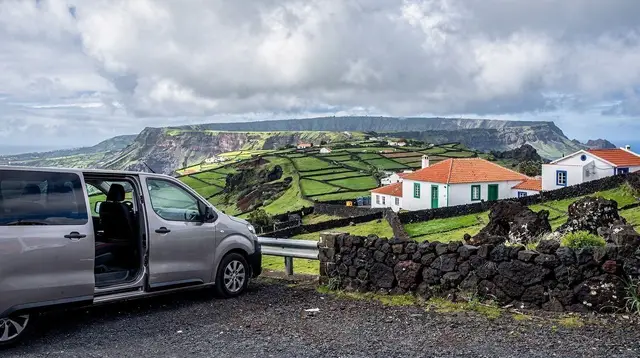
A day around São Miguel’s volcanic valleys is a good example of how these figures stack up in practice. A morning spent on a guided route through Furnas, for instance a half-day 4x4 tour through the Furnas valley, runs in the mid-range bracket above and typically already includes a stop at one of the thermal sites, saving a separate entry fee. On Terceira, a visit that pairs a rural landscape with local produce, such as a half-day visit to a working dairy farm, sits toward the lower end of the activity scale and adds a very different, low-cost afternoon to a trip built mostly around free hiking and sightseeing.
Water-based activities carry their own separate cost logic. An evening on the water, like a sunset cruise along the coast, or a half-day out with a local fishing charter, both fall in the same general 50-90 EUR band as whale-watching trips, since all three depend on chartering a boat and crew for a set number of hours rather than per-person entry tickets.
Planning two or three paid activities across a week, rather than one per day, is what keeps most mid-range budgets from tipping into the higher-end range — see Booking Azores Tours in Advance for timing tips on securing space in peak months.
The Real Variable: Inter-Island Transport
This is the cost category that a single “per day” figure cannot capture, because it does not scale with the number of days — it scales with the number of island changes.
| Route type | Typical one-way cost | Notes |
|---|---|---|
| Inter-island flight, SATA Air Açores | Varies by route and season | See Inter-Island Flights with SATA |
| Ferry within the “Triangle” (Pico-Faial-São Jorge) | Modest, short crossing | Runs year-round, several times daily; see Inter-Island Ferries |
| Ferries linking the wider central group (adds Terceira, Graciosa) | Seasonal, June-September only | Not a year-round option |
| Western group (Flores-Corvo) links | Most weather-sensitive, can pause for days | Budget flexibility, not just money, into this leg |
The practical takeaway: a trip confined to the Pico-Faial-São Jorge triangle can lean on the cheap, frequent, year-round ferry (see Pico-Faial Day Trip by Ferry), while a trip that also wants to include Terceira or Graciosa needs either a summer-only ferry window or a flight, and a trip to Flores or Corvo should treat transport as a schedule risk as much as a cost. For structured examples of how these choices roll up into a full trip, see 7 Days, Two Islands and 10 Days, Three Islands.
Putting a Full Day Together
A representative mid-range day on a single island, for one traveler sharing a car and a room with a companion, looks something like this:
| Item | Cost |
|---|---|
| Half of a double guesthouse room | 35-50 EUR |
| Share of car rental and fuel | 20-30 EUR |
| Breakfast, lunch, dinner | 20-30 EUR |
| Amortized cost of activities booked every second or third day | 15-25 EUR |
| Daily total | 90-135 EUR, or roughly 70-100 EUR on a lighter day with no paid activity |
Solo travelers absorbing the full car rental alone should add roughly 20-30 EUR to these figures. Budget-focused travelers using hostel dorms, self-catering and free hikes rather than paid tours can bring the same day down to 45-60 EUR.
Sample Weekly Totals
| Trip shape | Estimated total (excluding international flights) |
|---|---|
| 7 nights, one island (e.g. São Miguel), mid-range | 500-700 EUR per person |
| 7 nights, one island, budget style | 350-450 EUR per person |
| 10 nights, three islands, mid-range | 750-1,000 EUR per person, including inter-island transport |
| 10 nights, three islands, budget style | 550-700 EUR per person |
These figures assume a shared car and room; solo travel or a preference for higher-end lodging pushes every row upward. They also exclude flights into and out of the Azores itself, which are a separate line covered in Flights to the Azores Explained.
Practical Ways to Control the Budget
A few habits make a bigger difference than hunting for marginally cheaper individual line items:
- Concentrate on one or two islands rather than three or four if the budget is tight — every extra island change adds both money and schedule risk, particularly toward the western group.
- Book the rental car early for July and August, when island-wide fleets sell out and daily rates climb.
- Use rural cottages with kitchens on islands like Pico or São Jorge to cut the food line without cutting quality.
- Space paid activities out rather than booking one every day; two or three well-chosen excursions per week keep the activity budget from becoming the largest single category.
- Treat the Montanha do Pico ascent as its own separate line item with its own fee schedule, not as a generic “hike” cost.
- Check where to stay in the Azores and the currency tool or budget tool before locking in a full itinerary, since accommodation and exchange assumptions are usually the first numbers worth revisiting.
Daily Budget Questions, Answered
How much does a day in the Azores cost on average?
A mid-range day for one traveler, splitting a car and a double room with a companion, tends to land between 70 and 100 EUR: accommodation, a share of the rental car and fuel, three meals, and one paid activity every second or third day. Solo travelers paying for a car alone should add 20 to 30 EUR.
Do I really need to rent a car on every island?
If you plan to see more than the main town, yes. Public transport between villages is thin and irregular, and each island requires its own separate rental since companies do not operate a single archipelago-wide fleet. Budget a new rental agreement, and a new fuel tank, for every island you land on.
How much should I budget for fuel in the Azores?
A small rental car uses roughly 5 to 6 liters per 100 km, and fuel prices sit close to mainland European levels. For a full day of driving around a mid-sized island such as São Miguel or Terceira, 10 to 15 EUR in fuel is a realistic allowance.
Is food expensive in the Azores?
Not especially. A simple lunch of the day (prato do dia) at a local tasca runs about 8 to 12 EUR with a drink, while a sit-down dinner with fish or the regional cozido das Furnas costs 15 to 25 EUR. Supermarket self-catering can bring daily food costs under 15 EUR.
How much do paid activities and tours cost?
Whale-watching trips typically run 55 to 75 EUR, half-day 4x4 or minibus tours around 45 to 65 EUR, and boat or fishing excursions in a similar range. The Montanha do Pico ascent has its own fee schedule set by the Casa da Montanha, separate from tour prices.
Does island-hopping change my daily budget?
Yes, significantly. Every inter-island move adds either a SATA Air Açores flight or an Atlânticoline ferry fare on top of your normal daily spending, plus a new car rental pickup fee on arrival. A one-island week and a three-island week are not comparable trips financially, even if the nightly hotel rate looks the same.
Is the Azores cheaper than mainland Portugal?
Some costs, like car rental and imported goods, run a little higher in the Azores because of shipping to the islands. Others, like fresh local produce, dairy and fish, can be cheaper than in Lisbon or Porto. Overall the difference is modest rather than dramatic.
What’s a realistic total budget for a 7-day trip?
For one traveler on a mid-range single-island trip, figure roughly 500 to 700 EUR for seven days of accommodation, car and fuel share, food and two or three paid activities, excluding international flights. Add 80 to 150 EUR per inter-island hop if your itinerary covers more than one island.
Trip-planning essentials on GetYourGuide
Verified deep-linked GetYourGuide tours. Book through these links and we earn a small commission at no cost to you.
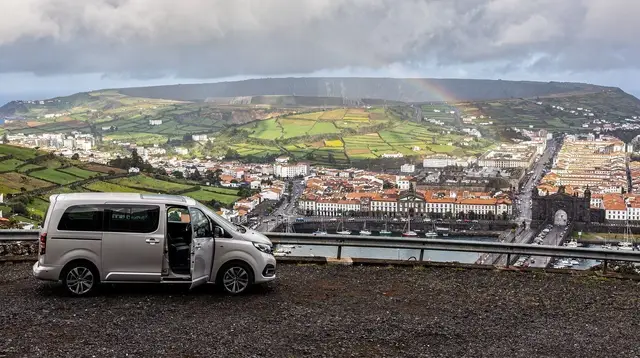
GetYourGuide does not provide a product photo for this activity — the image shows the meeting point, photographed by us.