Azorean Food: What to Eat Across the Nine Islands
What is Azorean food like?
Azorean cuisine blends mainland Portuguese roots with volcanic-island ingredients: earth-cooked cozido on São Miguel, raw-milk cheese from São Jorge, Europe's only commercial tea plantations on São Miguel, and greenhouse pineapple grown mainly around Ponta Delgada. Each specialty is anchored on a specific island, so knowing where to look matters as much as knowing what to order.
A cuisine shaped by volcanoes and the Atlantic
Azorean food does not read like a single national cuisine you can summarise in one dish. It reads like nine small pantries, each shaped by its own soil, its own herd, and its own stretch of ocean. The islands sit on volcanic rock in the middle of the North Atlantic, and that geology shows up on the plate as directly as it shows up in the landscape: geothermal heat cooks a stew in the ground on one island, lava-sheltered pasture feeds the cows that make a protected cheese on another, and a patch of greenhouse land on a third grows pineapple that never sees a tropical sun.
This guide is a panorama, not a deep dive. It exists to give a first-time visitor a working map of what “Azorean food” actually covers before choosing which experiences to book on which island. The archipelago’s headline dishes each have their own detailed guide - the geothermal stew of cozido das Furnas, the protected-origin São Jorge cheese, the Gorreana tea plantation, the pineapple greenhouses, the archipelago’s wine, and the everyday street food and markets scene.
What follows ties those pieces together and fills in the specialities that do not get a page of their own: the seafood, the meat dishes, the sweets, and the everyday drinks that make up an Azorean table.
The headline specialities, at a glance
Four dishes and products carry most of the archipelago’s culinary reputation, and each one belongs to a specific island rather than to the Azores as a whole. Visitors regularly assume they can order a geothermal cozido on Terceira or buy Gorreana tea grown on Pico, and both assumptions are wrong.
| Speciality | Home island | What it is | Where to read more |
|---|---|---|---|
| Cozido das Furnas | São Miguel | Meat and vegetable stew, buried and cooked by geothermal heat for six to seven hours | Cozido das Furnas guide |
| Queijo de São Jorge | São Jorge | Firm, tangy raw-milk cheese with protected-origin status | São Jorge cheese guide |
| Gorreana tea | São Miguel | Green and black tea from one of Europe’s only working plantations | Gorreana tea plantation guide |
| Azorean pineapple | São Miguel | Slow-grown greenhouse pineapple, mostly near Ponta Delgada | Azores pineapple plantations |
Keep that table in mind as a rule of thumb for the rest of this guide: if a dish or product has a specific island attached to it, that island is where the authentic version is made, even if a version of it eventually appears on menus elsewhere in the archipelago.
Cozido das Furnas: the geothermal stew, in brief
Cozido das Furnas is the dish most visitors have heard of before they arrive, and it is worth a short word here even though it has its own dedicated guide. The stew combines beef, pork, chicken, and Portuguese sausages such as morcela and chouriço with cabbage, carrots, and potatoes, all cooked together in a sealed pot lowered into the geothermally heated soil of the Furnas valley on São Miguel. No water is added; the steam rising from the ground does the cooking, over roughly six to seven hours.
Because the pots are buried before dawn and pulled up mid-morning, cozido is served exclusively at lunch, and restaurants in Furnas generally ask for a reservation 24 to 48 hours ahead, stretching to 48 or even 72 hours in July and August. For the full picture - which restaurants serve it, how to watch the pots come out of the ground, and how to pair a visit with the valley’s thermal pools - see the dedicated cozido das Furnas guide.
A gentle way to work a cozido lunch into a wider day is to combine it with a guided ride through the valley; a guided e-bike tour through Furnas that also includes a cheese tasting pairs the stew’s home valley with a taste of the archipelago’s dairy tradition in the same afternoon.
São Jorge cheese: the archipelago’s protected-origin export
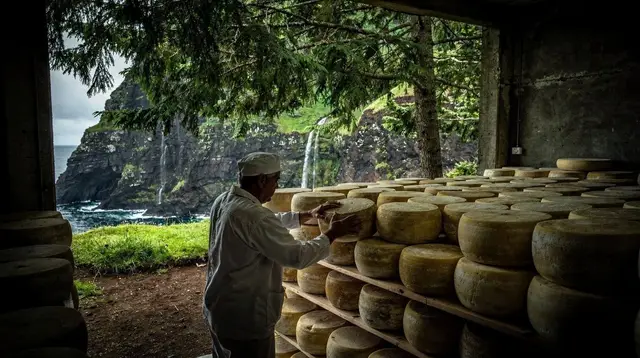
São Jorge produces the Azores’ best-known cheese, a firm, slightly sharp raw-milk cheese matured for several months and sold under a protected designation of origin. It is made from milk produced on the volcanic pastures of São Jorge, and while it is exported and sold across every island’s supermarkets and restaurants, the cheese itself is only made in one place.
Farms around São Jorge’s fajãs - the flat coastal platforms formed by old lava flows and landslides - still supply much of the milk. A visit to São Jorge itself is the only way to see the production side of the cheese rather than just its finished wheels on a plate elsewhere. The full production story, the ageing process, and where to taste it on the island are covered in the São Jorge cheese guide.
Other islands make their own farmhouse cheeses worth trying on their own terms - fresh, milder cheeses turn up on São Miguel and Pico - but none carries the protected-origin label or the archipelago-wide reputation of the São Jorge original.
Gorreana tea: grown on one hillside, drunk everywhere
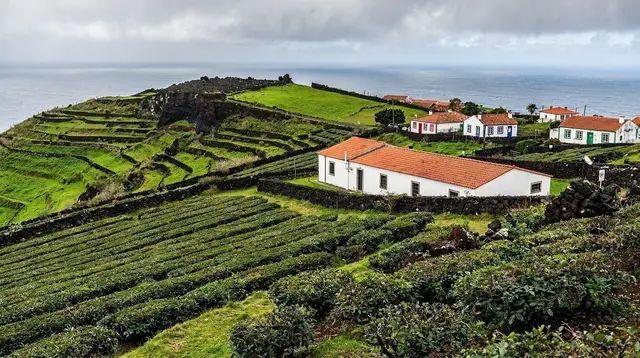
The tea in an Azorean breakfast cup very likely comes from the Gorreana estate, on the north coast of São Miguel near the settlement of the same name. It is one of the only commercial tea plantations left in Europe, and its green and black teas - grown, dried, and packaged on site without artificial additives - are sold across the archipelago’s cafés and supermarkets.
As with cheese, wide distribution does not mean wide production: the plantation itself sits on a single stretch of São Miguel, and visiting the fields, the old drying machinery, and the free tasting room is the only way to see the tea before it becomes a teabag on a hotel breakfast table. The Gorreana tea plantation guide covers opening hours, the free self-guided walk through the fields, and how to combine a visit with the nearby coastline.
Pineapple, greenhouse-grown and slow-ripened
Azorean pineapple looks and tastes different from the tropical fruit most visitors expect, and the reason is entirely about how it is grown. Small greenhouses, concentrated mostly around Ponta Delgada on São Miguel, shelter the plants from the archipelago’s cooler, wetter climate and let each fruit ripen slowly over roughly two years rather than the few months a tropical plantation needs.
The result is a smaller, sweeter, less acidic pineapple, traditionally used in jams, liqueurs, and desserts as much as eaten fresh. As with tea and cheese, the greenhouses are a São Miguel institution rather than an archipelago-wide crop; the Azores pineapple plantations guide covers which greenhouses welcome visitors and what a tasting typically includes.
Seafood: limpets, tuna, and octopus
Away from the four headline specialities, the everyday seafood on an Azorean table is some of the most consistent good eating across the whole archipelago, because it depends less on a single island’s geology and more on the surrounding Atlantic. Lapas - limpets grilled on a hot plate with garlic, butter, and a squeeze of lemon - appear on menus from São Miguel to Faial and are usually one of the cheapest starters on the board. Fresh tuna, often simply grilled or pan-seared with onions in a dish called bife de atum, shows up wherever boats land their catch, and oktopus stewed slowly in wine or served cold with olive oil is another coastal staple worth ordering on any island rather than saving for one in particular.
Fish soup, caldeirada, and simply grilled fresh catch of the day round out most coastal menus, and portions in the Azores tend to be generous by Portuguese standards. A local guide can steer a first-time visitor toward the right harbourside restaurant on any given day; a certified local guide booked for a half or full day is a practical way to combine food recommendations with sightseeing rather than treating the two separately.
Meat: alcatra and the sausages behind the cozido
Terceira contributes the archipelago’s best-known meat dish outside of cozido: alcatra, a beef cut slow-cooked in an earthenware pot with wine, garlic, and bacon until it falls apart, traditionally associated with the island’s religious festivals dedicated to the Holy Spirit. It shares a slow, patient cooking method with cozido das Furnas but uses an oven rather than geothermal heat, and it is very much a Terceira speciality rather than an archipelago-wide dish.
The Portuguese sausages that go into cozido - morcela (blood sausage) and chouriço (paprika-cured pork sausage) - are also worth trying on their own, grilled or added to bean stews, across every island’s butchers and markets. Pork itself is the most common meat on Azorean tables generally, reflecting the smallholding farms that dot the volcanic countryside.
Sweets and everyday bakery
Azorean desserts lean on eggs, sugar, and the local dairy far more than on tropical fruit. Queijadas - small custard tarts with a cinnamon-dusted top, distinct from the Portuguese pastel de nata - are a São Miguel classic sold by the box in Vila Franca do Campo bakeries.
Massa sovada, a slightly sweet, dense bread traditionally baked for Holy Spirit festivals, turns up year-round in bakeries across the islands, often alongside Dona Amélia cakes, a spiced, moist sponge named after a former Portuguese queen. None of these needs a reservation or a special trip; they are the kind of everyday bakery item worth grabbing on a walk through any town centre, and a wander through Ponta Delgada’s old town bakeries is as good a place as any to start.
Drinks: wine, liqueurs, and the tea you already know about
Pico’s vineyards, planted directly into small stone-walled plots called currais to shelter the vines from salt spray and wind, produce the Azores’ most distinctive wine and carry UNESCO World Heritage status for the landscape itself. The wine deserves its own reading rather than a summary here; see the Azores wine guide for the islands’ output more broadly, and the Pico wine and UNESCO vineyards guide for the currais landscape specifically.
Beyond wine, licor de maracujá - a bright yellow passion fruit liqueur - is the closest thing the Azores has to a signature aperitif, sold in small bottles in almost every gift shop and poured as a welcome drink in many restaurants. Ginjinha, a cherry liqueur imported from mainland Portuguese tradition, also appears on menus, and small-batch gin and other spirits have started showing up on Faial and São Miguel in recent years, though on a far smaller scale than the wine or liqueur tradition. To close a meal, a cup of Gorreana tea remains the most distinctly Azorean choice on the drinks list, even in restaurants far from the plantation itself.
Where to actually eat it: markets, tapas, and guided food tours
Ponta Delgada’s old-town streets hold the widest concentration of restaurants serving a genuine cross-section of Azorean cooking in one walkable area, from simple tasca-style lunch counters to more polished dining rooms. A structured way to taste several specialities in one outing without guessing which restaurant does what well is a guided tasting walk; a guided gourmet tapas food tour through Ponta Delgada typically strings together several small plates and pours across a handful of venues in one evening, which is a fast way to sample cheese, sausage, seafood, and a local drink or two side by side.
For a slower, more hands-on introduction to one ingredient rather than a whole menu, an apiary guided tour near Ponta Delgada covers local honey production, another small but genuine piece of São Miguel’s food landscape that rarely makes it onto a standard restaurant menu. Markets and informal street food stalls fill in the rest of the picture, and the street food and markets guide is the place to look for which weekly markets are worth timing a visit around.
Planning a food-focused trip
Because the archipelago’s biggest food names are each tied to a specific island, the practical planning question is less “what should I eat in the Azores” and more “which island’s food should I prioritise.” A five-day stay on São Miguel, for instance, comfortably fits both a cozido lunch in Furnas and a Gorreana tea visit on the same north-coast loop; see the São Miguel in 5 days itinerary for how that fits alongside the island’s landscape highlights. Anyone island-hopping toward São Jorge should plan a cheese tasting into that leg specifically, since it will not turn up as an experience on São Miguel or Terceira in the same way.
Budgeting for food is generally forgiving by Western European standards - a market lunch or bakery stop rarely stretches a daily budget, while a sit-down cozido lunch or a multi-course tasting menu sits at the higher end of a typical day’s spending. The Azores daily budget guide breaks down where meals typically fall against accommodation and activities for a fuller trip-planning picture. A day built around Furnas food and thermal pools is described in more everyday detail in a day in Furnas, which is a useful reality check on pacing before booking a tight schedule.
Azorean food FAQ
What is the single most famous Azorean dish?
Cozido das Furnas, a meat-and-vegetable stew cooked for hours in the geothermal soil of the Furnas valley on São Miguel. It is unique to that valley and is not replicated as an authentic geothermal dish anywhere else in the archipelago.
Which island makes the best-known Azorean cheese?
São Jorge produces the archipelago’s protected-origin cheese, a firm, tangy raw-milk cheese aged for months. Other islands make good farmhouse cheeses too, but the PDO-labelled queijo de São Jorge is the one to look for on a menu.
Is the tea really grown in the Azores?
Yes. The Gorreana estate on São Miguel is one of Europe’s only working tea plantations, and its green and black teas turn up on breakfast tables across the archipelago even though the plants themselves grow on one island.
Why does Azorean pineapple taste different from tropical pineapple?
It is grown slowly inside small greenhouses, mostly around Ponta Delgada on São Miguel, without artificial ripening agents. The result is smaller, sweeter and less fibrous than pineapple grown in open tropical fields.
What seafood should I prioritise while island-hopping?
Limpets (lapas) grilled with garlic and butter, fresh tuna steaks, and octopus stewed with wine are common across the coastal islands, alongside local specialities like alcatra, a slow-cooked beef dish from Terceira.
Do I need to book restaurants in advance for Azorean specialities?
For cozido das Furnas, yes, restaurants generally need 24 to 48 hours’ notice because the pots are buried before dawn; for most other dishes, a same-day reservation in high season is usually enough.
What should I drink alongside Azorean food?
Pico’s volcanic-soil wines, a shot of passion fruit liqueur (licor de maracujá) as a local aperitif, and a cup of Gorreana tea after the meal are the three drinks most associated with the islands.
tours.food-gastronomy
Verified deep-linked GetYourGuide tours. Book through these links and we earn a small commission at no cost to you.
GetYourGuide does not provide a product photo for this activity — the image shows the meeting point, photographed by us.