A Capital Built on Black and White Stone
Ponta Delgada sits on the south coast of São Miguel, the largest and most populous island in the Azores, and it is the closest thing the archipelago has to a big city — which, at around 45,000 residents in the wider municipality, still means a place you can cross on foot in twenty minutes.
It is the seat of the Azorean regional government, the busiest port in the islands, and the location of João Paulo II Airport, the gateway through which the great majority of visitors to the Azores arrive. If you are flying into the archipelago for the first time, there is a very good chance your trip begins here, on streets paved in the traditional Portuguese calçada pattern — black basalt and white limestone laid in waves, checkerboards and swirls underfoot.
The city’s character comes directly from that stone. Basalt is what these islands are made of, quite literally: the Azores are volcanic through and through, sitting on the meeting point of three tectonic plates, and Ponta Delgada’s builders simply used what the ground gave them. The result is a townscape of dark volcanic rock trimmed in white-painted plaster and limestone detailing, church facades in the same palette, and a historic core dense enough to feel genuinely old — because much of it is, dating to the 16th and 17th centuries when the city grew rich on the orange trade with Britain.
This page is a portrait of that city: what it is, how its neighborhoods fit together, where to stay, and why it earns its place at the start of almost every Azores itinerary without being, itself, the reason people come.
From Orange Groves to Regional Capital
Ponta Delgada was founded in the 15th century as Portuguese settlers colonized São Miguel, and it grew steadily until the 19th century, when it became genuinely wealthy — not from tourism, which barely existed, but from oranges. Azorean citrus, shipped out through this same harbor, supplied British markets for decades, and the fortunes it generated built the merchant townhouses, convents and public buildings that still define the old town.
When a blight devastated the orange groves later in the century, the city’s economy diversified into pineapple cultivation (still visible in the greenhouse-grown pineapples sold across the island), dairy, and eventually the administrative role it holds today as capital of an autonomous region within the European Union.
That status matters practically as well as historically. The Azores are Portuguese territory, so Ponta Delgada uses the euro, sits inside the Schengen area, and requires no separate visa for EU or Schengen visitors — but the whole archipelago runs on its own time zone, UTC-1, an hour behind mainland Portugal. It is an easy detail to overlook when booking connecting flights through Lisbon, and worth checking twice.
Finding Your Bearings in the Old Town
The historic center is compact and largely flat, organized loosely around three anchors: the Portas da Cidade, the marina, and the main squares behind them.
The Portas da Cidade — three stone arches built in 1783, originally part of the city’s old defensive wall — are the closest thing Ponta Delgada has to a symbol, and they open directly onto Praça Gonçalo Velho Cabral and the pedestrianized shopping streets beyond. Around this square sit City Hall, several cafés, and the beginning of Rua de São João, the main artery for wandering the old town.
Down at the water, the marina and Portas do Mar waterfront complex form the city’s modern face: a working harbor for fishing boats, whale-watching operators and inter-island ferries, fronted by a promenade, a cruise terminal, and a cultural center built over the water on stilts. Most boat tours — whale-watching trips, sailing excursions, sunset cruises — leave from here, which is part of why the marina rather than the old town is where most visitors first get a sense of the sea that surrounds this island chain.
Inland from both, a scatter of churches and convents — the Convento de Nossa Senhora da Esperança, home to the revered image of Senhor Santo Cristo dos Milagres, and the Igreja Matriz de São Sebastião on the main square — anchor a religious life that still shapes the local calendar, most visibly during the Festas do Senhor Santo Cristo each May, one of the largest religious festivals in Portugal.
None of this is a walking route in itself — for a proper turn-by-turn route through the old town, the Ponta Delgada walking guide covers that ground. This page is about understanding what the city is before you start moving through it.
Where to Stay in Ponta Delgada
Almost every visitor to São Miguel spends at least one night in Ponta Delgada, whether as a first stop after landing, a base for day trips, or a last night before flying out. The choice usually comes down to staying inside the historic center, near the marina, or slightly out toward the airport.
| Area | Best for | Typical feel |
|---|---|---|
| Historic center (around Portas da Cidade) | First-time visitors, walkers | Cobbled streets, cafés, shops, 10–15 min walk to marina |
| Marina / Portas do Mar | Boat tours, sea views | Modern hotels, waterfront restaurants, tour departures on foot |
| Near the airport | Late arrivals, early departures, road-trippers | Quieter, car-dependent, 10 minute drive to center |
Whichever area you pick, distances in Ponta Delgada are short enough that a car is not necessary for the city itself — you’ll want one once you head out to Sete Cidades, Furnas or Lagoa do Fogo, but not to get from your hotel to dinner.
Eating in the Capital
São Miguel’s food culture concentrates in Ponta Delgada more than anywhere else on the island, simply because it has the population and the visitors to support it. Fresh tuna and other Atlantic fish appear on almost every menu, often grilled simply with the Azorean staple of sweet potato and salad. Local specialties worth seeking out include queijadas (small custard tarts), fresh pineapple grown in the island’s traditional greenhouses, and tea from the Gorreana plantation just along the north coast — Europe’s oldest working tea estate.
For a more structured introduction to the city’s food scene without doing the legwork yourself, a guided tasting is a practical shortcut on a short stay: a small-group food walk through Ponta Delgada takes in several stops for tastings of local specialties in a couple of hours, which is a useful way to eat well on a first evening before you know the streets. For a broader look at what to eat across the islands, the Azorean food guide and the cozido das Furnas guide — the volcanically-cooked stew unique to nearby Furnas — go into more depth than a city page can.
Why Ponta Delgada Is a Base, Not the Destination
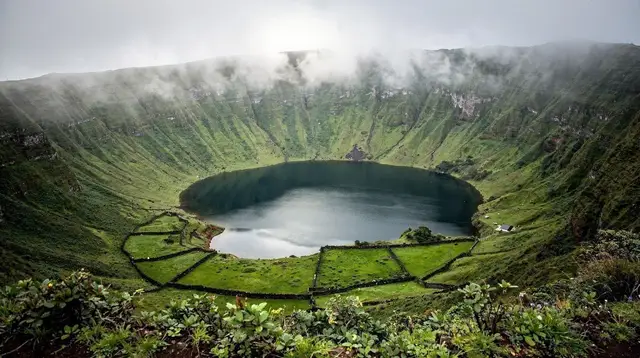
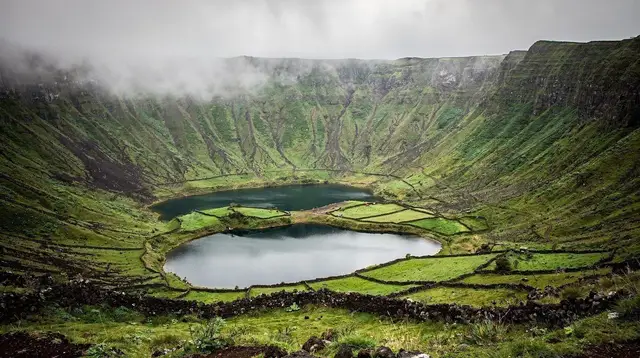
This is the point worth being direct about: almost everything that makes the Azores famous does not happen inside Ponta Delgada. The twin crater lakes of Sete Cidades, the thermal pools and cozido ovens of Furnas, the volcanic crater of Lagoa do Fogo, the tea and pineapple plantations — all of it lies elsewhere on São Miguel, reachable by car or organized tour but not on foot from your hotel. Ponta Delgada’s role is logistical and cultural rather than scenic: it is where you land, where you rent a car, where you eat well, and where the island’s administrative and commercial life is concentrated, but it is not where the landscapes that fill Azores brochures actually are.
That’s not a flaw in the city — plenty of capitals work this way — but it does mean planning matters. A visitor who books three nights in Ponta Delgada and never leaves the city center will miss the reason most people fly here in the first place. The efficient pattern is to use the city for your first and last nights (convenient for the airport, easy for a rental car pickup) and to build day trips or a short road-trip loop around it.
Full-day tours are one way to cover ground without driving yourself: a guided run out to the Sete Cidades and Fire Lake area or a combined whale-watching and volcano day with lunch included both start from the city and return you the same evening. The day trips from Ponta Delgada guide lays out the fuller menu of these options.
If your time is tight, it’s worth deciding upfront how much of it goes to the city itself versus the island around it — the São Miguel in 3 days and São Miguel in one day itineraries both allocate that balance explicitly, and a 5-day itinerary has room for both the city and a proper loop of the island’s east and west.
Getting There and Moving On
João Paulo II Airport sits a few kilometers west of the city center and, for most visitors, is the literal first and last thing they see of the Azores. It receives direct flights from mainland Portugal and a growing number of European cities, plus the inter-island network operated by SATA Air Açores that connects São Miguel to the other eight islands. If your plan includes island-hopping — say, on to Terceira, Pico or Faial — Ponta Delgada is almost certainly where those onward flights depart from, since it functions as the hub of the whole archipelago’s air network.
The guide to flights to the Azores and the broader getting to the Azores guide cover routes and booking in detail; airport-specific logistics, from baggage to transfers, sit in the dedicated Ponta Delgada airport guide rather than here.
Renting a car is the practical next step for most visitors once they’ve settled into the city, since São Miguel’s public transport network does not reach many of the sights that justify the trip. Rental offices cluster near both the airport and the marina; the car rental in the Azores guide walks through what to expect. For a different pace on your first day or two, a guided buggy tour is also available directly from the city: an off-road buggy excursion through the countryside around Ponta Delgada covers some of the same coastal and inland ground you’d otherwise need your own car for.
Weather and Timing
The Azores don’t have a dry season in the way the nearby Canary Islands or Madeira do, and Ponta Delgada is no exception — expect humidity and cloud cover year-round, with the well-worn local saying about “four seasons in one day” holding up more often than not. Statistically, July and August are the driest, warmest months, while November through February bring the most rain, though never the kind of temperature swings that would call for serious cold-weather gear; winter lows rarely drop far below the mid-teens Celsius. For a full month-by-month breakdown, the best time to visit the Azores guide goes further than a city snapshot can.
Because the airport runs year-round and the city itself has plenty of indoor museums, churches and restaurants, Ponta Delgada works as a base in any season — it’s really the outdoor excursions further afield on São Miguel, more than the city, that are weather-dependent.
On the Water
Whale and dolphin watching is one of the most popular activities booked directly from Ponta Delgada’s marina, and for good reason: São Miguel’s south coast puts boats within reach of resident sperm whales and several dolphin species for much of the year, with the great migratory rorquals passing offshore mainly in spring.
A combined outing such as a whale-watching trip paired with lunch and water activities is a straightforward way to spend a half-day on the water without arranging transport, since the boats leave directly from the city. No operator can promise a sighting on any given day, but sightings across a season are frequent — worth knowing before you set expectations for a single outing.
Inland From the City
For visitors who want to get onto São Miguel’s volcanic interior without renting a car themselves, guided hiking is bookable straight from Ponta Delgada. A private, guide-led hike suited to your pace and interests is one option for reaching trailheads and viewpoints that are otherwise a longer drive or a more involved logistics exercise on your own. It’s a useful middle ground between a packed group day tour and fully independent driving, particularly on a first visit when the island’s roads and trail markings are still unfamiliar.
Ponta Delgada at a Glance
| Location | South coast of São Miguel, Azores |
| Population | Roughly 45,000 in the wider municipality |
| Time zone | UTC-1 (one hour behind mainland Portugal) |
| Airport | João Paulo II Airport, main Azores gateway |
| Currency | Euro |
| Best for | First/last nights, food, boat tours, day-trip base |
| Not found here | Crater lakes, thermal pools, tea and pineapple estates |
Frequently Asked Questions About Ponta Delgada
Is Ponta Delgada the capital of the Azores?
Yes. Ponta Delgada, on the island of São Miguel, is the largest city and administrative capital of the Azores, an autonomous region of Portugal. The regional government and most head offices are based there, alongside João Paulo II Airport, which handles the majority of flights to the archipelago.
How many days should I spend in Ponta Delgada itself?
Two to three days is enough to see the old town, the marina and a museum or two, and to eat well. Most visitors then move on to the rest of São Miguel — Sete Cidades, Furnas, Lagoa do Fogo — or fly to another island, since the city itself is compact.
Is Ponta Delgada a good base for exploring São Miguel?
It is the natural base: most rental car offices, day-tour departures and the inter-island airport are here, and driving times to Sete Cidades, Furnas or Nordeste are all under an hour. Staying in the city keeps logistics simple even if you spend most days out on the island.
What is there to see in Ponta Delgada itself, without a car?
The historic center is entirely walkable: the Portas da Cidade gateway, the marina and Portas do Mar waterfront, City Hall, the Convento de Nossa Senhora da Esperança, and several small museums. A day or two on foot covers the city center comfortably.
Do all flights to the Azores land in Ponta Delgada?
Most do. João Paulo II Airport in Ponta Delgada is the main gateway for both long-haul flights from mainland Portugal and abroad, and for inter-island connections operated by SATA Air Açores and Azores Airlines. A handful of routes serve other islands directly, but Ponta Delgada carries the bulk of traffic.
What is Ponta Delgada known for?
Its black-and-white basalt paving (calçada portuguesa), the 18th-century Portas da Cidade gate, a working marina, and a food scene built on local specialties like fresh tuna, Gorreana tea and São Jorge cheese. It’s a working city and administrative capital, not a resort town.
Can I see whales or hot springs in Ponta Delgada city?
No — both require leaving the city. Whale-watching boats depart from the marina but head out into open water off the coast, and the hot springs (Furnas, Ribeira Grande) are 30 to 60 minutes’ drive away. The city itself has no thermal pools or crater lakes.