Steam rises out of the ground in Furnas before you have parked the car. This is the one stop on a São Miguel itinerary where the island’s volcanic plumbing is not a story told at a viewpoint but a fact under your shoes — a village built inside a crater, where the earth itself is hot enough to cook lunch.
A crater with a village inside it
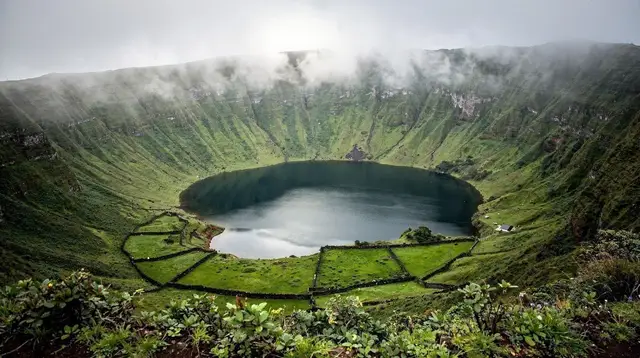
Furnas occupies a large, heavily eroded volcanic caldera on the eastern side of São Miguel, one of the most geologically active spots in the Azores. Where most craters on the island hold a lake and little else, Furnas holds a working village: a few thousand residents, a parish church, guesthouses, and streets that wind between camellia hedges and hydrangea banks. The crater walls close the valley in on three sides, trapping moisture and heat and giving Furnas its own damp, mossy microclimate even by Azorean standards.
The village itself is unhurried and low-rise, built for locals rather than for tour buses, which is part of its appeal. You can walk most of the center in under an hour, past the twin-towered Igreja de São Miguel Arcanjo, small cafés serving the region’s black-mineral spring water, and shopfronts selling Furnas-branded ceramics and preserves. It is not a place with a single postcard viewpoint; the interest here is underfoot and in the air, not on a horizon.
Where the heat reaches the surface
The reason Furnas exists as a destination is geothermal, not scenic. Along the shore of the Lagoa das Furnas, a shallow lake at the crater’s floor, the ground is perforated with active fumaroles — vents that push out sulfurous steam and boiling mud in small, fenced pockets you can walk between on raised paths. The air smells distinctly of sulfur, the ground is warm enough in places that lingering barefoot would be a bad idea, and the steam plumes are visible from a good distance on cool mornings.
This is not the fallout of a recent eruption. The Furnas volcano last erupted in 1630, and what you see today is a long-lived geothermal field, a permanent, low-level release of heat from magma still sitting deep beneath the crater. It is the same mechanism, on a smaller and calmer scale, that powers larger geothermal fields elsewhere on the island — see our overview of the archipelago’s volcanoes and craters for how Furnas fits into that wider picture. Around the fumarole field, several dedicated pools and streams carry hot mineral water down toward the lake, and the ground nearby is often too warm to walk on comfortably in bare feet.
How the ground cooks lunch
The single most photographed sight in Furnas is a row of buried, numbered iron pots, each one marking a spot where a restaurant has dug a hole into the heated soil beside the fumarole field. This is the starting point of the cozido das Furnas, the valley’s signature dish — but it is worth being precise about the mechanism, because it is often described loosely as cooking “in a volcano” or “in lava.” Neither is accurate. There is no open lava and no active eruption involved. What cooks the pot is geothermal steam and heat conducted through the soil itself, the same energy source as the fumaroles a few meters away, working slowly and invisibly for hours rather than violently.
Restaurant staff typically bury their pots before sunrise and return in the late morning to dig them up, which is why cozido is served exclusively at lunch across the village — there is no evening seating for it, and no way to order one on short notice in the afternoon. Watching this cycle, even without eating, is one of the more memorable free things to do in Furnas: arrive mid-morning and you can see pots going in or coming out depending on the day’s schedule.
The full story of the dish itself, including its ingredients and its centuries of history, sits outside the scope of this page; our dedicated cozido das Furnas guide and the Azorean food guide cover it in depth, and our day-in-Furnas blog post walks through what an actual visit feels like hour by hour.
If you would rather see the process up close with a guide explaining each step, a tour combining the cozido tasting with the valley’s thermal pools bundles both halves of the experience into one outing, and a hands-on option, a cozido cooking class at a Furnas hotel, goes a step further by having you help prepare a pot rather than only watching one dug up.
What sits just outside this page
Furnas is dense with things to do that each deserve their own explanation rather than a paragraph here. The valley’s best-known thermal bathing spot, a large ochre-tinted pool inside a historic botanical garden, is covered fully in our Terra Nostra Park guide. A second, smaller and more affordable set of iron-rich pools favored by locals is covered in our Poça da Dona Beija guide — worth reading before you go, since that water famously stains light-colored swimwear and towels a rust-orange. For how Furnas compares to the archipelago’s other hot springs, see the wider Azores hot springs guide.
None of that detail is repeated here on purpose: this page is about Furnas the place, not Furnas the spa itinerary. If a soak is the priority for your visit, treat one of those two guides as the next page to read after this one, and budget an extra hour or two beyond what is described below.
Beyond hot water, Furnas also has a working tea estate a short drive from the village center, one of the last remaining in Europe, which our Gorreana tea plantation guide covers separately. Several tours package the tea estate together with the crater itself, which is a practical way to see both without doubling back on the same road; a combined tea plantation and hot springs tour runs exactly that route, and a shorter version, a half-day Furnas and tea plantation tour, suits visitors who only have a morning or afternoon free.
Getting to Furnas and moving around once you are there
Furnas sits on the eastern side of São Miguel, reached from Ponta Delgada by the EN1-1ª coast road, a drive of roughly 45 to 60 minutes that runs through Vila Franca do Campo before climbing inland into the crater. A rental car is the most practical way in, since São Miguel’s public transport network is built around residents’ commutes rather than a tourist circuit through the crater villages. If you would rather not drive, an organized tour from Ponta Delgada is the standard alternative, and most of them also stop at one or more of the sights this page deliberately leaves aside.
Once inside the crater, the village and the fumarole field by the Lagoa das Furnas are both walkable, connected by flat, easy paths that make Furnas one of the more accessible stops on the island regardless of mobility. Parking near the lakeshore fumarole field is generally straightforward outside of peak midday hours, when tour coaches cluster around the same few pull-offs.
Travelers building out a longer eastern loop sometimes continue past Furnas toward Nordeste or Povoação, both of which extend the same coast road further along São Miguel’s greener, quieter side. Furnas also pairs naturally with a stop at Lagoa do Fogo on the way back toward Ponta Delgada, if your day allows for one more crater before heading home; a guided option, a half-day trip to Lagoa do Fogo, covers that detour without requiring you to plan the stop yourself.
For visitors who prefer to explore the valley floor at a slower pace than a car allows, a guided e-bike tour through Furnas with a cheese tasting stop covers much of the same ground on two wheels, with a food break built in.
How much time Furnas actually needs
Furnas rewards different amounts of time depending on what you are after. A tight half-day visit — park, walk the fumarole field, wander the village center, watch a cozido pot go in or come out — takes two to three hours and fits comfortably into a longer day that also includes another eastern São Miguel stop. Add a thermal pool soak, whether at Terra Nostra or Poça da Dona Beija, and a sit-down cozido lunch, and Furnas becomes a full day on its own, especially once you account for the slower pace that a hot soak and a heavy meal naturally impose.
Neither choice is wrong. Visitors following a compact São Miguel in 3 days itinerary often treat Furnas as a half-day stop paired with another crater or coastal town on the same route, while those with a looser São Miguel in 5 days itinerary can give the valley its full day and still have room for Terra Nostra and a proper lunch. If São Miguel is your only stop and time is genuinely tight, a one-day São Miguel itinerary can still include a shortened version of Furnas, though it means skipping the sit-down lunch entirely.
For a private, unhurried version of the crater that groups its stops around your own pace rather than a set script, a private tour combining a Furnas lake walk with Terra Nostra is built for exactly that half-day-to-full-day flexibility.
When to go
Furnas is a year-round destination, and unlike drier corners of southern Europe, there is no closed season here: the fumaroles steam in January as reliably as they do in August, and the crater’s green is constant. What changes with the season is comfort and visibility. July and August tend to bring the driest, clearest stretches of weather on São Miguel generally, which makes for better photos of the steam rising against a blue sky and a more pleasant walk around the lakeshore. The wetter months, roughly November through February, bring more mist and short showers, which can actually make the fumarole field feel more dramatic, if less convenient underfoot.
As with anywhere on the islands, treat any forecast as a rough guide rather than a guarantee — the Azorean habit of shifting from sun to rain and back within a single afternoon applies just as much inside a crater as it does on the coast.
Where Furnas fits on the map of São Miguel
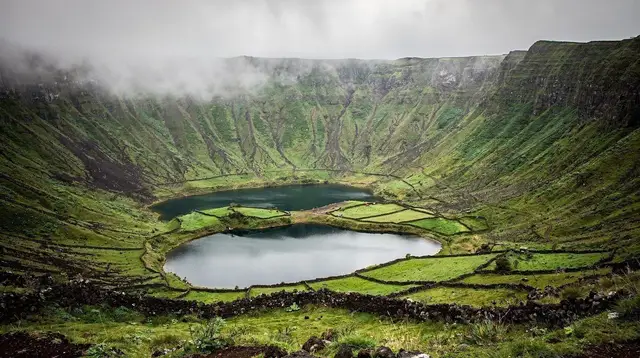
Furnas is one of the two signature craters on São Miguel, alongside Sete Cidades on the opposite side of the island. The comparison is worth making explicitly: Sete Cidades is about the view down into twin lakes from a rim road, with no geothermal activity at all, while Furnas is about what is happening at ground level inside the crater itself. Most visitors building a full island itinerary do both, on separate days, rather than trying to combine them.
Furnas also anchors the eastern half of São Miguel more broadly. Along with Ribeira Grande to the north and Vila Franca do Campo on the coast below, it forms one of the natural clusters for a multi-day road trip that avoids doubling back across the island. Anyone still deciding how to sequence these stops can browse the general things to do in São Miguel hub, or narrow straight to things to do in Furnas for a full activity list once the crater itself has convinced you it is worth a stop.
Furnas FAQ: planning your half-day or full-day visit
Is Furnas a village, a crater, or both?
Both. Furnas is a small village sitting inside a large, densely green volcanic crater on the eastern side of São Miguel. The settlement, the crater walls, the Lagoa das Furnas, and the geothermal fields all share the same name and the same collapsed volcanic basin.
How do you get from Ponta Delgada to Furnas?
The drive along the EN1-1ª south coast road takes roughly 45 to 60 minutes, passing through Vila Franca do Campo before climbing into the Furnas crater. There is no direct public bus network built for tourists, so a rental car or an organized tour is the practical way to reach it.
How is the cozido das Furnas actually cooked?
Pots of meat and vegetables are lowered into holes dug into the ground near the fumarole fields by the Lagoa das Furnas, where geothermal heat and steam, not lava or an open volcano, cook the food slowly over several hours. Restaurants bury their pots before dawn and dig them up in late morning, which is why cozido is a lunch-only dish and why same-day walk-in orders in high season often fail.
Is Furnas worth a full day or just a half day?
A half day is enough to walk the village, see the steaming fumarole field by the lakeshore, and watch or collect a cozido pot. A full day makes sense if you also want to add a thermal pool soak or a sit-down lunch, both of which sit just outside the scope of this page.
Do you need to book anything in advance for Furnas?
You do not need to book to walk around the village or view the fumaroles, but a restaurant table for cozido is best reserved a day or two ahead, and further out in July and August. Thermal pool entry is generally walk-in, though arriving early avoids the midday coach groups.
What is the difference between Furnas and Sete Cidades?
Sete Cidades is a twin-lake crater on the western side of São Miguel known for its viewpoints and blue-and-green lakes with no active geothermal activity. Furnas, on the eastern side, is a crater where the ground itself is visibly hot, with fumaroles, hot springs, and geothermal cooking; the two are usually visited on separate days.
Is Furnas rainy?
Furnas sits in a humid, cloud-catching crater, so mist and short showers are common in any season, in keeping with the Azorean pattern of shifting weather within a single day. Rain rarely cancels a visit outright, since the fumarole field and thermal pools are enjoyable in wet or overcast conditions too.
Can you visit Furnas without a car?
It is possible with an organized day tour from Ponta Delgada, which is how most visitors without a rental car reach Furnas. Taxis can also be arranged for a return trip, but there is no frequent scheduled bus service built around tourist stops within the valley.