Poça da Dona Beija: The Complete Bathing Guide
What are the opening hours and entry price for Poça da Dona Beija?
Poça da Dona Beija in Furnas, São Miguel, is open daily from 8:30am to 11:00pm, with last entry at 10:15pm. Adult entry costs around €12 before 5:30pm and around €16 from 6:00pm, with reduced child rates. The iron-rich water permanently stains light-coloured swimwear and towels, so bring older, darker ones.
Inside the Iron-Rich Pools of Furnas
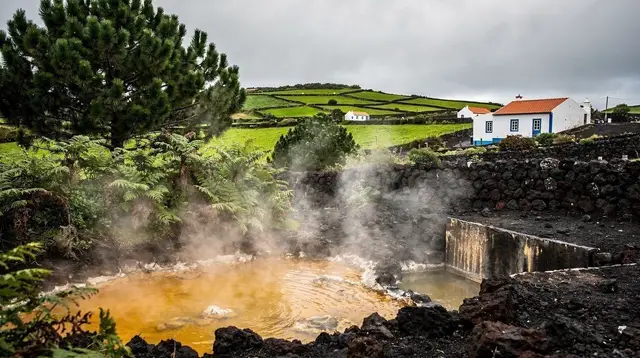
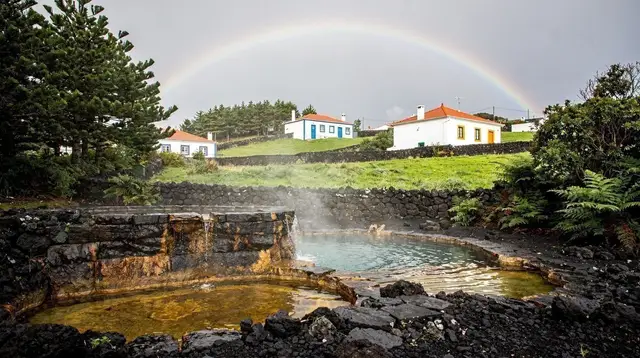
Poça da Dona Beija sits on the edge of Furnas, the volcanic valley on the eastern side of São Miguel that produces the archipelago’s hottest, most mineral-heavy water. The site itself is small and unpretentious: a handful of connected open-air pools carved into a stream bed, screened by tree ferns and bamboo, with steam drifting off the surface even on a warm afternoon. There is no grand entrance and no botanical garden around it — just changing rooms, lockers, a small snack counter, and the pools themselves, fed continuously by a natural hot spring.
The water itself is the whole point of the visit. It emerges rich in dissolved iron, which gives it a faint amber-orange cast and a distinctive mineral smell, and keeps the pools sitting at a genuinely hot, soak-worthy temperature year-round. That same iron content is responsible for the site’s best-known quirk, covered in detail below: it stains fabric, and it stains it for good.
This guide covers only Poça da Dona Beija itself — the practical logistics of getting in, when to go, what it costs, and what to bring. If you are trying to decide between the hot springs of Furnas more broadly, or want the botanical-garden pool a short drive away instead, see the separate guides to the Azores hot springs overall and to Terra Nostra Park’s thermal pool, or read up on Furnas as a destination before narrowing down your plan.
Poça da Dona Beija Is Not Terra Nostra Park
It is worth stating plainly, because it is the single most common mix-up among first-time visitors: Poça da Dona Beija and the thermal pool inside Terra Nostra Park are two different, unrelated sites in the same village, and confusing them can cost you an afternoon.
Terra Nostra is a historic botanical garden with a single large, warm pool at its centre, built for a more parkland, all-day visit with shade, paths and gardens to wander. Poça da Dona Beija is smaller, hotter, more rustic, and built purely around bathing rather than strolling — several linked pools rather than one large one, with a more intimate, steamier feel and a look that owes more to a natural rock stream than a formal park. They have separate entrances, separate ticket counters, and separate opening hours, and they sit a short drive apart rather than inside the same gate. If your plan is to do both in one day, budget them as two distinct stops rather than one combined visit.
Opening Hours and Admission Prices
Poça da Dona Beija opens every day of the year, including public holidays, which makes it one of the more dependable stops on a Furnas itinerary regardless of when you land in São Miguel.
| Detail | Information |
|---|---|
| Opening hours | Daily, 8:30am to 11:00pm |
| Last entry | 10:15pm |
| Pool closing | 10:45pm (time to dry off and leave) |
| Adult entry, before 5:30pm | around €12 |
| Adult entry, from 6:00pm | around €16 |
| Child entry (2–6), before 5:30pm | around €10 |
| Child entry (2–6), from 6:00pm | around €14 |
| Under 2 | Free |
Treat these figures as a reliable working estimate rather than a locked-in rate. Small, local thermal pools like this one adjust pricing occasionally, and the two-tier structure — a lower rate earlier in the day, a higher one from early evening — has stayed consistent even when the exact euro amounts have shifted slightly. If precision matters for your budget, it is worth a quick check on arrival rather than assuming last year’s number still applies.
There is no reservation system for general entry: it operates on a walk-in basis, and the site simply gets busier or quieter depending on the hour.
Why the Water Stains — and What to Wear
This is the detail that catches out more visitors than any other, so it deserves its own space rather than a passing mention. The pools at Poça da Dona Beija are fed by water naturally high in dissolved iron. That mineral content is exactly what makes the pools appealing — warmer, more mineral-dense water than an ordinary swimming pool — but it also means the water leaves a rust-orange tint on anything light-coloured that soaks in it for more than a few minutes.
Swimsuits, towels, and even some swim shorts come out with a permanent orange-brown tinge after a single visit. It does not rinse out at home, and it is not a stain that responds to normal laundering. Locals and repeat visitors deal with this the simple way: they bring an old, dark-coloured swimsuit and an old, dark-coloured towel specifically set aside for Furnas, rather than risking anything they actually care about. If you only own light-coloured swimwear, consider treating this trip as the reason to buy a cheap dark one, or accept that whatever you wear in will not look the same afterward.
Because the water permanently stains fabric, pack your own towel rather than count on finding a rental on site — availability of towel rental can vary by season, and bringing your own removes the uncertainty entirely. Pack a second, dry towel and a spare set of clothes to change into once you are out, since walking back to a car in Furnas evening air in a damp, stained towel is not a pleasant way to end the visit.
Evening and Night-Time Bathing
Because Poça da Dona Beija stays open until 11:00pm every night, it is one of the few Azorean hot springs where an after-dark soak is a genuinely normal, planned-for option rather than an improvisation. The pools are lit for the evening hours, and the contrast between the steaming, warm water and the cooler night air is, for many visitors, the single best sensory reason to make the trip to Furnas in the first place.
Late afternoon and evening also tend to be quieter than the midday stretch, when day-trip groups from Ponta Delgada and cruise excursions cluster around Furnas. Arriving after 6:00pm — accepting the slightly higher evening entry rate — buys you a calmer pool, softer light, and, on clear nights, a view of stars overhead that the daytime visit simply cannot offer.
For a guided version of exactly this experience, with logistics and local commentary handled for you, an evening visit to the Furnas hot springs after dark bundles the transport and timing so you are not driving Furnas’s unlit back roads yourself after a long soak. It suits travellers based in Ponta Delgada or elsewhere on São Miguel who would rather not self-drive at night, and it removes the guesswork around exactly when the pools feel their best.
Getting There and Parking
Poça da Dona Beija sits just outside the centre of Furnas village, close enough to walk from many of the village’s guesthouses but far enough that most visitors arrive by car. Driving in the Azores is straightforward on the main routes into Furnas, though the final approach roads are narrow, as is typical across São Miguel, so allow a little extra time on blind curves.
There is a small dedicated car park right at the site entrance. It is adequate outside peak hours but fills quickly on summer afternoons and again around sunset, when the evening crowd starts arriving for the lower light and cooler air. If you are visiting midday in July or August, expect to circle briefly or park a short walk away; an early-morning or late-evening visit avoids this entirely.
Most visitors reach Furnas as part of a self-drive loop around eastern São Miguel, which makes renting a car in the Azores close to essential if you want full control over your arrival time. Public transport connections into Furnas exist but run on a limited schedule that does not line up neatly with an evening soak plan.
What to Pack for Your Visit
A short, practical checklist covers almost everything worth remembering before you set off for the pools:
- An old, dark swimsuit or swim shorts you are willing to see permanently tinted
- An old, dark towel, plus a second dry towel for afterward
- A spare set of clothes and closed shoes for the walk back to the car
- Flip-flops or water shoes, since the poolside stone can be uneven and hot underfoot
- A small dry bag for phone, wallet and keys, since lockers are available but limited
- A light jacket for the walk to and from the car park after dark, since Furnas evenings cool quickly even in summer
For a broader packing rundown covering the rest of an Azores trip, see the general Azores packing list — the towel and swimsuit advice above is specific to Furnas and worth adding on top of that general list rather than relying on it alone.
Combining Your Visit with the Rest of Furnas
Because Poça da Dona Beija sits right at the edge of the village, it slots naturally into a longer Furnas day rather than standing alone. Many visitors pair a late-afternoon or evening soak with an earlier stop for cozido das Furnas, the meat-and-vegetable stew traditionally cooked for hours in the valley’s volcanic heat — note that cozido is served at lunch only and restaurants generally want a booking made a day or more ahead, so plan that part of the day before the pools rather than after.
If you are building a fuller itinerary around things to do in Furnas, the pools work well as a closing stop: sightsee and eat earlier in the day, then finish with a soak before heading back to Ponta Delgada or on to the next stop on a São Miguel road trip. Furnas also appears on most day trips from Ponta Delgada, and a Poça da Dona Beija stop is the natural way to end one before the drive back.
Travellers curious about São Miguel’s other thermal sites — the botanical-garden pool at Terra Nostra, or the free natural pools at Caldeira Velha near Ribeira Grande — should treat those as separate excursions on a different day or a different stretch of the same trip; see the dedicated guides to Terra Nostra’s thermal pool and to Caldeira Velha for those.
Visiting with Children
Families do bring children to Poça da Dona Beija, and the reduced child pricing reflects that it is a reasonably normal family stop. That said, there is no lifeguard on site, several of the linked pools run hotter than a standard swimming pool, and the poolside stone underfoot can be slippery and uneven in places.
Supervise young children closely, let them ease into the warmest pools gradually rather than jumping straight in, and keep in mind that the evening hours — appealing as they are for adults — mean darker paths and cooler changing conditions that are less forgiving for a tired child. For wider guidance on planning around children elsewhere in the archipelago, see the guide to visiting the Azores with kids.
Planning Your Timing Around the Season
Furnas is warm and steamy in every season, since the spring water temperature does not depend on the weather outside, but the experience of the pools does shift with the calendar. In the busiest summer weeks, expect a fuller car park and a livelier pool through the afternoon, with the evening slot offering the clearest advantage in comfort. Outside peak season, daytime visits are noticeably quieter, and the gap between an afternoon and an evening soak narrows. For a general sense of when to schedule an Azores trip around weather and crowds, the guide to the best time to visit the Azores is a useful starting point before you lock in a Furnas date.
Poça da Dona Beija: Frequently Asked Questions
The questions below cover the details visitors ask most often before a first visit to the pools — timing, cost, what to wear, and how the site differs from its better-known neighbour.
What time does Poça da Dona Beija open and close?
The pools are open every day of the year from 8:30am to 11:00pm. Last entry is at 10:15pm, and everyone is asked to be out of the water by 10:45pm so staff can close the site on time.
How much does it cost to enter Poça da Dona Beija?
Adult tickets run around €12 for entry before 5:30pm and around €16 from 6:00pm onward. Children aged 2 to 6 pay a reduced rate at both times, and children under 2 go in free. Prices are set locally and can move slightly season to season, so treat these as a working estimate rather than a fixed rate.
Will the water really stain my swimsuit?
Yes. The pools are fed by naturally iron-rich thermal water, and that iron leaves a rust-orange tint on light-coloured fabric that does not wash out. Regular visitors bring a swimsuit and towel they are happy to sacrifice, in a dark colour, rather than risk a good one.
Is Poça da Dona Beija the same place as Terra Nostra Park?
No, and mixing them up is the most common mistake. Terra Nostra is a separate, ticketed botanical garden a short drive away, built around one large thermal pool inside a park setting. Poça da Dona Beija is a standalone cluster of smaller open-air pools set among ferns and rock, with its own gate, hours and pricing.
What is the best time of day to visit?
Late afternoon into early evening is the local favourite: the light softens, day-trip crowds thin out, and steam rises more visibly off the water as the air cools. The pools stay open until 11:00pm, so a post-dinner soak under lights is also a realistic option, especially outside the busiest summer weeks.
Do I need to bring my own towel?
Bring one you do not mind staining permanently, plus a second dry towel to change into afterward. Because rental options can vary by season, it is safer to pack your own than to count on finding one on site.
Is Poça da Dona Beija suitable for children?
Families do visit with children, and the shallower pools are manageable for older kids, but there is no lifeguard on duty and some pools are hotter and deeper than others. Supervise children closely and let younger ones adjust gradually to the heat before they swim freely.
Is there parking at Poça da Dona Beija?
There is a small car park directly at the entrance, which fills up on peak summer afternoons and around sunset. Arriving right at opening or later in the evening generally means an easier time finding a space than the midday window.
If you would rather have the timing, transport and local context handled for you, a guided day in Furnas with a biologist-led garden walk and lunch included pairs naturally with an evening stop at the pools afterward, and a certified local guide booked for the day can fold Poça da Dona Beija into a wider São Miguel itinerary alongside the valley’s other volcanic sights.
tours.hot-springs-thermal
Verified deep-linked GetYourGuide tours. Book through these links and we earn a small commission at no cost to you.
GetYourGuide does not provide a product photo for this activity — the image shows the meeting point, photographed by us.