Best Time to Visit the Azores
When is the best time to visit the Azores?
Late spring (May–June) and early autumn (September) usually give the best balance of mild weather, calmer inter-island transport and lighter crowds than the summer peak. July and August are statistically the driest and busiest months, while December through February are the wettest and quietest, with the most risk of ferry disruption.
A Destination Without a Dry Season
The most common question about the Azores is also the hardest one to answer with a single word: when should you go? Unlike the Canary Islands or Madeira, the Azores do not have a reliable dry season. The nine islands sit alone in the open North Atlantic, warmed by the Gulf Stream, and that position gives them mild temperatures nearly all year but also frequent cloud, wind and rain in every month. Choosing a travel date here is less about finding “the good weather window” and more about weighing trade-offs: crowd levels, prices, daylight hours and how reliable inter-island transport will be during your trip.
This guide compares the seasons side by side so you can make that trade-off with open eyes. If you want the detail broken down by individual month, see our month-by-month weather guide; if you already know roughly when you are travelling, our dedicated season guides go deeper on spring, summer, autumn and winter.
The Climate in Plain Terms
The Azores sit roughly 1,500 km off Lisbon in the middle of the Atlantic, and their weather behaves like open-ocean weather rather than continental European weather. Expect a narrow temperature range across the year — very roughly 13–14°C in the coldest winter weeks up to 23–25°C at the height of summer — but high humidity and cloud cover in every season. There is no monsoon-style wet season and no reliably dry stretch; instead, fast-moving Atlantic fronts can bring sun, cloud and rain within the same afternoon. Locals describe this as “four seasons in one day,” and it is worth taking literally when you pack and when you plan each day’s activities.
Because the climate is driven by the open ocean rather than a single continental pattern, the difference between islands can matter as much as the difference between months. The western group (Flores and Corvo) tends to be wetter and windier than the eastern group (São Miguel and Santa Maria), and higher ground on São Miguel, Pico and São Jorge collects fog that can appear with little warning. None of this means the islands are an unpleasant place to visit outside two “good” months — it means every visit benefits from a flexible itinerary and layered clothing, whatever the season.
Season by Season at a Glance
| Season | Months | Typical daytime temp | Rain likelihood | Crowd level | Price level |
|---|---|---|---|---|---|
| Spring | March–May | 15–19°C | Moderate, increasingly settled by May | Low to moderate | Low to moderate |
| Summer | June–August | 21–25°C | Lowest on average, still possible | Highest | Highest |
| Autumn | September–November | 17–22°C, cooling through November | Rising through the season | Moderate, dropping by November | Moderate |
| Winter | December–February | 13–16°C | Highest, plus wind | Lowest | Lowest |
Treat this table as a general tendency rather than a forecast: every one of these seasons has produced both glorious sunny weeks and washed-out ones. It is a comparison tool for choosing dates, not a promise about the days you will actually get.
Spring (March–May)
Spring is a build-up rather than a single mood. March can still feel like a tail end of winter, with unsettled weather and a quieter island atmosphere, while May starts to resemble early summer, with longer days, warmer air and the first hydrangea buds appearing along the roadsides (full bloom comes later — see our hydrangea season guide for the details).
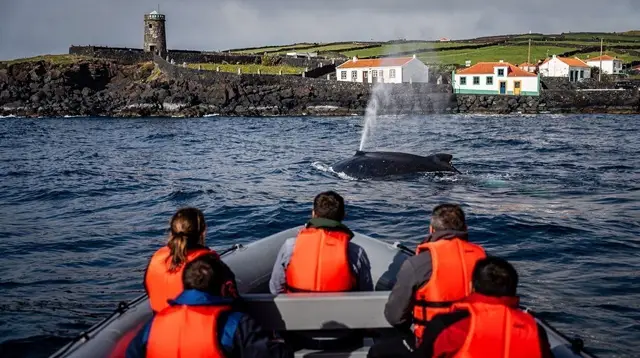
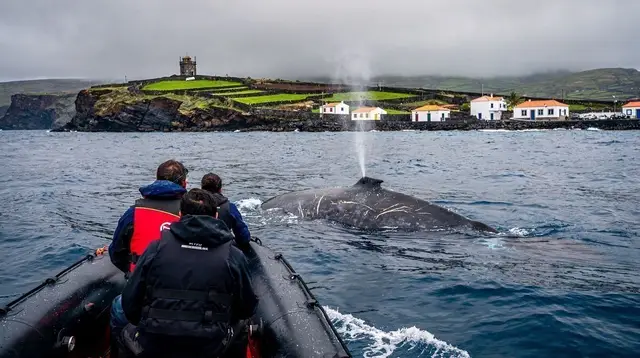
Spring is also prime time for the archipelago’s migratory whales: several species of large baleen whale, including blue and fin whales, pass through on their spring migration, layered on top of the resident sperm whales and dolphins that are visible for much of the year. Our dedicated whale season guide explains which species to expect and when. For hikers, spring trails are green and well-watered without the peak-season crowds of summer — worth pairing with our roundup of the best hikes in the Azores.
Summer (June–August)
June through August is the busiest and, on average, the driest window, which is exactly why it is the most popular time to visit. Long daylight hours suit full days of hiking, boat trips and exploring several islands in one trip. It is also peak hydrangea season on São Miguel and Faial, and the most reliable period for the full inter-island flight and ferry network, including the wider seasonal ferry routes across the central and western groups that only run from June to September.
The cost of that popularity is real: rental cars, popular whale-watching trips and well-known thermal pools can book out days in advance, and flight and accommodation prices peak. Our detailed summer guide and booking-ahead guide cover how far ahead to plan.
Autumn (September–November)
September is often quietly recommended as one of the best all-round months: the sea and air are still warm from summer, crowds start to thin after the August peak, and the inter-island ferry network is usually still running in its fuller summer configuration. October keeps much of that appeal with lower prices, while November marks a clearer turn toward winter, with shorter days, rising rainfall and the wider ferry network winding down to its reduced winter schedule.
Autumn also overlaps with the tail of the hydrangea season and, on the food side, with the tail end of the busiest reservation period for cozido das Furnas, the slow-cooked dish that benefits from booking a table well ahead in high season. Full detail is in our autumn guide.
Winter (December–February)
Winter is the quietest, cheapest and wettest season. Daytime temperatures rarely drop into genuinely cold territory — snow at sea level is not something to plan around — but persistent cloud, wind and short daylight hours change the character of a trip.
This is also the season when inter-island transport is least dependable: the Pico–Faial–São Jorge ferry triangle keeps running, but the wider network connecting the rest of the central and western groups is largely paused, and flights can face more frequent weather delays. Winter suits travellers focused on São Miguel’s thermal pools, quiet trails and lower prices, more than travellers hoping to island-hop widely. See our winter guide for what realistically stays open.
Matching the Season to What You Want to Do
Because the climate does not swing dramatically between seasons, the more useful question is often not “what is the weather like” but “what do I want to do, and when does that work best.” A few examples:
- Whale and dolphin watching: resident sperm whales and several dolphin species are seen across much of the year, but the large migratory whales — blue, fin and sei whales — pass through mainly in spring. Do not plan a trip around “summer whale watching” expecting to see the big migratory species; check our whale season guide before booking.
- Hydrangeas: the flowers that appear on postcards of São Miguel and Faial bloom mainly from June into August, tapering by early autumn. A May or September visit may catch only buds or fading flowers — see the hydrangea season guide.
- Hiking: trails are walkable year-round, but summer gives the longest daylight window for full-day routes, while spring offers greener landscapes with fewer people on popular paths.
- Island hopping: this depends more on the ferry calendar than on rainfall. The wider network beyond the reliable Pico–Faial–São Jorge triangle mainly runs June to September, so a multi-island winter itinerary needs backup flight options built in from the start.
Inter-Island Travel and the Season You Choose
Your travel dates affect more than the weather you experience — they affect how easily you can move between islands. Two points matter for planning:
- The ferry connection between Madalena (Pico) and Horta (Faial), and the wider “triangle” that includes São Jorge, runs year-round several times a day and is the single most dependable inter-island link in the archipelago.
- The broader ferry network reaching Terceira and Graciosa, and the already fragile links to Flores and Corvo, mostly operate from June to September. Outside that window, flights on SATA Air Açores become the more reliable option, and western-group connections in particular can pause for several days at a time in poor weather.
If your itinerary depends on several inter-island hops, read our guides to inter-island ferries before fixing your dates, and always keep a flexible buffer day if you are travelling outside the June–September window.
Prices and Crowds Through the Year
Prices for flights, accommodation and rental cars follow a fairly predictable curve: lowest in the winter months outside the Christmas and New Year peak, rising through spring, peaking in July and August, then easing back down through autumn. Popular activities — whale-watching trips, well-known thermal pools, and Pico’s regulated mountain ascent — can sell out days ahead in the summer peak, which makes advance booking far more important in July–August than in November–February. Our daily budget guide and tour-booking guide go into the specific numbers and lead times.
For a first outing on the water while temperatures and crowds are still manageable, many visitors book a short, low-commitment activity such as an evening cruise along the São Miguel coastline to get a feel for the islands before committing to longer excursions. Anglers travelling outside peak season, when boats are easier to book on shorter notice, often add a half-day fishing trip out from the coast to their itinerary.
Choosing Between Islands and Season
The right season can also depend on which island you prioritise. São Miguel, the most visited island, has the fullest calendar of things to do whatever the month, which makes it the most forgiving choice for a winter or shoulder-season trip. Smaller and more remote islands — Pico, Faial, São Jorge, and especially Flores, Corvo and Graciosa — reward the June–September window most clearly, both for weather comfort on outdoor routes and for the fuller transport network. If you are still deciding where to go before deciding when, our guide to which Azores island to visit and our comparison of how many days you need in the Azores are useful next steps.
Travellers heading to Pico specifically for the island’s volcanic landscape and vineyards often build in a full day for it; a guided day tour around Pico’s vineyards, villages and coastline works in nearly any season, since the island’s lower-elevation sights stay accessible even when cloud sits on the summit. On the water, surfers chasing bigger Atlantic swells tend to time their trip for autumn and winter, when a beginner surf lesson on one of São Miguel’s beaches can be paired with genuinely lively conditions rather than the calmer summer swell.
Our Recommendation for First-Time Visitors
If you have no fixed reason to travel at a particular time, June and September are the two months most commonly recommended for a first trip. Both sit close to the statistically driest window without landing in the most expensive and crowded weeks of July–August, and both keep the fuller inter-island flight and ferry network running, which matters if your plan includes more than one island.
Neither month eliminates the chance of rain — nothing does here — so build slack into the itinerary: a rained-out hiking morning can become a museum visit in Ponta Delgada or Angra do Heroísmo, and a cancelled boat trip can often be rebooked a day or two later. Travellers curious about daily island life beyond the big attractions sometimes add a relaxed half-day visit to a working dairy farm, which runs comfortably in any season and gives a different, slower-paced view of São Miguel between bigger excursions.
Ultimately, the Azores reward flexibility more than a search for a perfect weather window. Pack for rain in every season, check ferry and flight schedules for your specific islands before locking in a multi-island route, and choose your month based on the balance of crowds, prices and daylight hours that matters most to your trip — not on a promise of guaranteed sunshine that this climate simply cannot make.
Frequently Asked Questions About Timing a Trip to the Azores
Is there a dry season in the Azores?
Not a reliable one. The archipelago sits in the open Atlantic with a mild, humid oceanic climate year-round, so rain showers can appear in any month, even in the statistically drier stretch of July and August. Locals sum it up as four seasons in one day, and it is worth planning around that rather than around a forecast.
What is the cheapest time to visit the Azores?
Flights, car rental and accommodation are generally lowest from November to March, outside the Christmas and New Year peak, and again in the shoulder weeks of April and October. July and August carry the highest prices and the tightest availability for rental cars and popular boat tours.
What is the quietest month to visit the Azores?
November, January and February see the fewest visitors on São Miguel and Terceira, the two most-visited islands. Quiet does mean wetter and windier weather, shorter daylight hours, and less frequent inter-island transport, so it suits travellers who prioritise low prices and empty trails over guaranteed sunshine.
Do the Azores get cold in winter?
Not by mainland European standards. Winter daytime temperatures typically sit in the low-to-mid teens Celsius, moderated by the Gulf Stream, and snow at sea level is essentially unheard of. The main winter discomfort is persistent cloud, wind and rain rather than cold.
Is summer too crowded in the Azores?
July and August are the busiest months on São Miguel and Terceira, with fuller flights, higher car rental prices and popular boat tours and thermal pools that can sell out. The islands never feel as crowded as mainstream Mediterranean destinations, but booking accommodation, car rental and activities well ahead matters most in this window.
Should I avoid winter because of ferry cancellations?
Not necessarily, but plan around it. The Pico–Faial–São Jorge ferry triangle runs year-round and is the most dependable inter-island link. The wider ferry network across the central and western groups mostly operates from June to September, so a winter or shoulder-season trip that depends on several ferry hops needs backup flight options and flexible dates.
What is the best month overall for a first visit?
June and September are usually recommended for a first trip: both sit close to the driest statistical window, both keep the full inter-island flight and ferry network running, and both avoid the very peak of July–August pricing and crowds. Neither guarantees dry weather, so a flexible itinerary still matters.
Seasonal experiences on GetYourGuide
Verified deep-linked GetYourGuide tours. Book through these links and we earn a small commission at no cost to you.
GetYourGuide does not provide a product photo for this activity — the image shows the meeting point, photographed by us.