Spring in the Azores: What March to May Actually Brings
What is spring like in the Azores?
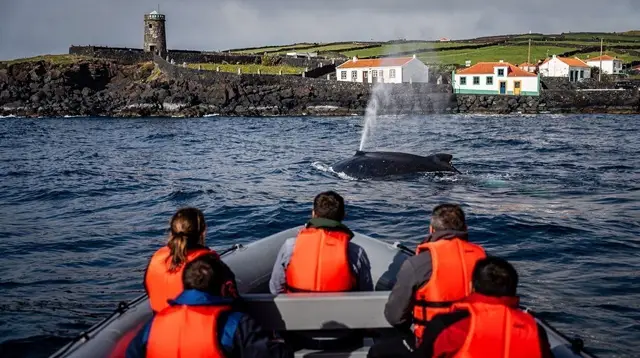
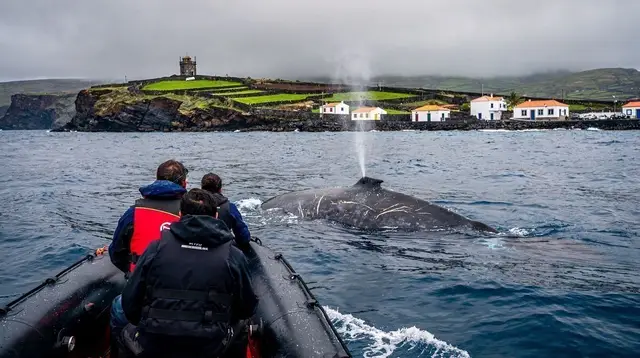
Spring (March to May) is when the Azores' resident sperm whales and dolphins are joined by migrating blue, fin and sei whales passing through the archipelago, while the islands turn green again after the wet winter months. Hydrangeas are not yet in bloom — that display only starts in summer — and Atlantic weather stays changeable, so layers and a rain jacket matter more than sunscreen. It's a strong season for boat trips, hiking and lighter crowds before the July–August peak.
Spring in the Azores sits in an awkward but rewarding gap: too early for hydrangeas, too early for the summer crowds, and right in the middle of the best window for spotting whales that most visitors never think to ask about. If you’re choosing between a spring and a summer trip, the difference isn’t really about weather charts — it’s about what’s moving through the water and what’s growing on the hillsides while you’re there.
A Season Between Storms and Hortensias
March, April and May in the Azores are transitional months. The islands are shaking off a wet winter, the pastures and hillsides are at their most intensely green, and the archipelago’s volcanic landscape — craters, fajãs, currais — looks freshly washed rather than dusty or dry. At the same time, none of the postcard hydrangea hedges are in flower yet; those start appearing from around June and peak in July and August, so a spring visitor sees the plants as green foliage, not the blue and pink corridors that dominate Azorean marketing photos. If flowering hedgerows are the main draw for your trip, spring is the wrong season — check the hydrangea season guide before booking dates.
What spring does offer, and offers well, is water. The seas around the nine islands carry more marine traffic in these months than at almost any other point in the year, thanks to a wave of large whales passing through on migration, layered on top of species that live in Azorean waters permanently. That’s the heart of what makes spring worth considering on its own terms, rather than as a compromise between winter and summer.
The Whale-Watching Window: Residents Plus Passing Giants
The Azores are unusual among whale-watching destinations because they combine two very different kinds of sightings. Sperm whales, common dolphins and bottlenose dolphins are resident, which means they can be encountered across much of the year, spring included. Spring’s distinguishing feature is what gets added on top: blue whales, fin whales and sei whales migrating north, generally most active in the spring months before tapering off later in the year.
This is a meaningful difference from what a summer visitor experiences. By the time hydrangeas are blooming in July and August, most of those migrating giants have already moved on, leaving the resident sperm whales and dolphins as the main event. A spring trip is the more realistic window for a chance — never a guarantee — at seeing a blue or fin whale, animals that dwarf the sperm whales the islands are historically associated with.
None of this comes with a promised sighting. Local operators quote high success rates across the year as a whole, but no operator can promise a specific species on a specific day, and the ocean doesn’t run on a fixed timetable. What spring changes is the mix of what’s possible, not the certainty of seeing it. For the full breakdown of which species show up when across the whole year, the dedicated whale-watching and whale season guides go deeper than this page needs to.
Deciding which island to base a whale-focused spring trip around is its own question — the best island for whale watching guide and the head-to-head Pico vs Faial comparison both cover the trade-offs between São Miguel’s easier logistics and the deeper whaling tradition around the Pico–Faial channel.
Boat trips from São Miguel are the most frequently run, but the tradition runs deepest on a full day exploring Pico, historically the epicentre of Azorean whaling and now the base for much of the region’s whale-watching fleet. Old shore-based lookout posts, the vigias once used to spot the spouts of sperm whales, still overlook the channel between Pico and Faial and are part of what makes this stretch of water special beyond the animals themselves.
For a lower-key way to be on the water at the point when light and wildlife activity often overlap, a sunset boat tour is a gentler alternative to a full whale-watching excursion, particularly on an early-spring evening when a dedicated trip might be cancelled for sea conditions.
Spring’s cooler Atlantic also shapes what’s realistic underwater. Anyone weighing a diving trip or a gentler snorkelling outing this early in the year should plan around a wetsuit rather than the swimwear-only conditions of high summer — the water hasn’t caught up with the season yet, even on a warm, sunny day on land.
From Grey to Green: The Islands Waking Up
Away from the water, spring is when the Azores’ volcanic landscape looks its most vivid. Winter rain saturates the soil, and by March the pastures that cover much of São Miguel, Terceira and Pico are a deep, almost artificial-looking green — the same green that gives the archipelago its reputation as “the green islands” rather than a beach destination. Crater lakes fill, waterfalls run fuller, and hiking trails that can bake dry and dusty by August are softer underfoot and noticeably quieter.
This is a good season for trail time. São Miguel’s crater walks, the coastal and crest paths of São Jorge, and the network of routes across Pico and Faial are all easier to book guides and transport for outside peak months. The general overview in the best hikes in the Azores guide is a reasonable starting point if trails, rather than water, are your main interest this trip, and the island-specific São Miguel hiking trails guide narrows that down further for anyone based there.
Pico’s vineyard landscape is another spring highlight worth building time around. The UNESCO-listed currais — small plots walled in black lava stone to shelter vines from salt wind — look different depending on the season, and spring’s clearer, rain-washed light before the vines fill out in summer is a favourite time for photographers.
The pico wine and UNESCO vineyards guide covers the currais and the wine itself in more depth than fits here, and a half-day tour built around a coasteering session near Caloura, on the Caloura coastline, is one way to combine the island’s volcanic scenery with a physical, in-the-water alternative to a straightforward boat trip.
If your interest runs toward the working side of the islands rather than only scenery, spring pastures are also when Azorean dairy farming is easiest to see in action, and a short half-day dairy farm visit is a low-effort way to fit that into a São Miguel itinerary.
Hortensias? Not Yet — Setting Spring Expectations Right
It’s worth repeating plainly, because it’s the single most common mismatch between what people expect from Azores photos and what a spring trip actually delivers: the hydrangea hedges that line so many roads in Azores marketing images are a summer phenomenon, not a spring one. Flowering generally begins around June, builds through July, and peaks in August, with a gradual fade toward the end of summer. A traveller arriving in March, April or even most of May will see the shrubs themselves — often planted in dense hedgerows along country roads and around fields — but green, not in bloom.
This isn’t a reason to avoid spring. It’s a reason to be clear about what you’re trading. Spring gives you the whale migration, the greenest landscapes of the year, quieter trails and generally easier availability than summer; it does not give you the flowering hedges. If hydrangeas in bloom are non-negotiable for your trip, the hydrangea season guide linked above lays out the realistic window, and it isn’t spring. If you’re still weighing spring against summer more broadly, the best time to visit the Azores guide and the companion azores in summer page cover the trade-offs beyond just flowers and whales.
Weather in Spring: Four Seasons in One Day, Still
The Azores don’t have a dry season in the way the Canary Islands or Madeira do, and spring doesn’t change that. What it does is soften the extremes of winter without yet reaching the more settled stretch of high summer. Rain remains a real possibility on any given day, cloud cover is common, and the well-worn local description of “four seasons in one day” — sun, cloud, rain and sun again within a few hours — still applies through March, April and May as much as at any other point in the year.
Practically, this means packing layers rather than committing your whole spring itinerary to outdoor plans with no fallback. A promising forecast in the morning is not a guarantee for the afternoon. For day-by-day planning across the full year rather than the spring-specific overview given here, the azores weather month-by-month guide is the more detailed reference; this page is deliberately about what spring changes for wildlife and landscape, not a substitute for that month-by-month detail.
Sea conditions also matter more in spring than they will by midsummer. Boat trips — whale-watching included — are more likely to be affected by wind and swell in March and April than in July, which is one more reason operators build flexibility into multi-day bookings rather than fixing a single outing in stone.
Spring at a Glance
| March | April | May | |
|---|---|---|---|
| Whale activity | Resident species plus early migrating rorquals | Peak window for migrating blue, fin and sei whales | Migration tapering as summer approaches |
| Landscape | Deep green after winter rain, waterfalls full | Greenest month on most islands | Still green, drying slightly by late May |
| Hydrangeas | Foliage only, no flowers | Foliage only, no flowers | Foliage only, first buds possible late in the month |
| Sea and boat trips | More weather-dependent, more cancellations possible | Improving conditions, still variable | Generally calmer, closer to early-summer conditions |
| Crowds and prices | Quietest of the three months | Quiet, rising toward Easter periods | Building gradually ahead of summer |
Treat this as a general shape of the season, not a fixed forecast — Atlantic weather in the Azores resists exact prediction even a few days out, let alone months in advance.
Planning a Spring Trip: Practical Notes
A rental car remains close to essential for exploring any island beyond its main town, spring included, since inter-village public transport is limited and each island’s rental market is separate from the others — see the car rental in the Azores guide before booking, and the driving in the Azores guide for what the roads themselves are like. Roads that wind along cliffs and crater rims can turn foggy quickly at altitude in spring, exactly as in other seasons, so unhurried driving and a readiness to pull over in poor visibility matter more than in clear midsummer conditions.
Inter-island logistics are also worth building around realistically rather than optimistically. The Pico–Faial ferry link runs year-round and is the most dependable way to combine those two islands with São Jorge in the same trip. Wider ferry networks covering the rest of the central group, and especially the western islands of Flores and Corvo, are far less reliable outside the summer season and can be disrupted by spring swell for days at a time — plan flexible dates if your itinerary depends on reaching them, and check current schedules through the inter-island ferries guide rather than assuming a summer timetable applies in March or April.
Pack for genuine temperature swings and wet weather rather than a beach holiday: a proper rain layer, sturdy footwear for both trails and cobbled town streets, and warmer layers for boat trips, where wind chill on open water is sharper than it feels on land. The Azores packing list guide covers this in more detail than fits here.
For travellers building a longer trip specifically around wildlife, a structured itinerary such as the Azores whale-watching trip plan can help sequence islands so that boat days and hiking days aren’t competing for the same weather window. And if a rainy spring afternoon forces a change of plan, an evening visit to Furnas’ hot springs is one of the more reliable indoor-adjacent alternatives on São Miguel, since a soak in warm mineral water works just as well under cloud as under clear sky — the Azores hot springs guide covers the other thermal spots worth knowing about beyond Furnas itself.
Choosing a Base Island for a Spring Trip
Spring’s mix of migrating whales, quiet trails and unreliable ferries makes the choice of base island more consequential than it is in midsummer, when almost everything is running. São Miguel remains the default first stop: it has the archipelago’s main airport, the widest spread of tour operators, and enough on one island — Sete Cidades, Furnas, the Lagoa do Fogo — to fill several days without depending on a ferry at all. The São Miguel in 5 days itinerary is a reasonable template for a spring visit built around that single island.
For travellers who want the deeper whaling history and the currais landscape alongside the boat trips, pairing Pico with Faial works especially well in spring precisely because the ferry between them runs year-round, unlike the links out to São Jorge or the western islands. The Pico and Faial in 5 days itinerary sequences that pairing in more detail. Anyone still undecided between building a trip around one island or hopping between several should start with the which Azores island to visit guide and the how many days in the Azores guide, both of which apply just as much to a spring itinerary as to any other season.
Spring in the Azores rewards travellers who come for the ocean and the landscape rather than the flowers. It’s the season when the archipelago’s whale population is at its most varied, its hillsides at their greenest, and its trails and boats at their least crowded before summer arrives — trade-offs worth knowing before you book, not after.
Seasonal experiences on GetYourGuide
Verified deep-linked GetYourGuide tours. Book through these links and we earn a small commission at no cost to you.
GetYourGuide does not provide a product photo for this activity — the image shows the meeting point, photographed by us.