Snorkelling in the Azores: Volcanic Pools and Vila Franca do Campo
Is snorkelling in the Azores worth it, and where should I go?
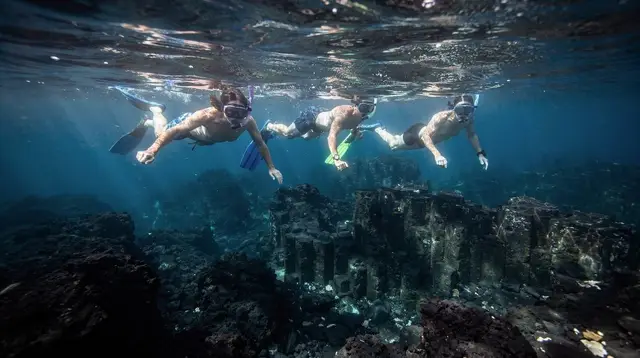
Yes, particularly around the crater islet of Vila Franca do Campo and the archipelago's natural volcanic pools, but temper your expectations: the water is cool rather than tropical, and the seabed is black volcanic rock and boulders, not a coral reef.
What snorkelling in the Azores actually looks like
The Azores are not the Caribbean, and the most useful thing this guide can do is say that plainly before you pack a swimsuit and nothing else. These nine islands are pure volcanic rock rising from the middle of the North Atlantic, roughly 1,500 km from Lisbon, and everything about the underwater experience follows from that one fact: the water stays cool year-round, there is no coral, and the seabed is black basalt, boulders and lava formations rather than a bright reef.
What you get instead is something quieter and more specific — clear, cold-clean Atlantic water over dramatic volcanic terrain, sheltered natural pools carved into the coastline, and one genuinely excellent, boat-accessible snorkelling site off São Miguel: the crater islet of Vila Franca do Campo.
This page is deliberately narrow. It covers snorkelling with a mask, snorkel and fins at or near the surface — not scuba diving with tanks (see diving in the Azores for that, or the advanced offshore site at Princess Alice Bank for experienced divers only). It also isn’t a general tour of every natural swimming pool in the archipelago, nor a beach-by-beach rundown (best beaches in the Azores covers that ground). Think of this as the practical answer to one question: if I want a lighter, no-tank water activity in the Azores, where do I go, what will I see, and what should I actually pack.
Vila Franca do Campo: the archipelago’s best-known snorkelling spot
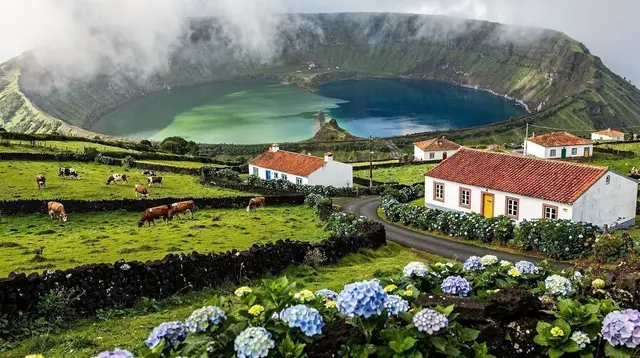
If you ask any local operator on São Miguel where to snorkel, the answer usually starts with the same place: the islet of Vila Franca do Campo, a short distance off the south coast near the town of the same name. It’s the flooded remnant of an old volcanic crater — a near-circular ring of rock enclosing a calmer, partly sheltered lagoon, which is exactly the kind of geometry that makes for approachable snorkelling in an otherwise open, often choppy ocean.
Access is seasonal and boat-only: small boats shuttle visitors out from the marina in summer, and the islet itself is a protected nature reserve, so landing and swimming rules are set locally and can change with sea conditions on the day. Inside the ring, expect rocky ledges, small caves and gullies at a few metres’ depth, decent visibility on a calm day, and a reasonable chance of small fish shoals moving along the rock walls. It’s not a deep or technical site — that’s the appeal — but it is genuinely open Atlantic water, so a guided or accompanied visit is the sensible default rather than an independent swim from shore.
Beyond Vila Franca do Campo, snorkelling on São Miguel also happens informally around sheltered coves near Caloura and Ribeira Grande, and at some of the island’s natural pools when the swell is low enough. None of these are as purpose-built for snorkelling as Vila Franca do Campo, but they’re worth asking about locally if you’re staying nearby and want to fit in a short swim between other plans.
Water temperature: what “cool Atlantic” means month by month
The single biggest misconception first-timers bring to the Azores is expecting Canary Islands or Mediterranean water temperatures. The Gulf Stream does moderate the climate here, avoiding the sharp swings of true open ocean, but it does not make the Azores warm in a tropical sense. Sea temperatures move gently across the year rather than dramatically, and even at their August peak they sit well below what most snorkellers associate with reef destinations.
| Season | Approximate sea feel | What most people wear |
|---|---|---|
| Winter (Dec–Feb) | Coldest of the year | Full wetsuit; short swims only |
| Spring (Mar–May) | Still cool, slowly warming | Full or long wetsuit |
| Summer (Jun–Sep) | Warmest of the year, but still cool by tropical standards | Shorty wetsuit or rash guard for most people |
| Autumn (Oct–Nov) | Cooling again | Full wetsuit recommended |
Treat these as rough seasonal patterns, not guaranteed figures — the Azores’ own weather proverb, “four seasons in one day,” applies to the sea as much as the sky, and a windy front can make the water feel noticeably colder than the calendar suggests. For a fuller month-by-month picture of what to expect on land and at sea, see Azores weather month by month and best time to visit the Azores.
No coral, and why that’s not a downgrade
It’s worth saying twice, because it’s the expectation most likely to disappoint an unprepared visitor: there is no coral reef anywhere in the Azores. The islands sit on the junction of three tectonic plates and are volcanic through and through, in cool temperate Atlantic water far outside the range where reef-building coral grows. What replaces it underwater is a landscape built the same way the islands themselves were — black basalt walls, boulder fields, swim-throughs and small caves, colonised over time by anemones, sponges, algae and a resident cast of temperate-water fish rather than the tropical rainbow species divers see in the Red Sea or the Caribbean.
For many visitors this turns out to be its own reward rather than a compromise: fewer crowds in the water, a genuinely wild and geologically dramatic setting, and marine life that feels specific to this ocean rather than imported scenery. If your priority is colour and coral above all else, the Azores simply isn’t that trip — and it’s worth being upfront about that rather than overselling a comparison to Madeira or the Canary Islands, both of which sit in warmer water and are sometimes wrongly assumed to offer the same underwater conditions as the Azores.
Gear rental: you don’t need to pack your own
Because most visitors aren’t travelling with a dive bag, gear rental is the norm rather than the exception. Dive centres and watersports operators based in Ponta Delgada and along the São Miguel coast, plus similar outfits on Terceira, Pico and Faial, rent masks, snorkels, fins and wetsuits by the half-day or full day. Boat trips to Vila Franca do Campo commonly bundle gear into the price, which is the simplest option if you’re short on time or luggage space.
A few practical notes worth knowing before you book:
- A wetsuit, even a thin one, makes a bigger difference to comfort here than in a tropical destination — don’t skip it to save a few euros.
- Prescription masks are rarely stocked locally in a wide range, so bring your own if you rely on one.
- Booking ahead in July and August is sensible, since boat capacity to Vila Franca do Campo is limited and weather-dependent departures can bunch up demand on the next clear day.
- If a coasteering or boat tour is more your speed than pure snorkelling, several operators combine cliff-jumping, swimming and exploring the coastline by water — worth considering as a complementary activity rather than a substitute.
this coasteering trip along São Miguel’s coastline mixes swimming, cliff jumps and sea caves for travellers who want more movement than still snorkelling but nothing as involved as scuba. It’s a useful option on a day when the swell makes Vila Franca do Campo’s boat crossing borderline, since coasteering routes are chosen for shelter on the day.
Getting there and building it into a wider day out
Vila Franca do Campo sits a short drive from Ponta Delgada, making it an easy half-day addition to a São Miguel itinerary rather than a trip that needs its own dedicated day. Many visitors pair a morning snorkel at the islet with an afternoon exploring the town itself, or fold it into a longer loop that also takes in Furnas or the Lagoa do Fogo crater lake — see São Miguel in 3 days for how that kind of day tends to be sequenced.
If you’d rather see the coastline from the water without getting in it first, a sunset run is a good low-effort way to scope out conditions and decide whether the next day looks right for snorkelling.
this evening boat tour along the São Miguel coast is a gentle, no-gear-required way to see the same shoreline from the water, and operators are often a good source of same-week advice on where conditions look calmest for snorkelling.
For visitors who want to combine a coastal boat outing with one of the Azores’ more distinctive claims to fame — being among the last places in mainland Europe’s time zones to see the sun set — there’s also a themed option worth flagging.
this “Last Sunset of Europe” boat excursion runs from São Miguel and, while not a snorkelling trip itself, is a popular way to end a beach-and-water day without needing a second full outing.
Snorkelling with kids and less confident swimmers
Vila Franca do Campo’s sheltered lagoon is the most forgiving option in the archipelago for families and less experienced swimmers, precisely because the crater ring cuts down on open-ocean swell that would otherwise make snorkelling here more demanding. That said, “sheltered” is relative in the North Atlantic, not an absolute guarantee of calm water, and conditions on the day should always be checked with the boat operator before children go in unsupervised. A properly fitted wetsuit matters even more for kids, both for warmth and confidence in the water.
For a broader view of what else works well with children across the islands, see Azores with kids and family-friendly activities in the Azores, both of which cover a wider range of gentler, family-paced options beyond the water.
Snorkelling versus other water activities in the Azores
It’s easy to conflate snorkelling with the archipelago’s other well-known water activities, so here’s a quick comparison to help decide what actually matches what you want from the day.
| Activity | Depth / equipment | Best for | Not covered here |
|---|---|---|---|
| Snorkelling | Surface, mask/snorkel/fins | Light, low-commitment water time, families | Bottle diving, deep sites |
| Scuba diving | Tank, certified or guided | Divers wanting depth and marine life beyond the surface | See diving in the Azores |
| Coasteering | Wetsuit, no tank, cliff jumps | Active swimmers wanting movement and adrenaline | Still, calm snorkelling |
| Natural pool swimming | No mask needed | Relaxed swimming in volcanic rock pools | Dedicated marine sightseeing |
If deeper water and marine encounters beyond what a snorkel allows are the goal, diving in the Azores is the better starting point, and confident, certified divers chasing something more specialised can look at Princess Alice Bank, an offshore site well beyond snorkelling range and not something to attempt without proper certification and a dive operator.
Practical checklist before you go
A short list to run through before booking a snorkelling day in the Azores:
- Check the day’s sea conditions with your operator — the Azores’ fast-changing weather can turn a calm morning choppy by afternoon.
- Rent a wetsuit even in August; the water is cooler than most snorkellers expect from a subtropical-looking archipelago.
- Book Vila Franca do Campo boat crossings ahead in July and August, when demand for limited departures peaks.
- Bring your own prescription mask if you need one — local rental stock skews standard.
- Don’t expect coral or tropical colour; expect volcanic rock, caves and a genuinely wild Atlantic seabed instead.
- If the swell rules out snorkelling on a given day, a coasteering trip or an evening boat tour are reasonable, weather-flexible alternatives.
- If you’re building a longer stay around watersports generally, browse the full diving and snorkelling category and things to do on São Miguel for other options that pair well with a snorkelling morning.
For travellers weighing up whether to spend a full trip in the water versus splitting time between islands, Azores boat tours and car rental in the Azores are useful next reads — a rental car makes it far easier to reach Vila Franca do Campo’s departure point on your own schedule rather than relying solely on organised transfers.
Snorkelling in the Azores: frequently asked questions
Do I need a wetsuit to snorkel in the Azores?
Most people are noticeably more comfortable with at least a shorty wetsuit or a thick rash guard, even in the warmest summer months, because Azorean sea temperatures stay well below tropical norms year-round. Full wetsuits are the norm outside summer.
Is Vila Franca do Campo good for snorkelling?
Yes — it’s the archipelago’s most accessible dedicated snorkelling spot: a flooded volcanic crater islet off São Miguel, with a partly sheltered lagoon reached by a short seasonal boat shuttle from the mainland shore.
What will I actually see snorkelling in the Azores?
Volcanic rock walls, boulder fields, small caves and gullies, plus resident temperate-water marine life such as anemones, sponges and fish shoals — a rocky, moody underwater landscape rather than a coral garden.
Can I rent snorkelling gear on the islands?
Yes. Dive centres and watersports operators on São Miguel and several other islands rent masks, snorkels, fins and wetsuits by the half or full day, and many Vila Franca do Campo boat trips include gear in the price.
Is snorkelling in the Azores safe for kids?
It can be, particularly in sheltered spots like Vila Franca do Campo’s lagoon and with a properly fitted wetsuit, but conditions shift quickly in the North Atlantic — always confirm with the boat operator before letting children swim unsupervised.
What is the best time of year for snorkelling in the Azores?
Late June through September brings the calmest seas and the least-cool water of the year, though the Azores’ famously fast-changing weather means it’s worth staying flexible rather than fixing a single date months in advance.
Is there coral in the Azores?
No. The archipelago is entirely volcanic and sits in cool temperate Atlantic waters, so there are no coral reefs here — the underwater terrain is basalt rock, boulders and lava formations instead.
How does snorkelling compare to diving in the Azores?
Snorkelling stays at the surface with just a mask, snorkel and fins, while diving uses tanks to reach greater depths and see more of the marine life along volcanic walls and caves — see diving in the Azores for what that adds.
tours.diving-snorkeling
Verified deep-linked GetYourGuide tours. Book through these links and we earn a small commission at no cost to you.
GetYourGuide does not provide a product photo for this activity — the image shows the meeting point, photographed by us.