Best Natural Swimming Pools in the Azores
Are the Azores' natural swimming pools warm?
No, not as a rule. Most are cool Atlantic seawater trapped in volcanic rock, exposed to real swell. Only Ponta da Ferraria on São Miguel gets a geothermal boost, and only for a window around low tide — everywhere else, including the lava pools at Biscoitos and São Jorge's fajãs, expect bracing, unheated ocean water.
Every Azorean island touches the same Atlantic, but the water that pools along its volcanic edges behaves very differently from one coastline to the next. Some pockets are genuinely warm, thanks to the same geology that heats São Miguel’s hot springs. Most are not — they are simply seawater held still by lava rock, cold, clear and occasionally rough. Anyone island-hopping through the archipelago and trying to decide where to actually get in the water needs a way to compare sites, not a single postcard image of a turquoise lagoon.
Not Every Piscina Natural Is the Same
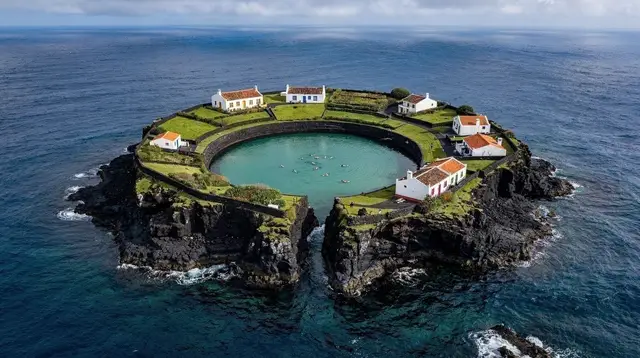
In Portuguese, these sites are usually called piscinas naturais — natural pools — and the term covers a wide range of conditions. A pool can be a fully enclosed basin protected by a natural or partly built rock wall, or it can be an open inlet where the ocean simply surges in and out with the swell. It can sit right at sea level, exposed to whatever the Atlantic is doing that day, or it can be a semi-sheltered channel that only fills at high tide. None of that is visible from a single photo, which is exactly why so many visitors arrive expecting a calm, warm lagoon and find something closer to a cold, splashy rock pool instead.
This guide focuses on the handful of areas that come up again and again when people ask where to swim on a multi-island trip: Ponta da Ferraria on São Miguel, the lava pools of Biscoitos on Terceira, and the pools built into the fajãs of São Jorge.
It does not repeat the site-level detail already covered on the destination pages for Caloura or Mosteiros, it leaves sand beaches to our separate guide to the Azores’ best beaches, and it leaves inland thermal pools like Terra Nostra to the dedicated hot springs guide. What follows instead is the comparison a traveller actually needs before deciding where to spend a swimming afternoon.
São Miguel: Ponta da Ferraria’s Tide-Timed Warm Water
Ponta da Ferraria sits at the western tip of São Miguel, close to Mosteiros, where a natural hot spring meets the open sea. This is the one site in this guide where the “warm natural pool” image genuinely applies — but with an important condition attached. The geothermal water only mixes noticeably with the sea around low tide, when a rocky basin traps the warm outflow before the incoming tide dilutes and eventually swallows it again. Arrive at the wrong point in the tidal cycle and the pool feels like any other stretch of Atlantic coastline: cool, open, and moved by swell.
Because the effect is tide-dependent, checking a tide table before setting out matters more here than at almost any other swimming spot in the archipelago. It is also worth knowing that this is a natural, unsupervised site with uneven volcanic rock underfoot, not a maintained facility — sturdy water shoes make a real difference. São Miguel has several other coastal swimming spots worth knowing about even if they are not geothermal, including sheltered inlets near Caloura and additional access points around Mosteiros itself; treat those as reliably cool, scenic swims rather than warm-water bonuses.
Anyone building a base around Ponta Delgada can pair a Ponta da Ferraria visit with a broader look at the west of the island, and a short sunset boat trip along São Miguel’s south coast is a good way to see several of these coastal pools from the water before deciding which one to prioritise on foot.
Terceira: The Lava Pools of Biscoitos
On the north coast of Terceira, the Biscoitos area is built almost entirely on solidified lava flows, and its natural swimming zone reflects that directly. Instead of one single pool, Biscoitos is a stretch of interconnected rock basins carved and shaped over centuries by the sea, with some sections left in their raw volcanic state and others fitted with walkways, ladders or low retaining walls to make entry and exit manageable. This is unheated Atlantic water throughout — there is no geothermal component at Biscoitos — but the layout of the rock does a good job of breaking incoming swell before it reaches the calmer inner pools.
That combination of natural shelter and light infrastructure makes Biscoitos one of the more approachable natural-pool areas in the archipelago for a wider range of swimmers, from confident adults to reasonably careful families, provided conditions are checked on the day rather than assumed. The same lava terrain that shapes the pools also shapes the island’s famous vineyards nearby, so a Biscoitos swim pairs naturally with a slower look at the rest of Terceira, including Angra do Heroísmo.
Travellers looking to round out a Terceira day on the water sometimes add a boat trip that combines dolphin watching with open-water swimming stops, which is a different kind of swim entirely — open ocean rather than a sheltered pool — but a useful complement for the same day.
São Jorge: Swimming Pools Built Into the Fajãs
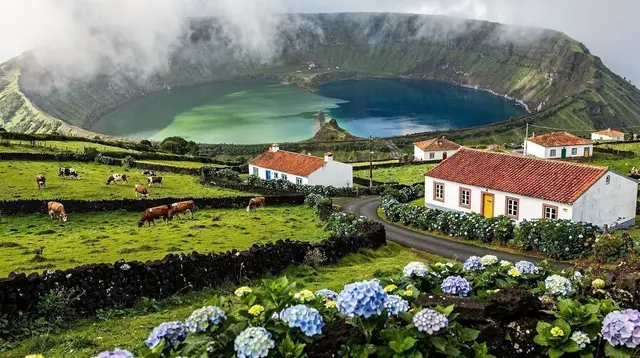
São Jorge approaches the idea of a natural pool from a different angle again. The island’s fajãs — the flat coastal platforms formed by old lava flows or landslides at the base of its cliffs — are where most of the swimmable pools sit, usually reached by a walk down from the cliff road above rather than a direct drive to the water’s edge. Because these pools face the open Atlantic without much in the way of an offshore reef or headland to break the swell, exposure varies enormously by exact location and by the day’s sea state; a fajã that is glassy calm one morning can be closed out by breaking waves that same afternoon.
This is also the area where the trade-off between remoteness and infrastructure is starkest. Some fajã pools have basic amenities nearby, but many do not, and the appeal is precisely that isolated, elemental feel rather than a managed swimming facility.
Anyone planning to combine a swim with the walk down deserves to read the terrain properly first — our guide to hiking São Jorge’s fajãs covers the access routes, gradient and timing in more detail than belongs here. Base towns like Velas and Calheta both sit within reach of different fajã access points, so which one makes sense depends on where you are staying on the island.
Other Islands, Fewer Pools, More Boats
Not every island in the archipelago is built around natural swimming pools in the same way, and it is worth saying so plainly rather than stretching the theme where it does not fit. Faial’s coastline near Capelinhos is dramatic but shaped by a comparatively recent volcanic eruption rather than by long-settled pools, and much of the island’s water-based appeal centres on the marina at Horta and boat-based activity rather than rock-pool swimming.
For travellers who want an in-water experience on Faial beyond a natural pool, a supervised open-water swim with sharks off Horta is a very different but genuinely popular option, aimed at confident swimmers rather than families with young children.
Pico, Flores, Corvo, Graciosa and Santa Maria all have their own coastal swimming spots, but they tend to be scattered, less developed and more dependent on local knowledge than the three areas above. That is not a reason to skip them if you are already on one of those islands — it is a reason to ask locally rather than to plan a whole day around a single named pool the way you reasonably can at Ponta da Ferraria or Biscoitos.
What Actually Makes One Natural Pool Better Than Another
Three factors decide whether a given piscina natural is worth prioritising on a given day, and they matter far more than how the site photographs online.
| Factor | Why it matters |
|---|---|
| Water temperature | Only geothermally influenced sites like Ponta da Ferraria get noticeably warmer than the surrounding ocean, and even then only around low tide. Everywhere else, temperature tracks the Atlantic itself. |
| Swell exposure | Open inlets facing the ocean directly can go from calm to dangerous within an hour as swell builds. Pools shielded by rock walls, breakwaters or a partly enclosed basin, like sections of Biscoitos, stay usable in a wider range of conditions. |
| Facilities | Ladders, walkways, changing areas and marked entry points reduce the real risk of slipping on wet lava rock, which is the most common way a natural-pool visit actually goes wrong. |
None of these factors is fixed. The same pool can be glassy and welcoming in the morning and closed out by breaking waves after a weather front moves through — a pattern common enough in the Azores that it has its own local saying about four seasons in one day. Treat every one of these sites as conditions-dependent, and check the forecast on the morning of your visit rather than relying on what a guidebook says in general terms.
Comparing the Main Natural Pool Areas at a Glance
| Area | Island | Typical water | Swell exposure | Access |
|---|---|---|---|---|
| Ponta da Ferraria | São Miguel | Warm at low tide only, otherwise cool | Moderate, tide-dependent | Roadside, short walk to the rocks |
| Biscoitos | Terceira | Cool, unheated Atlantic | Lower — partly sheltered basins with light infrastructure | Roadside, walkways and ladders on site |
| Fajã pools | São Jorge | Cool, unheated Atlantic | Higher — open coastline, variable by exact spot | Walk or drive down from the cliff road |
| Faial coastal spots | Faial | Cool, unheated Atlantic | Higher, volcanic and exposed near Capelinhos | Mostly boat-based swimming rather than fixed pools |
When to Go and How to Check Conditions
Because none of these pools come with lifeguards or daily condition reports the way a managed beach might, the responsibility for judging the day falls on the visitor. A calm morning is not a guarantee for the afternoon, and a pool that a local swims in comfortably twice a week can look completely different after two days of onshore wind.
Building in flexibility — a plan B island destination or an indoor activity for the same day — is more useful than fixating on a single site regardless of conditions. Our broader look at Azores weather month by month and the best-time-to-visit tool both help with the seasonal picture, but day-to-day sea state still needs a same-day check locally.
Practical Tips Before You Get in the Water
A short checklist covers most of what actually goes wrong at these sites: water shoes for sharp, uneven lava rock; a towel and dry layer for afterwards, since the air can feel cool even on a warm day once you are wet; and a car, since almost none of these pools sit within easy walking distance of public transport — our car rental guide covers what to expect island by island.
It is also worth building a swim into a wider day rather than treating it as the whole plan: a morning at Biscoitos pairs naturally with an afternoon exploring the rest of Terceira, and a swim near Ponta Delgada can be combined with a look at a guided visit to Praia do Pópulo and the nearby coastline for those who want sand as well as rock.
For a more active way to experience the same volcanic coastline that shapes these pools, a guided coasteering session combining cliff-edge scrambling with sea swimming covers ground that a still swim in a single pool never will, and it comes with the safety margin of a certified guide reading the swell for you.
Frequently Asked Questions About the Azores’ Natural Swimming Pools
Are the Azores’ natural swimming pools warm all year?
No. Only Ponta da Ferraria on São Miguel gets a geothermal boost, and only for an hour or two around low tide. Everywhere else — Biscoitos, the fajãs of São Jorge, the coves near Ponta Delgada — the water is regular, cool Atlantic seawater regardless of season.
Which island has the best natural swimming pools?
São Miguel and Terceira have the most accessible and developed sites — Ponta da Ferraria and the Biscoitos pools respectively — while São Jorge’s fajãs offer a wilder, more remote experience that usually involves a walk or a drive down a steep access road.
Are the natural pools safe for children?
Some are, but judge each site on its own terms. Sheltered, walled pools like the ones at Biscoitos are calmer than open lava inlets facing the open Atlantic, which can turn rough within minutes once swell picks up.
Do I need to pay to use the natural pools?
Most volcanic rock pools are free, unstaffed public access points. A handful of complexes, such as parts of Biscoitos, add basic infrastructure like ladders, walkways or a small parking area, occasionally with a modest charge.
What should I bring to swim in an Azorean natural pool?
Water shoes for sharp lava rock, reef-safe sunscreen, and a lightweight towel. Also bring flexibility: swell and weather can make a site unsafe with little warning, so always have a backup plan for the day.
Is summer the best time to swim in the Azores?
Summer brings calmer seas and warmer air, which makes it the easiest season for natural pools. The water itself stays cool year-round outside geothermal spots, so pack a plan for cold water even in July and August.
What is the difference between a piscina natural and a fajã pool?
A piscina natural is any sea-fed pool trapped in volcanic rock along a coastline. A fajã pool is the same idea but sits on one of São Jorge’s flat coastal platforms, formed by old lava flows or landslides, often below a steep cliff road.
tours.beaches-natural-pools
Verified deep-linked GetYourGuide tours. Book through these links and we earn a small commission at no cost to you.
GetYourGuide does not provide a product photo for this activity — the image shows the meeting point, photographed by us.