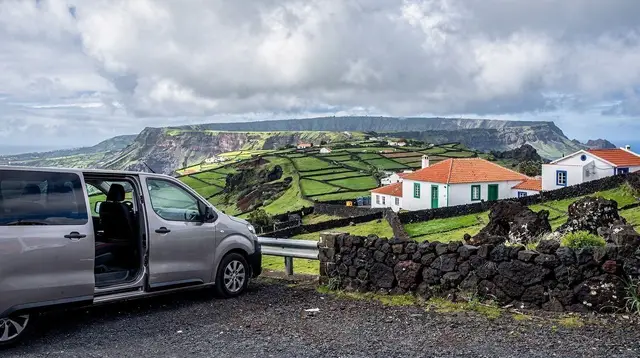
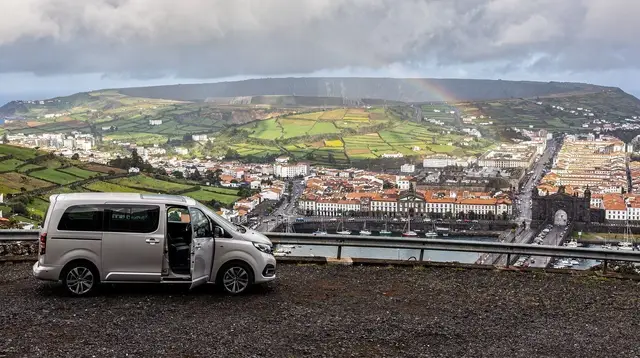
Which Azores Island Should You Visit First?
Which Azores island should a first-time visitor choose?
São Miguel is the easiest starting point, with the widest flight choice and the broadest single-island itinerary. But Terceira and Pico each hold things São Miguel does not have — UNESCO wine country, lava caves, a proper mountain summit — so the right pick still depends on trip length, budget, and whether hiking or thermal relaxing is the priority.
Nine islands, three groups, and no single “best” one — that is the part of Azores planning that stalls most first-time visitors before they have even looked at flights. Unlike a single-destination trip, choosing where to land here also decides what you will and will not see, because the islands do not repeat each other’s landscapes. This guide is for the moment before you have booked anything: a plain look at all nine islands, one honest sentence each, and the practical questions that actually narrow the list.
Nine islands, one sentence each
The Azores split into three groups by geography and, in practice, by how easy each is to reach. The eastern group is the arrival point for almost everyone; the central group is where most multi-island trips expand into; the western group is the one to save for later.
| Group | Islands | Access from mainland Europe |
|---|---|---|
| Eastern | São Miguel, Santa Maria | Direct flights, wide choice |
| Central | Terceira, Pico, Faial, São Jorge, Graciosa | Terceira has regular direct flights; the rest connect via São Miguel or Terceira |
| Western | Flores, Corvo | Connections only, most weather-sensitive links in the archipelago |
Here is each island in one line, plus what it is genuinely best suited for on a first trip:
| Island | In one sentence | Best for |
|---|---|---|
| São Miguel | The largest, most developed island, with crater lakes, hot springs, and a real capital city | A complete first trip on its own, or a base for a longer one |
| Terceira | A UNESCO World Heritage town, a walk-in volcanic chamber, and lava-planted vineyards | History and easy direct-flight access beyond São Miguel |
| Pico | Portugal’s highest mountain and a UNESCO wine landscape built from stone-walled lava plots | Serious hikers and wine travelers |
| Faial | A yachting marina town scarred by a 1957 volcanic eruption on its western tip | Sailing culture and one of the youngest landscapes in Europe |
| São Jorge | The island of the fajãs, coastal shelves formed by lava flows and landslides | Dedicated hikers and cheese lovers |
| Flores | Waterfalls and crater lakes on a UNESCO biosphere reserve at the archipelago’s western edge | Travelers with flexible dates and a taste for the remote |
| Corvo | The smallest inhabited island, essentially one crater and one village | A day trip add-on to Flores, not a standalone base |
| Santa Maria | The oldest and driest island, with sandy beaches and a Columbus-era harbor | Sun-seekers who still want an Azorean landscape |
| Graciosa | A small biosphere-reserve island holding Europe’s largest known volcanic cave | Travelers already comfortable arranging things without pre-booked tours |
That table already rules a few things out for most first-timers: Corvo is not a base, it is a side trip from Flores; Graciosa currently has no bookable activities listed on major tour platforms, so it suits a more improvised traveler rather than someone hoping to pre-book excursions.
The São Miguel trap
São Miguel deserves its reputation. It has the twin lakes of Sete Cidades, the thermal valley of Furnas, the Gorreana tea plantation, and enough restaurants, roads, and accommodation options that a first-time visitor never feels stranded. For a one-island trip, it genuinely covers more ground than any other Azorean island.
But “complete” is not the same as “everything.” A traveler who arrives expecting Pico’s mountain, Terceira’s lava tube, or São Jorge’s fajãs and stops at São Miguel will not find scaled-down versions of them there — those landscapes simply do not exist outside their own islands. The volcanic wine country protected by UNESCO grows only on Pico’s lava-plot currais. The chamber-like lava tube at Algar do Carvão is a Terceira feature. The fajã coastal shelves that define São Jorge were built by that island’s own lava flows and landslides. If any of those three specifically drew you to the Azores in the first place, São Miguel cannot substitute for them, however good it is at everything else.
Four questions that actually decide it
Rather than ranking islands in the abstract, four practical constraints do most of the deciding for a first trip.
How long is your trip
A short trip of a few days rewards staying on one island rather than losing time to inter-island transfers; a longer one can absorb a second island without feeling rushed. This page will not repeat the full breakdown of trip lengths — see how many days you actually need in the Azores for that — but as a rule of thumb, the shorter the trip, the more strongly it points toward São Miguel or Terceira alone, simply because both have direct flights and enough to fill several days without a ferry or a second flight.
What is your budget
Accommodation and car rental prices vary less between islands than travelers expect, since each island’s market is small and separate rather than tied to a single archipelago-wide chain. What moves the budget more is whether a second flight or a ferry crossing gets added to the itinerary, and how many paid activities — a boat trip, a jeep tour, a guided mountain ascent — get stacked into the days. For working figures, see the Azores daily budget guide and the accommodation overview at where to stay in the Azores.
Hiking and mountains, or hot springs and gentler days
This is the sharpest fork in the decision. Travelers who want serious trail time gravitate toward Pico, for the regulated ascent of Montanha do Pico, and São Jorge, for its fajã coastal trails — see the best hikes in the Azores for the fuller picture. Travelers who came for thermal water and gentler scenery are usually happiest on São Miguel, where Furnas and its hot pools sit within a short drive of the capital. Neither approach is wrong; they simply point at different islands.
How much flight and ferry flexibility do you have
Ponta Delgada, on São Miguel, is the only Azorean airport with a genuinely wide choice of direct routes to the mainland and beyond — see getting to the Azores for the full picture. Terceira keeps a fairly regular direct schedule too.
Beyond those two, reaching an island usually means a connecting flight on SATA Air Açores or a ferry crossing; the Pico-Faial ferry runs year-round and is the most dependable maritime link in the archipelago, but the wider inter-island ferry network thins out sharply outside summer, and Flores and Corvo are the most exposed to weather delays of any islands in the group.
The quieter islands: Flores, Corvo, Santa Maria, and Graciosa
These four rarely make a first-timer’s shortlist, and this page has mostly grouped them together as “for later” — but each holds something none of the bigger islands do, and for the right traveler that is reason enough to plan around them rather than skip them.
Flores is the greenest possible answer to “why the Azores.” Waterfalls drop off nearly every cliff on the island, and the crater lakes of Lagoa Funda and Lagoa Comprida sit close enough together to see both in a single day out. The whole island is a UNESCO biosphere reserve, which is as much a statement about how little of it has been built up as about its scenery — see Flores hiking trails for routes around the lakes and cliffs.
Corvo, its tiny neighbour, is really just one crater and one village: the Caldeirão dominates an island that is the smallest inhabited one in the whole archipelago, and, like Flores, it is a UNESCO biosphere reserve in its own right. Corvo works best as a day trip from Flores rather than a base of its own — see the Flores and Corvo four-day itinerary for a combined visit. Both islands share the archipelago’s most weather-dependent flights and ferries, so anyone building a trip around them should leave slack on either end.
Santa Maria sits apart from the rest of the archipelago geologically and visually. It is the oldest island and the most southerly, with a noticeably drier climate, and entire villages of yellow-trimmed houses look out toward a sandy beach, Praia Formosa, rather than the black-rock shorelines typical elsewhere. The reddish terrain at Barreiro da Faneca looks more like inland Portugal than anywhere else in the group. Santa Maria is also where Christopher Columbus put in at the bay of Anjos in February 1493, on his way back from the first Atlantic crossing — see Santa Maria in three days for a short itinerary built around the island’s beaches and history.
Graciosa, the smallest island of the central group, is built around a single extraordinary feature: the Furna do Enxofre, Europe’s largest known volcanic cave, with an underground lake and sulfur fumaroles reached by descending into the Caldeira da Graciosa. The white windmills scattered around Santa Cruz da Graciosa are the island’s other recognisable image. Graciosa is also, at the time of writing, the one Azorean island with no activities bookable online through major tour platforms — a reason it suits a traveler happy to arrange things on arrival rather than someone who prefers everything pre-booked before landing.
A quick match by traveler type
| If you are… | Consider starting on |
|---|---|
| A first-timer with under a week, no second flight wanted | São Miguel |
| Drawn to history, wine, and a UNESCO old town | Terceira |
| Set on hiking a real mountain | Pico |
| A sailor or fan of volcanic-eruption landscapes | Faial |
| Looking for the archipelago’s most distinctive hiking terrain | São Jorge |
| Comfortable with flexible dates and light on pre-booked plans | Flores, Graciosa, or Santa Maria |
None of these are exclusive picks. A common shape for a longer first trip is São Miguel plus one central-group island, and readers weighing that option should see the island-hopping guide or a ready-made route such as São Miguel in five days or the ten-day, three-island itinerary.
Whichever island comes first, a handful of activities are worth locking in before departure rather than hoping for space on arrival, especially in peak season. On São Miguel, a day chasing waterfalls and swimming spots is an easy way to see the island’s greener side beyond the obvious viewpoints — a guided waterfall day on São Miguel covers several of them in one outing.
If Pico is on the list, a full-day tour that takes in the vineyard landscape, the coastline, and the mountain’s lower slopes is a practical way to see the island without self-navigating unfamiliar lava-rock roads — a full-day Pico island tour is built for exactly that.
Terceira rewards a similarly guided day, moving between Angra do Heroísmo, the Algar do Carvão lava chamber, and the Biscoitos vineyards in one trip — see a full-day tour of Terceira. And for travelers weighing Pico specifically for its whale-watching heritage, a boat trip departing from the island’s own waters is worth pre-booking rather than arranging on the day — a whale and dolphin watching boat tour from Pico is the most direct way to try.
Frequently asked questions about picking your first Azores island
Is São Miguel enough for a first trip to the Azores?
São Miguel alone covers hot springs, crater lakes, whale watching, and a walkable capital, which makes it a complete short trip on its own. It cannot substitute for Pico’s UNESCO vineyards, the Algar do Carvão lava tube on Terceira, or São Jorge’s fajãs — those only exist on their own islands.
Which Azores island has the most direct flights from mainland Europe?
São Miguel’s Ponta Delgada airport carries by far the widest range of direct routes from Lisbon and other European cities. Terceira also receives regular direct flights, while Faial and Pico see only seasonal direct service and the western islands are reached mainly via connections.
Which island is best for hiking on a first visit?
São Jorge and Pico are the strongest hiking picks for a first-timer, with the fajã trails on São Jorge and the regulated ascent of Montanha do Pico as the standout routes. São Miguel also has accessible trails around Sete Cidades and Lagoa do Fogo without requiring a second flight.
Can I visit more than one island on a first trip?
Yes, and many first-time visitors do, most often pairing São Miguel with one central-group island such as Terceira or the Pico-Faial-São Jorge triangle. This page focuses on picking a starting point; combining islands is covered separately.
Which Azores island is best for whale watching?
Pico, particularly Lajes do Pico, is the archipelago’s historic base for whale watching, built on the same vigia lookout tradition once used by whalers. São Miguel and Faial also run regular boat trips, and sightings are never guaranteed on any island.
Is Pico or Terceira easier to combine with São Miguel?
Terceira is generally the simpler add-on, since it keeps a fairly regular direct flight schedule to Ponta Delgada and the mainland. Pico is easiest reached as part of the central-island triangle by ferry from Faial rather than as a standalone flight destination.
Which island should I skip on a short first trip?
On a trip of a week or less, Flores and Corvo are the ones to leave for a later visit, since their air and ferry links are the most weather-dependent in the archipelago. Graciosa and Santa Maria are also easy to postpone on a first, short itinerary.
Do I need a rental car regardless of which island I choose?
Yes. Public transport between villages is limited on every Azorean island, and each island’s car rental market is separate, so a first-timer should plan to book a car locally on whichever island they land on.
Trip-planning essentials on GetYourGuide
Verified deep-linked GetYourGuide tours. Book through these links and we earn a small commission at no cost to you.
GetYourGuide does not provide a product photo for this activity — the image shows the meeting point, photographed by us.