Whale Watching in the Azores
Can you see whales year-round in the Azores?
Yes for sperm whales and resident dolphins, which are recorded most months of the year. Great whales such as blue and fin whales are seasonal visitors, passing through mainly in spring, so the species you see depends heavily on when you go.
Why the Azores rank among the best places on Earth to see whales
The nine volcanic islands of the Azores sit above a stretch of the mid-Atlantic where the seabed drops away sharply just offshore, bringing deep, nutrient-rich water within reach of small boats. That geography, more than any single island’s coastline, is why the archipelago has built a global reputation for whale and dolphin watching. It’s an archipelago-wide phenomenon rather than a single-spot attraction, and it’s worth understanding before you commit any part of a trip to it — including before you decide which island to visit or how many days to spend here.
This guide covers the whole picture: which species live here year-round, which only pass through, how a boat trip is actually run, and the realistic odds of a sighting. It doesn’t cover picking a specific island for the best odds (that’s a separate comparison), swimming in the water with dolphins (its own guide), the choice between a classic boat and a rigid inflatable (covered here), or the history of the whaling industry the region grew out of (that story is here). Think of this page as the starting point, before any of those narrower decisions.
Resident species: sperm whales and dolphins, most of the year
The Azores’ signature resident species is the sperm whale. Because the deep water starts so close to shore, sperm whales are recorded in the archipelago in almost every month of the year, which is unusual among whale-watching destinations worldwide and is the single biggest reason the islands built their reputation.
Several dolphin species are also resident and seen regularly across the seasons:
| Species | Status | Typical season |
|---|---|---|
| Sperm whale | Resident | Most months |
| Common bottlenose dolphin | Resident | Most months |
| Common dolphin | Resident | Most months |
| Risso’s dolphin | Resident | Most months |
| Atlantic spotted dolphin | Seasonal | Warmer months |
None of this amounts to a guarantee on any single trip — more on that below — but it does mean that, unlike destinations built around one seasonal migration, the Azores has something to look for across most of the calendar.
Seasonal visitors: the great whales pass through in spring
This is the point most first-time visitors get wrong, and it matters enough that it’s worth stating plainly: the great migratory whales are a spring phenomenon, not a summer one. Blue whales, fin whales and sei whales move through Azorean waters mainly between April and June, on their way between winter breeding grounds and summer feeding areas further north. By the time most people take their main summer holiday, in July and August, these large rorquals have generally already moved on.
That doesn’t make summer a bad time to go — it’s still solid for dolphins and for sperm whales — but it’s a different trip. If seeing a blue whale, the largest animal ever to have lived, is a priority, spring is the window to plan around, not summer. Conversely, a visitor who books a summer trip expecting the same species mix as a spring one is likely to be disappointed by a promise the season never made.
No operator can promise you a sighting
Whale-watching companies in the Azores commonly advertise success rates in the region of 98% across a full season. That figure is real, and it reflects how productive these waters are — but it’s a seasonal average built from hundreds of trips, not a guarantee for the two or three hours you’ll spend on the water. Weather, sea state, and the simple unpredictability of wild animals mean that any individual outing can come back without a sighting, even in peak months.
Be wary of any promotional language that implies otherwise. A responsible operator will be upfront that sightings can’t be guaranteed while still explaining why the odds are so favourable here compared to most of the world’s coastlines.
How a boat trip actually works: vigias, radios and the search
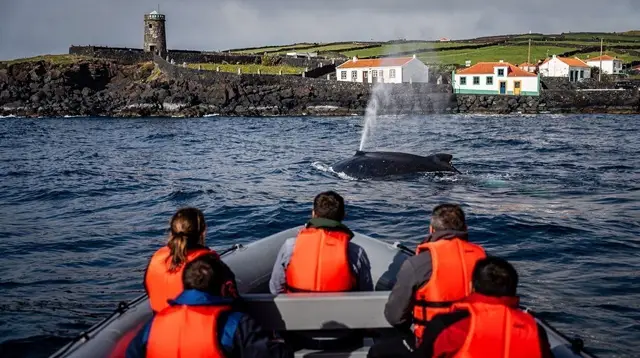
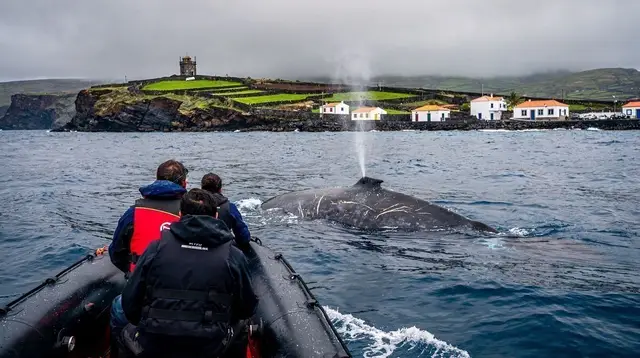
What makes an Azorean whale-watching trip distinctive is a system that predates the switch from whaling to watching. Vigias — land-based lookout posts perched on high cliffside points — were once used by whalers to scan the horizon for the tell-tale blow of a surfacing sperm whale. That same infrastructure is still in use today, just repurposed: biologists or trained spotters staff the vigias with binoculars and radio directions out to the boats at sea, dramatically narrowing the search compared with simply cruising and hoping.
A typical outing runs two to three hours and follows a rough pattern:
- Departure from the marina, with a safety briefing covering the day’s approach rules.
- A transit out to open water, guided in real time by vigia spotters where the operator uses them.
- A search phase, watching for blows, fins or surface activity, often with a marine biologist aboard to identify species and explain behaviour.
- Observation time once an animal or pod is located, kept to regulated distances and durations.
- The return to the marina.
Some operators combine the boat trip with snorkelling opportunities or a dedicated biologist briefing; others run shorter, more focused sunset outings when the target is scenery and dolphins rather than a long search for whales. Regional rules cap how many boats can be near a single animal at once and set minimum approach distances, which is part of why choosing an operator that visibly follows those rules matters more than chasing the closest possible encounter — how operators get chosen for this site goes into that selection process in more depth.
Where whale watching happens across the islands
Whale watching isn’t confined to one island. Boats operate out of harbours on São Miguel, Pico, Faial, Terceira and elsewhere, and the deep water that makes the whole archipelago productive doesn’t stop at any single coastline. That said, some ports carry more historical weight than others: Lajes do Pico, on the island of Pico, was the region’s most important whaling port and remains a natural anchor point for observation trips today, a link this guide leaves for the whaling history piece to explore properly. Nearby, Horta’s marina on Faial is another long-established base for operators.
Rather than duplicate that comparison here, this guide treats the choice of island as a separate decision — see the dedicated comparison of islands for whale watching once you’re ready to narrow things down. For now, the point to take away is that no single island monopolises sightings; the deciding factors are usually convenience, the rest of your itinerary, and which operators you prefer.
Bird life on the same waters
Whale-watching trips often double as a good introduction to the Azores’ seabirds, since the same productive, nutrient-rich waters that attract cetaceans also draw shearwaters, petrels and terns. Some operators run dedicated marine-birdwatching outings with a biologist guide rather than folding it into a standard whale trip. If birding is a serious interest rather than a bonus, the archipelago’s birdwatching guide covers it as its own subject.
Building whale watching into your trip
Because sightings depend so much on season, it’s worth deciding early whether whale watching is a priority for your trip, since that can influence when you travel more than which island you choose.
The month-by-month weather guide and the broader best-time-to-visit guide both cover how the whale-watching calendar interacts with rainfall, hydrangea season and overall crowd levels — useful context if a spring trip built around the great whales would mean trading off other things you want to see. There’s also a full write-up of the whale-watching season specifically, which goes deeper into the month-by-month species mix than this overview does.
If whale watching is one part of a longer trip rather than the whole point of it, it slots easily alongside a day or two of hiking, thermal pools or wine tasting without needing a specialised itinerary. Visitors who do want to structure a trip specifically around it — combining several islands, a spring timing window, and more than one type of marine outing — are better served by the dedicated whale-watching itinerary, which sequences that in detail rather than repeating it here.
Booking a boat trip
Whale and dolphin watching tours are widely available and easy to book in advance, which is worth doing in peak weeks when boats fill up. A standard sea-based option is the Azores whale and dolphin watching tour departing from São Miguel, which covers the core experience described above: vigia-guided search, a few hours at sea, and a marine guide aboard.
On Pico, closer to the historic whaling port of Lajes do Pico, the Pico Island whale and dolphin watching boat tour runs a similar format from a base with a direct link to the region’s whaling past. For a trip that leans further into the science, the islet boat tour with a marine biologist aboard pairs the search for cetaceans with closer commentary on behaviour and identification, useful if you want more than a spotting checklist out of the day.
A realistic way to plan around it
Treat whale watching in the Azores as a strong, archipelago-wide reason to visit rather than a single bookable moment. Sperm whales and resident dolphins give most visitors, in most months, a genuine chance of a sighting; the great migratory whales narrow that window to spring for anyone specifically chasing blue or fin whales. Build in more than one outing if the sighting matters to you, choose an operator that plays by the approach-distance rules rather than one promising guarantees, and decide on timing before you lock in an island — not the other way around.
Whale watching in the Azores: your questions answered
Is whale watching in the Azores guaranteed to see whales?
No operator can guarantee a sighting on any given trip. Reputable companies quote high success rates, often around 98% across a full season, but that is a seasonal average, not a promise for your specific outing.
What’s the best time of year to see whales in the Azores?
It depends on what you want to see. Sperm whales and resident dolphins are possible most of the year, while the large migratory rorquals such as blue, fin and sei whales are concentrated in spring, roughly April to June.
Can you see whales in the Azores in summer?
Summer is reliable for dolphins and for sperm whales, but it is not the season for the great migratory rorquals, which have generally already passed through by then. Calling summer “whale season” without qualification is misleading.
Which whales and dolphins live in the Azores year-round?
Sperm whales are the archipelago’s signature resident species, recorded in most months. Common dolphins, bottlenose dolphins and Risso’s dolphins are also present through much of the year.
What are vigias and how do they help spot whales?
Vigias are land-based lookout posts once used by whalers to spot the blow of a surfacing sperm whale. Today they are staffed by biologists or guides who radio directions to boats at sea, which is why land-based spotting still shapes how trips are run.
How long does a typical whale-watching boat trip last?
Most standard boat trips run two to three hours, including the transit out from the marina, time searching and observing, and the return. Some operators pair the trip with snorkelling or a marine-biologist briefing, which can extend it.
Is whale watching in the Azores conducted responsibly?
Regional rules set minimum approach distances, speed limits and a maximum number of boats around any one animal or pod at a time. Choosing an operator that visibly respects these limits, rather than one promising close encounters, matters more than which island you book from.
Do I need to choose an island before booking a whale-watching trip?
Not to get started. The species and general odds are archipelago-wide rather than tied to a single island, so it’s reasonable to decide you want to prioritise whale watching first and pick the specific island afterwards.
tours.whale-watching
Verified deep-linked GetYourGuide tours. Book through these links and we earn a small commission at no cost to you.
GetYourGuide does not provide a product photo for this activity — the image shows the meeting point, photographed by us.