The History of Whaling in the Azores
When did whaling end in the Azores, and can you still see it today?
Commercial whaling in the Azores followed the American shore-based model introduced in the 19th century and was formally banned in 1984. The old factories on Pico and Faial, and the land-based lookout posts once used to spot sperm whales, have since become museums and heritage sites rather than active hunting operations.
Long before anyone in the Azores watched a sperm whale through binoculars for pleasure, entire island communities depended on hunting one. For more than a century, the archipelago ran a whaling industry built on an American blueprint: open wooden boats, hand-thrown harpoons, and watchmen scanning the horizon from clifftop posts. That story ended in 1984, and what is left of it today is not a living trade but a set of museums, old factories and lookout points that visitors can walk through to understand where the Azores’ relationship with the sperm whale actually began.
From Yankee Whalers to Azorean Crews
Azorean whaling did not grow out of a local tradition of hunting whales from small boats, as it did in some other parts of the Atlantic. It arrived from the outside, carried by American ships. From the late 18th century onward, New England whaling vessels crossing the Atlantic in search of sperm whales began stopping in the Azores to take on fresh water, food and, crucially, crew. Azorean men had a reputation among American captains as strong, capable boatmen, comfortable in small craft in open water, and whaling ships routinely signed them on for multi-year voyages.
Through the 19th century, thousands of Azoreans worked aboard American whaleships, learning the methods, tools and vocabulary of Yankee whaling firsthand. Many settled permanently in whaling ports in Massachusetts and elsewhere in New England, seeding Azorean-American communities that still exist today. Others returned home carrying the skills and equipment of the trade with them. It was this transferred knowledge, not a separate homegrown practice, that became the basis for the shore-based whaling industry that developed on the islands themselves over the following decades.
By the early 20th century, several Azorean islands were running their own whaling operations rather than simply supplying crew to foreign ships. The equipment and methods were still recognizably American: open whaleboats, hand harpoons, and hunts launched directly from shore rather than from large factory ships out at sea. What had started as a recruiting stop for New England whalers had become a distinct, home-grown industry that would last until 1984.
The Vigia: Watching the Sea for Cachalots
The engine of Azorean shore whaling was not the boat, but the lookout. A vigia was a land-based watch post, typically set on a headland or hillside high enough to give a sweeping view of the surrounding ocean. From there, a trained watchman spent long hours scanning the water for the distinctive blow of a surfacing sperm whale, known locally as the cachalot, distinguishable from other whales by the angle and shape of its spout.
When a vigia spotted a whale, the alert had to travel fast. Watchmen signaled the whaling crews waiting on standby below using flags, smoke, rockets or, in the later 20th century, radio, giving them a rough bearing and direction so they could launch quickly and row out before the animal moved on. Because sperm whales could surface and dive again within minutes, the speed and accuracy of the vigia’s signal often decided whether a hunt happened at all that day.
This lookout network was not a minor detail of the industry, it was its backbone. Every whaling settlement on Pico, Faial and Terceira depended on a network of these posts positioned along the coast, and the job of vigia carried real local status and skill: reading the sea, judging distance, and telling a sperm whale’s blow from a passing squall or a trick of the light. It is worth remembering that this same instinct for reading whale behavior from land is one of the very few things that survived the end of hunting, in the hands of a few former watchmen who later worked with the operators now running boat trips to see whales rather than catch them.
Open Boats and Hand Harpoons: How a Hunt Worked
Once a vigia’s signal came in, crews launched narrow, fast wooden whaleboats, called baleeiras, rowed by a small team of oarsmen with a harpooner standing ready at the bow. There was no engine on these boats during the chase itself. Everything depended on rowing hard enough to close the distance on a sperm whale before it dived, then holding position close enough for the harpooner to strike by hand.
A successful harpoon strike did not kill the whale outright. It attached the boat to the animal by a long line, and the crew was towed, sometimes for hours and often far out to sea, in what whalers called a “Nantucket sleigh ride” after the American whaling port the technique came from. The whale was eventually killed at close range once exhausted, then towed back to shore, usually by a motorized support launch rather than the oar-powered whaleboat itself.
This was dangerous, physically punishing work carried out in open Atlantic swell, often far from land and with no guarantee of a catch. It is also, notably, a completely different activity from the guided small-boat and RIB trips that leave from these same harbors today to observe whales rather than hunt them: the boats, the goal and the outcome share nothing beyond a shared stretch of ocean.
Pico, Faial and Terceira: The Whaling Islands
Whaling was never spread evenly across the Azores. It concentrated on a small number of islands with the right combination of deep water close to shore, a resident sperm whale population, and communities willing to build the industry around it.
Pico was the undisputed center of Azorean whaling. Shore stations and processing factories operated at Madalena and São Roque do Pico, and the island’s south coast was home to one of the archipelago’s most important historic whaling ports, from which whaleboats were launched for generations.
Faial, just across the narrow channel from Pico, ran its own whaling operation centered on Horta, where a shore factory processed catches brought in from the strait between the two islands. Terceira, further north and less closely tied to Pico’s whaling culture, also maintained its own whaling activity in the 20th century, based near Angra do Heroísmo.
These islands were connected by more than shared methods. Boats, crews and even whales moved across the channel between Pico and Faial regularly, and the two islands’ whaling histories are best understood together rather than separately. A hunt that began off Pico’s coast might well be processed at a factory on Faial, or the other way around, depending on where the chase ended.
Whale Oil, Spermaceti and Ambergris: Why It Mattered
Whaling was not pursued for sport or curiosity, it was an economic activity, and a significant one for the islands involved. Once a sperm whale was towed ashore, it was processed at a dedicated factory, where the blubber was rendered into oil used in lubricants and other industrial applications, and the waxy substance found in the whale’s head, spermaceti, was extracted separately for use in candles, cosmetics and fine machine oils. Occasionally, crews found ambergris, a rare and valuable substance formed in a sperm whale’s digestive system, prized by the perfume industry and worth far more by weight than oil.
For islands with few other exports, this industry mattered a great deal. Whaling factories provided steady employment not just for boat crews but for the workers who processed the catch, and the trade brought outside income into small, often isolated communities. On Pico in particular, whaling was, for much of the 20th century, one of the island’s principal economic activities alongside its parallel tradition of Pico’s UNESCO-listed vineyards.
The End of an Era: The 1984 Ban
By the second half of the 20th century, the economics and politics of whaling were shifting fast against the Azorean industry. Synthetic substitutes replaced whale oil in most of its former industrial uses, shrinking demand at exactly the moment international attitudes toward commercial whaling were hardening, with growing pressure through bodies like the International Whaling Commission to end the practice worldwide.
Portugal formally banned whaling in the Azores in 1984, closing a chapter that had run, in essentially the same open-boat, hand-harpoon form, for well over a hundred years. The ban did not arrive as a single dramatic event so much as the endpoint of a trade that had already been declining for years, as factories struggled to remain viable and fewer young Azoreans went into whaling crews. What it left behind, physically, were the shore stations, factory buildings, whaleboats and vigia posts that the whaling communities had built up over generations, largely intact but now without a working industry to use them.
From Hunting to Watching: A Different Story
It would be easy to assume that Azorean whale-watching grew directly out of whaling, simply swapping a harpoon for a camera. That is not what happened, and it is worth being precise about the difference. Commercial whale hunting in the Azores ended completely in 1984. Whale-watching as an organized tourist activity developed afterward, as a new activity built from nothing, using boats, routes and regulations that had no operational connection to the whaling fleet.
The one genuine continuity is personal, not practical: a number of former vigia watchmen, whose working lives had been spent reading the sea for signs of a surfacing sperm whale, later shared that expertise with the first whale-watching operators, and some of the same clifftop lookout points once used to direct whaleboats are still used today to help guide tour boats toward whales. But the boats, the purpose, the regulations and the outcome for the whale are entirely different. Treating today’s whale-watching trips as a continuation of the whaling industry, rather than something that only became possible once whaling stopped, is the single most common misunderstanding about this history.
Whaling Museums and Heritage Sites to Visit Today
What survives of the whaling era is now preserved largely as heritage rather than industry, concentrated on Pico and Faial. Former processing factories have been converted into museums that display original whaleboats, harpoons, cutting tools, factory machinery and photographs documenting both the hunts and the daily life of whaling families. Alongside dedicated whaling museums, several old vigia lookout posts remain visible along the coastlines of Pico and Faial, and the wider volcanic landscape that shaped where these lookouts were placed is covered in more depth in our guide to the Azores Geopark.
| What to see | Where | What it covers |
|---|---|---|
| Former whaling factory museums | Pico (Madalena area, São Roque do Pico) | Whaleboats, harpoons, factory equipment, crew life |
| Former whale-oil factory site | Horta, Faial | Shore-based processing, Faial’s whaling history |
| Vigia lookout points | Coastal Pico and Faial | Original watch posts used to spot sperm whales |
| Historic port town context | Angra do Heroísmo, Terceira | Wider maritime and trading history of the islands |
Faial’s own maritime story extends beyond whaling, and the harbor town of Horta, its yachting culture and its famous sailors’ bar are covered separately in our guide to Horta’s marina and Peter Café Sport.
Planning a Whaling Heritage Visit
A whaling history trip works best as a half-day or full-day add-on to time spent on Pico or Faial, ideally paired with the islands’ other heritage and landscape highlights, an approach covered step by step in our Pico and Faial in 5 days itinerary.
For a structured introduction, a guided whaling heritage tour on São Miguel walks through the industry’s history with a local guide rather than leaving visitors to piece it together from museum panels alone. On Pico itself, a whaling-boat-style outing on Pico Island uses a traditional-style vessel to explain how crews once worked the channel, without the hunting element.
To place the whaling story in its wider island context, a historical walking tour of Ponta Delgada or an Angra do Heroísmo historical city walking tour on Terceira covers the broader maritime and trading past that whaling was one part of.
Both Pico and Terceira reward a slower pace for this kind of visit: a browse through our things to do on Pico or our wider history and heritage activities category page turns up further museums, walking routes and guided options beyond whaling alone. Visitors specifically interested in seeing whales alive today, rather than the history of hunting them, should read our separate guide to whale-watching in the Azores, which covers a different activity built after 1984, not a continuation of this one.
FAQ: Whaling History in the Azores
When did whaling begin in the Azores, and why did it follow an American model?
American whaling ships from New England began stopping in the Azores in the late 18th and 19th centuries to take on supplies and recruit local crew, who were valued as skilled boatmen. Azoreans learned Yankee whaling methods this way, and some later emigrated to New England whaling ports, before the islands developed their own shore-based whaling industry using the same techniques.
What was a vigia and how did it work?
A vigia was a land-based lookout post, usually perched high on a cliff or hillside with a wide view of the sea, where a watchman scanned the water for the telltale spray of a surfacing sperm whale. Once a whale was spotted, the vigia signaled the crews waiting below, who launched open whaleboats and rowed out to the hunt.
Which islands were the centers of Azorean whaling?
Pico was the heart of the industry, with shore stations and factories at places like Madalena and São Roque do Pico, supported by the historic whaling port further along its south coast. Faial, especially Horta, and Terceira also ran active whaling operations, each with its own factories and vigia network.
What happened to the whale oil and other products?
Sperm whales caught by Azorean crews were processed onshore at dedicated factories, where their oil, spermaceti and occasionally ambergris were rendered and exported. These products were used in lubricants, cosmetics and other industrial goods, and the trade formed a meaningful part of the local economy on whaling islands for well over a century.
When and why did whaling end in the Azores?
Whaling in the Azores was formally banned in 1984, as demand for whale oil products collapsed in the face of synthetic alternatives and international regulation of whaling tightened. Portugal’s ban brought an end to a practice that had run, largely unchanged in its open-boat, hand-harpoon methods, for over a century.
Are the old whaling factories open to visitors today?
Yes. Former whaling factories and related buildings on Faial and Pico have been converted into museums that display whaleboats, harpoons, factory equipment and archival photographs, alongside exhibits on the vigia lookout system and the daily life of whaling crews and their families.
Is there any connection between historic whaling and today’s whale-watching tours?
There is a connection in place and in people, but not in practice: some of today’s whale-watching operators use former vigia lookout points, and a handful of early guides were retired watchmen who repurposed their knowledge of whale behavior. But whale-watching only developed after hunting stopped in 1984, and it shares no hunting methods or purpose with the whaling era.
What is the difference between a whaling museum and a whale-watching trip?
A whaling museum tells the historical story of the hunt, the factories and the vigia network through preserved buildings, tools and archives, and is a land-based, indoor visit. A whale-watching trip is a present-day boat excursion to observe living whales and dolphins at sea, run under wildlife-watching guidelines rather than any hunting tradition.
tours.history-heritage
Verified deep-linked GetYourGuide tours. Book through these links and we earn a small commission at no cost to you.
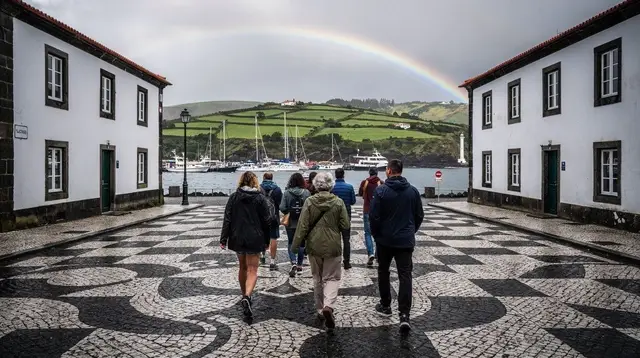
GetYourGuide does not provide a product photo for this activity — the image shows the meeting point, photographed by us.