Angra do Heroísmo: A Walking Guide to Terceira's UNESCO Old Town
What is Angra do Heroísmo and why is it a UNESCO World Heritage Site?
Angra do Heroísmo is the historic port town on Terceira island in the Azores, and its old town has been a UNESCO World Heritage Site since 1983. The listing recognises the 16th- to 18th-century colonial architecture built around a natural harbour that served as a major stopover on transatlantic sailing routes between Europe, Africa and the Americas.
A Port Town Frozen Between Two Empires
Long before anyone thought of the Azores as a whale-watching destination, Angra do Heroísmo was one of the most important harbours in the Atlantic. Tucked into a natural bay on the south coast of Terceira, the town grew rich from the 15th century onward as a mandatory stopover for ships sailing between Europe, West Africa, and the Americas — a place where captains waited out storms, restocked water and supplies, and sometimes waited weeks for a favourable wind before crossing the Atlantic in either direction.
That centuries-long role as a crossroads is why the historic centre of Angra do Heroísmo was inscribed as a UNESCO World Heritage Site in 1983, one of only two such listings in the Azores alongside the Pico wine landscape.
This guide covers the old town itself: the streets, the cathedral, the former governors’ palace, and the museums that explain how a small Atlantic port ended up shaping the history of three continents. It does not cover Monte Brasil, the volcanic cone and park that rises just west of the harbour — that gets its own separate guide, since it is really a hiking and viewpoint outing rather than a walk through historic streets. It also does not cover Praia da Vitória, Terceira’s other major town, or the terceira bull-running tradition known as touradas à corda, both of which deserve their own visits and their own pages.
Angra do Heroísmo and Praia da Vitória Are Not the Same Town
This is worth stating plainly before anything else, because first-time visitors to Terceira often assume the island has one town and get confused when itineraries mention both names. Angra do Heroísmo and Praia da Vitória are two distinct urban centres on opposite sides of the island, roughly twenty minutes apart by car, and they play very different roles.
Angra do Heroísmo is the older of the two, the historic capital and the seat of Terceira’s UNESCO-listed architecture, built tightly around its harbour. Praia da Vitória sits on a long sandy bay on the island’s other coast; it grew later, was largely rebuilt after wartime and post-earthquake reconstruction, and today is best known for hosting Terceira’s airport (Lajes) rather than for colonial-era streetscapes. If your itinerary has you flying into Terceira, you will very likely land near Praia da Vitória and then drive to Angra do Heroísmo for the historic centre — they are not interchangeable stops, and treating them as one town on a schedule is a common planning mistake.
Why the Old Town Made the UNESCO List
Angra’s World Heritage status, granted in 1983, recognises the town’s layout and architecture from the 16th to the 18th centuries: a grid of streets radiating from a fortified harbour, lined with colonial-era churches, convents, and civic buildings built from local basalt and often finished in white plaster with dark stone trim — the same black-and-white palette you will see repeated across the Azores, but nowhere as densely as here.
What made Angra worth defending and building up in the first place was its position. Ships crossing from Europe toward the Americas, or returning laden with goods from Africa and the New World, used the Azores as a natural waypoint roughly a third of the way across the Atlantic, and Angra’s sheltered bay was the best anchorage on offer.
Fleets of Spanish and Portuguese ships, including gold- and silver-carrying vessels from the Americas, called here to regroup before the final leg home, which also made the town a target — it was fortified repeatedly against pirates and rival powers over the centuries. The town’s full name, “Angra do Heroísmo” (“Bay of Heroism”), was added in the 19th century in recognition of its resistance during the Portuguese civil war, layering a second history of conflict onto the older maritime one.
A serious earthquake struck Terceira in 1980, damaging much of the historic centre, and the reconstruction that followed was carried out with unusual care to preserve original facades and street patterns — part of why the UNESCO nomination succeeded just three years later, and why the old town still reads as a coherent whole rather than a patchwork of eras.
Walking the Old Town: A Half-Day Route
The UNESCO-listed centre is small enough to cover on foot in a morning or an afternoon, with the harbourfront, the main square, and the surrounding streets all within easy walking distance of one another.
Most visits start at the Sé Catedral de Angra, the town’s cathedral, whose interior and treasury reflect the wealth that once passed through the port. From there, the main square is dominated by the Palácio dos Capitães-Gerais, the former residence of the governors of the Azores and, historically, a stopping point for Portuguese royalty travelling to and from the Americas. Its long balconied facade is one of the most photographed buildings in town.
Fanning out from the square, the streets of the old town — narrow, cobbled, lined with two- and three-storey townhouses — are worth wandering without a fixed plan for at least an hour. Look for the Igreja da Misericórdia, one of several richly decorated churches built with money from merchant and shipping families, and for the ornamental calçada portuguesa paving that marks the more ceremonial streets and squares. The harbourfront itself, with its marina and the fortified breakwater, is a good place to end the walk and see where the ships that built the town’s fortune would have anchored.
If you would rather have the history narrated as you go, a guided option covers exactly this route:
a guided walk through Angra do Heroísmo’s UNESCO-listed streets, which typically takes in the cathedral, the main square, and the harbourfront over a couple of hours.
For a different angle on the same neighbourhood, some operators run their old-town walk around the São João festivities, one of Terceira’s biggest annual celebrations; the São João guided walking tour pairs the historic streets with the atmosphere of that particular event when the dates line up with your visit.
Museums That Tell the Port-of-Call Story
Walking the streets shows you the architecture; the museums explain why it exists. The Angra do Heroísmo Museum, housed in the former Convento de São Francisco near the harbour, is the most complete stop for understanding the town’s centuries as a transatlantic waypoint — its collections cover navigation, military history, and the religious institutions that anchored civic life in a port this exposed to both fortune and attack. The adjoining Igreja de São Francisco is worth a look on its own for its gilded woodwork, typical of the wealth that flowed through the town during its busiest maritime centuries.
Smaller collections around the centre touch on specific threads of local history — religious festivals, seafaring traditions, and the civil-war period that gave the town its “heroísmo” suffix — but the former convent museum is the one to prioritise if you only have time for one.
Getting to Angra do Heroísmo and Around Terceira
Most visitors reach Terceira by air into Lajes airport, near Praia da Vitória, then drive roughly twenty minutes to Angra do Heroísmo; see our separate guide to flights into the Azores for how Terceira fits into wider island-hopping plans.
Once you are on the island, a rental car is the practical way to reach everything beyond the old town itself — the UNESCO centre is fully walkable, but sights like Algar do Carvão, the volcanic cave near the island’s interior, or the Biscoitos vineyards planted directly into old lava flows on the north coast, are a drive away. Our guide to renting a car in the Azores covers what to expect island by island.
If you prefer not to self-drive for the old town portion of your trip, a private option covers the ground for you:
a half-day city tour of Angra do Heroísmo, which typically bundles the cathedral, the palace, and a wider loop around the town with transport included.
Should You Hire a Local Guide?
None of the sights in Angra do Heroísmo require a guide to visit — the cathedral, the palace square, and the museum are all open to independent visitors and well signposted. What a guide adds is context: the layers of maritime, military, and religious history packed into a few square blocks are not always obvious from a facade alone, and a local guide can point out details like which buildings survived the 1980 earthquake largely intact versus which were carefully reconstructed.
For visitors who want that depth without joining a set group itinerary, a certified local guide can tailor the pace and focus of the walk, whether that means more time in the museum or more time on the harbourfront architecture.
Combining Angra do Heroísmo With the Rest of Terceira
A half-day in the old town leaves plenty of time to explore the rest of the island, and Terceira rewards a multi-day stay rather than a single rushed loop.
Our Terceira in 3 days itinerary builds a full visit around the old town, the volcanic interior, and the coastal vineyards, and pairs well with a look at Terceira’s religious festival calendar if your dates might overlap with the Divino Espírito Santo celebrations that animate towns across the island through spring and summer, or with the island’s distinctive bull-running tradition if you are visiting in summer, when touradas à corda take over village streets on weekends.
For a wider view of the things to do in Angra do Heroísmo beyond the historic centre, including boat trips around the coastline, that page rounds up options that sit outside the strict old-town walk covered here.
Terceira’s maritime past also connects it to Faial across the archipelago’s central group: if the transatlantic port history of Angra appeals to you, the whaling and sailing heritage on display at Horta’s marina and Peter Café Sport, and the wider history of Azorean whaling, make a natural companion read before or after your visit.
Angra do Heroísmo at a Glance
| What | Where | Time needed |
|---|---|---|
| Sé Catedral de Angra | Old town centre | 20–30 minutes |
| Palácio dos Capitães-Gerais | Main square | 15–20 minutes (exterior; check current access for interior visits) |
| Angra do Heroísmo Museum (Convento de São Francisco) | Near the harbour | 45–60 minutes |
| Old town streets and harbourfront | Throughout the UNESCO zone | 1–2 hours, unhurried |
| Full half-day visit | Old town only | 3–4 hours |
Treat the timings above as a starting point rather than a fixed schedule — opening hours for the palace and museum can shift seasonally, so it is worth checking locally on the day rather than planning down to the minute.
Practical Notes Before You Go
Terceira shares the Azores’ habit of shifting weather within a single day, so do not build your Angra do Heroísmo walk around a single morning forecast; if rain moves in, the museum and the covered arcades around the main square give you somewhere to wait it out before continuing outside. Parking directly inside the historic centre is limited, since the old town’s streets were laid out centuries before cars existed, so many visitors park at the edge of the centre or near the harbour and walk in. Comfortable shoes matter more than they might seem to from photos — the calçada portuguesa paving underfoot looks elegant but can be uneven and slippery when wet.
Because Angra do Heroísmo remains a working town rather than a preserved-in-amber museum piece, expect ordinary shops, cafés, and traffic mixed in among the historic buildings. That lived-in quality is part of what UNESCO’s listing recognises: this is not a reconstructed set piece but a town that has continuously occupied the same streets for over four centuries.
Frequently Asked Questions About Visiting Angra do Heroísmo
How long does it take to visit Angra do Heroísmo?
A focused walk through the UNESCO old town, including the cathedral and one museum, takes about half a day. Add a couple of hours if you want to linger over lunch or browse the shops along Rua de São João and Rua da Sé.
Is Angra do Heroísmo the same as Praia da Vitória?
No. Angra do Heroísmo and Praia da Vitória are two separate towns on Terceira with distinct histories and roles. Angra is the UNESCO-listed former capital and port of call; Praia da Vitória, on the other side of the island, is a newer town built around a long sandy bay and is home to Terceira’s airport.
What is the main historic sight inside Angra do Heroísmo?
The Sé Cathedral (Sé Catedral de Angra) at the heart of the old town is usually the starting point, alongside the Palácio dos Capitães-Gerais on the main square, which once housed the governors of the Azores.
Can I visit Angra do Heroísmo without a car?
Yes. The UNESCO-listed centre is compact and entirely walkable, so once you are in town a car is not needed. You will want one, however, to reach the rest of Terceira, including Algar do Carvão and the Biscoitos vineyards.
Is Monte Brasil part of the Angra do Heroísmo visit?
Monte Brasil, the volcanic cone and park overlooking the bay, is right next to the old town but is treated as a separate outing, since it involves trails and viewpoints rather than the historic streets themselves.
What museum best explains Angra’s transatlantic history?
The Angra do Heroísmo Museum, set inside the former Convento de São Francisco, covers the town’s centuries as a stopover for ships crossing between Europe, Africa and the Americas, including its military and religious past.
When is the best time to walk around Angra do Heroísmo?
Terceira’s weather can shift within a single day at any time of year, so a dry morning is worth taking advantage of. Many visitors combine an Angra do Heroísmo walk with the Divino Espírito Santo festivities or the bull-running season in summer, when the town is livelier but also busier.
Do I need a guide to visit Angra do Heroísmo?
A guide is not required, since most sights are signposted and close together, but a local guide adds context on the colonial architecture, the 1980 earthquake reconstruction, and the town’s role in transatlantic navigation that is easy to miss on a self-guided walk.
tours.city-sightseeing
Verified deep-linked GetYourGuide tours. Book through these links and we earn a small commission at no cost to you.
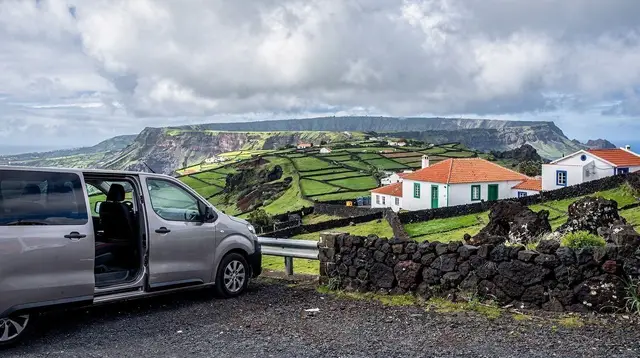
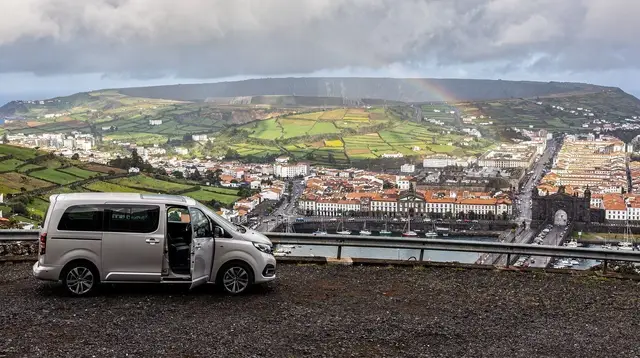
GetYourGuide does not provide a product photo for this activity — the image shows the meeting point, photographed by us.