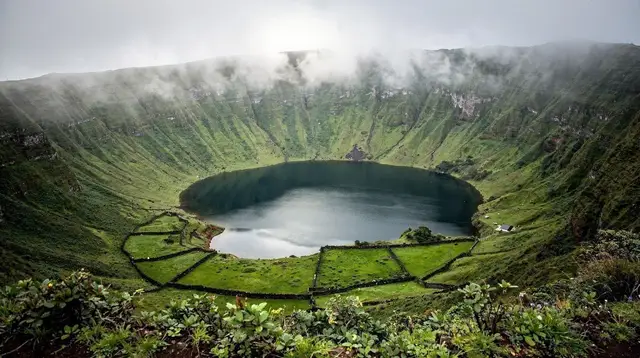
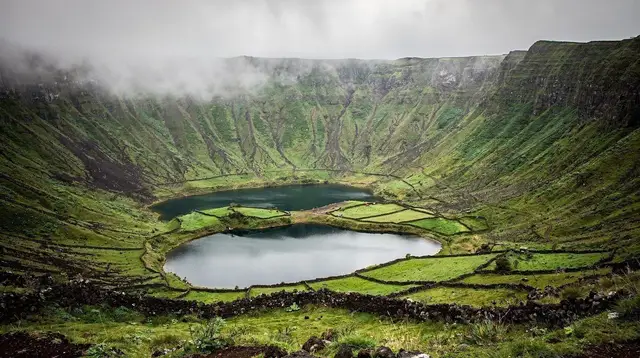
For most visitors, Pico island begins not at a trailhead or a vineyard, but at a small ferry terminal in Madalena, watching Faial’s Caldeira and Horta’s marina shrink into the distance behind a 30-minute wake. Madalena is where the practical business of visiting Pico gets sorted out: where the ferry from Faial actually docks, where most visitors pick up a rental car, and where the black lava coastline of Cachorro sits close enough to walk to from your hotel. It is not the island’s most dramatic destination, and it does not try to be — its job is logistics, and it does that job well.
Why Madalena matters: the Faial-Pico crossing
Madalena’s whole identity is tied to one short stretch of open water. The Atlânticoline ferry connecting Madalena to Horta on Faial takes roughly 30 minutes and, unlike much of the Azores’ inter-island network, runs year-round, several times a day. Together with the São Jorge leg, this route forms what locals call the “Triangle” — Pico, Faial and São Jorge — the one part of the central island group where you can reasonably plan a ferry crossing in November as confidently as in July.
That reliability matters more than it might sound. Elsewhere in the archipelago, inter-island transport is seasonal or weather-dependent: the wider central-group ferry network only runs from June to September, and the western group of Flores and Corvo is notoriously fragile, with services that can stop for days at a time outside summer. Madalena-Horta is the exception, not the rule, and it is worth building an itinerary around precisely because it is dependable.
If you are weighing how to structure a Faial-Pico stay, the mechanics of the crossing itself are worth reading up on before you book accommodation on either side — see our dedicated guide to inter-island ferries in the Azores and, for a shorter visit, the case for treating it as a Pico-Faial day trip by ferry rather than an overnight stay.
Because the crossing is short and frequent, some visitors treat Madalena as a day-trip base from Horta rather than a place to sleep. Both approaches work. What does not work well is assuming you can wing it in peak August afternoons without checking a timetable — sailings fill with vehicles as well as foot passengers, and if you are bringing a rental car across (most visitors don’t; renting separately on each island is simpler and cheaper), space is limited.
Cachorro: black lava on Madalena’s doorstep
Walk a few minutes north from the ferry terminal and the coastline turns dramatically to black. Cachorro is a shelf of jagged, dark volcanic rock worked into strange shapes by centuries of Atlantic swell — arches, channels, and shallow pools carved directly into old lava flows. It is one of the more striking pieces of coastal scenery you can reach on foot in the Azores, and it costs nothing to visit.
Cachorro is not a beach in the conventional sense — there is little sand, and the rock is uneven and can be slick with spray, so this is a place for careful walking and photography rather than casual sunbathing. Late afternoon light picks out the texture of the lava especially well, and low tide exposes more of the pools and channels. It is a fitting introduction to Pico’s volcanic character before heading further into the island, where the same lava rock reappears as the low walls enclosing the vineyard plots around Criação Velha.
If Cachorro leaves you curious about how the island’s volcanism shaped everything from its wine to its mountain, that thread continues at Montanha do Pico itself and in our broader look at Azores volcanoes and craters.
Madalena as a base — and its limits
Madalena’s real value to a visitor is as a hub, not a headline attraction. It has enough guesthouses, small hotels and restaurants to function comfortably as a one- or two-night base, it sits roughly central to Pico’s road network, and it is the most straightforward place to pick up a rental car on the island. From here, the drive to the vineyard landscape around Criação Velha takes only a few minutes, and the road toward São Roque do Pico — which leads on to the Montanha do Pico access point — is a short, manageable drive rather than a cross-island trek.
That last point is worth stating plainly, because it is the most common mix-up visitors make about this town: the trailhead and registration centre for climbing Montanha do Pico are not in Madalena. The Casa da Montanha, where the ascent is booked, tracked and equipped with a mandatory GPS unit, sits further along the road toward São Roque do Pico, outside both towns.
Staying in Madalena the night before a summit attempt is sensible — but budget time in the morning to drive out to the actual starting point rather than assuming you can walk there from your hotel. For the full detail on permits, pricing tiers and the mountain itself, see our guide to climbing Mount Pico; this page deliberately stops at the town, not the summit.
The same applies to two of Pico’s other headline draws. The UNESCO-listed currais vineyard landscape, with its lava-stone-walled plots at Criação Velha and Santa Luzia, is a short drive from Madalena but is covered in full in our dedicated Pico wine and UNESCO vineyards guide — Madalena is your logistical base for visiting it, not the landscape itself. And Pico’s historic whaling port, Lajes do Pico, on the island’s south coast, is a separate destination with its own maritime history and its own concentration of whale-watching departures; it is roughly a 30-40 minute drive from Madalena, not a walk.
| Where you’re headed from Madalena | Approximate drive time |
|---|---|
| Criação Velha (currais vineyards) | 5–10 minutes |
| São Roque do Pico / Casa da Montanha | 20–25 minutes |
| Lajes do Pico | 30–40 minutes |
| Cachorro | Walking distance |
Getting around from Madalena
Because Pico has no single island-wide public transport network worth relying on, most visitors who base themselves in Madalena rent a car directly there, either at the ferry terminal or in town. This is close to essential if you plan to see more than Cachorro on foot: the vineyard landscape, the mountain road, and Lajes do Pico are all a drive away, and buses between villages are infrequent at best.
Our general guide to car rental in the Azores covers what to expect island by island, and driving in the Azores is worth a skim before you set off — Pico’s roads are generally good but can turn narrow and cliff-hugging on the way to more remote fajã-style coastal spots, and fog can descend quickly at altitude.
If you would rather not self-drive, guided tours based on or covering Pico are a practical alternative, and several depart from or pass through the Madalena area as part of a wider island loop.
a full-day guided tour of Pico’s main sights, from the volcanic coastline to the vineyard landscape is a straightforward way to cover the island without renting a car, and it typically includes stops most independent visitors would otherwise piece together themselves. For a more active alternative, a full-day 4x4 jeep tour of Pico reaches some of the rougher tracks and viewpoints a standard rental car would struggle with, while a dune buggy adventure on Pico’s lava terrain covers similar ground with a sportier edge.
Whale watching near Madalena
Pico’s whaling history and its modern whale-watching industry are centred further south, around Lajes do Pico, where the old vigia watchtowers once guided whaling boats and now guide observation boats toward cachalots and dolphins. That fuller story belongs to Lajes, not Madalena — but tour operators covering Pico’s waters, including boats and pickup points near Madalena, do run whale and dolphin watching excursions that can be booked as a half-day add-on to a stay here.
a boat tour tracing Pico’s whaling-era waters pairs the history with a chance at seeing cetaceans in the same waters where whaling crews once worked, without promising a guaranteed sighting — no operator in the Azores can honestly promise that, whatever the odds quoted. Cachalots are resident and turn up in most months; the larger rorquals pass mainly in spring. If whale watching is the main draw of your Pico stay rather than a side trip from Madalena, it’s worth reading our broader whale watching in the Azores guide and considering a base closer to Lajes do Pico instead.
For a wider overview of what Pico offers beyond its ferry port, a guided tour covering the essential sights of Pico island is a reasonable single booking for visitors with only a day or two who want the highlights without planning a full self-drive route themselves.
Practical notes for arriving by ferry
A few things are worth knowing before your crossing. Sailings between Horta and Madalena run frequently but not endlessly — check the Atlânticoline timetable for the day and season you’re travelling rather than assuming an hourly service, particularly outside peak summer months. Foot passengers rarely have trouble finding space; travellers bringing a vehicle across should book ahead in July and August. The crossing itself is short enough that seasickness is rarely an issue even in a moderate swell, though the open Atlantic between the islands can still have some movement on a blustery day.
On arrival, Madalena’s ferry terminal sits within easy walking distance of the town centre, guesthouses, and Cachorro itself, so a first-time visitor without a rental car booked in advance is not stranded — though picking one up before you need to drive out toward the mountain road or Criação Velha will save a wasted morning.
If your trip includes both Faial and Pico, it’s worth planning the crossing as part of a coherent route rather than an afterthought: our 5-day Pico and Faial itinerary builds a sensible order around exactly this ferry link, and Horta marina and Peter Café Sport covers what to do on the Faial side before or after you sail.
For travellers weighing whether to add a private option to their Pico stay, a private tour of Pico Island allows a customised route from Madalena — useful for anyone short on time who wants to prioritise, say, the vineyards over the mountain road, or vice versa, without following a fixed group itinerary.
Frequently asked questions about Madalena, Pico
How long is the ferry from Horta to Madalena?
The Atlânticoline crossing between Horta on Faial and Madalena on Pico takes about 30 minutes and runs several times a day, year-round. It is the most reliable inter-island connection in the Azores, alongside the rest of the Pico-Faial-São Jorge “Triangle.”
Is Madalena the starting point for climbing Montanha do Pico?
No. The trailhead and the Casa da Montanha registration centre for the Montanha do Pico ascent sit further along the road toward São Roque do Pico, not in Madalena itself. Madalena is a convenient base to sleep and rent a car, but you still need to drive out to the mountain’s access point.
What is Cachorro in Madalena known for?
Cachorro is a stretch of jagged black volcanic lava rock right on Madalena’s waterfront, shaped by past eruptions and constantly worked by Atlantic swell. It is a short walk from the ferry terminal and a popular sunset and photography spot, with natural pools cut into the rock.
Should I stay in Madalena or Lajes do Pico?
Madalena suits travellers prioritising the ferry connection to Faial, car rental pickup, and central access to the Montanha do Pico road and the currais vineyards. Lajes do Pico, on the island’s south coast, is better placed for its whale-watching heritage and departures tied to that tradition.
Can I rent a car in Madalena?
Yes, Madalena is one of the main car rental pickup points on Pico, and a rental car is close to essential for reaching the vineyards, the mountain access road, and the island’s fajã-style coastal villages, since inter-village public transport is limited.
Does the Faial-Pico ferry run all year?
Yes. Unlike the wider inter-island ferry network that links the rest of the central group only from June to September, the short Madalena-Horta crossing operates throughout the year, several times daily.
What else is there to do near Madalena besides the ferry?
Within a short drive of Madalena you can walk the black lava shoreline at Cachorro, visit the lava-walled currais vineyards around Criação Velha, or head toward São Roque do Pico for the Montanha do Pico trailhead. Boat tours, jeep tours and whale-watching excursions on the island are also commonly booked through operators based in or near Madalena.