Best Island for Whale Watching in the Azores
Which Azores island is best for whale watching?
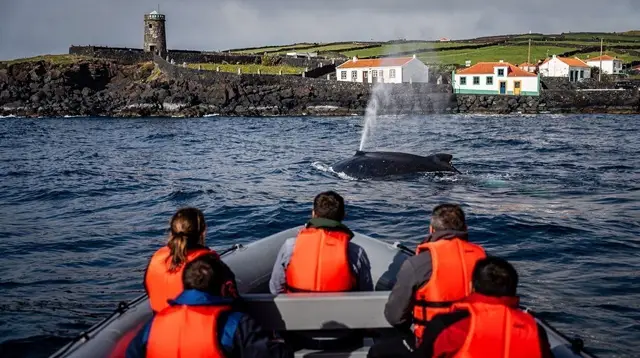
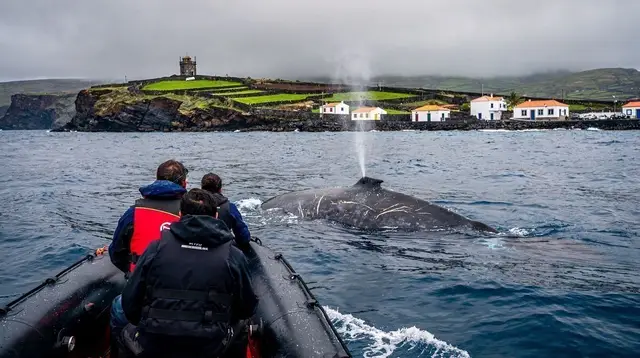
The channel between Pico and Faial has the archipelago's strongest track record for resident sperm whales and a whaling-era spotting tradition still in use today. São Miguel offers more daily departures and reliable dolphin sightings from a bigger base, while Terceira's whale-watching scene is smaller and less frequent. No island guarantees a sighting on any given trip.
If you’ve already decided you want to see whales in the Azores and you’re now choosing which island to fly into, the honest answer is that the nine islands are not equal for this. Some sit on deep water close to shore where sperm whales feed year-round; others are simply better served by boats and schedules. This page compares three islands head to head on that single question - where should you base yourself to maximise your odds - and leaves the mechanics of how a whale-watching trip actually runs, RIB versus classic boat, and the season-by-season species calendar to their own guides.
Why the island you choose changes what you’ll see
Whale watching in the Azores isn’t one homogeneous activity offered identically everywhere. The archipelago’s nine islands sit across three separate island groups, and the water around each one behaves differently. Pico and Faial face each other across a narrow, very deep channel that drops off close to the coast - exactly the kind of bathymetry that keeps sperm whales feeding nearby rather than passing offshore.
São Miguel is the largest island with by far the most tourism infrastructure, which translates into more boats leaving Ponta Delgada each day. Terceira has whales too, but far fewer companies running trips specifically to find them.
None of this changes the basic rule that applies everywhere in the archipelago: no operator, on any island, can promise a sighting. What changes island to island is the density of the search area, the number of daily attempts you get, and whether the crew is drawing on decades of local knowledge about exactly where the animals tend to be.
This comparison focuses on Pico-Faial, São Miguel and Terceira because they are the three islands with an actual whale-watching industry behind them - regular sailings, dedicated boats, marine biologists on board. Smaller islands such as São Jorge or Graciosa sit in the same ocean but haven’t built the same specialised infrastructure, so they don’t belong in a head-to-head built around maximising your odds. For the mechanics that apply across all three - what a RIB is versus a classic boat, and how the season shifts what you’re likely to see - the Traditional Boat vs RIB for Whale Watching in the Azores and When to See Whales and Dolphins in the Azores: A Month-by-Month Calendar guides cover ground this page doesn’t repeat.
The Pico-Faial channel: home turf of the sperm whale
The stretch of ocean between Lajes do Pico and Horta is the closest thing the Azores has to a whale-watching heartland, and it earned that reputation the hard way. This was the whaling industry’s own hunting ground for more than a century, and the same instinct that made it valuable to whalers - deep water within sight of the coast - is what makes it productive for watching rather than hunting today.
Sperm whales are recorded off Pico in most months of the year, not just a short peak season, because a resident population uses the channel to feed. Locals still credit the old vigias - shore-based lookout posts once used to spot a sperm whale’s surface blow from land - and several are staffed today by biologists or guides who radio confirmed positions out to the boats, rather than sending them out to search blind. That single difference, a radio call to a known animal instead of a scan-and-hope search pattern, is a large part of why the channel’s reputation holds up.
Lajes do Pico itself was the historic whaling port and remains the symbolic centre of this tradition; the Azores whaling history guide covers how that industry gave way to the observation trade that exists today. A short ferry ride connects the two islands - the Madalena-Horta crossing takes about 30 minutes and runs year-round, several times a day, making Pico and Faial genuinely easy to combine rather than a choice between two separate trips.
a half-day boat trip out of Pico that looks specifically for sperm whales and dolphins in the channel is the most direct way to fish in these particular waters. If you’d rather see the island’s other volcanic landmarks on the same visit, a full island tour of Pico covers the wider picture beyond the marina.
Basing yourself here for two or three nights, rather than trying to squeeze in a single sailing, is the practical advantage that matters more than any single day’s forecast: a missed morning to fog or swell simply becomes a second attempt the next day, on Pico or across the water in Faial.
Deciding between Pico and Faial themselves - rather than just the channel between them - comes down to a slightly different question than the one this page answers; the Pico vs Faial: How to Split Your Time Between the Two comparison walks through it for travellers who’ve already settled on the channel and now need to pick a base.
São Miguel: more departures, more dolphins, same ocean
São Miguel doesn’t have a channel quite like Pico-Faial, but it compensates with scale. As the largest and most populated island, with the archipelago’s main airport and its biggest concentration of tour operators, Ponta Delgada and nearby Vila Franca do Campo run considerably more daily sailings than any island in the central or western groups. More departures per day, spread across more companies, means more independent attempts at finding animals on any given trip you book.
What São Miguel is particularly reliable for is dolphins. Common dolphins and bottlenose dolphins are seen on the large majority of outings from Ponta Delgada, in a way that feels close to dependable even though nothing in Azorean whale watching is ever truly guaranteed. Sperm whales are recorded off São Miguel too - this is not a dolphins-only coastline - but the island’s edge over Pico is in departure frequency and dolphin consistency, not in a deeper concentration of resident sperm whales.
This matters for how you plan a trip. If your priority is fitting a marine excursion around a wider São Miguel itinerary that already includes Sete Cidades, Furnas and the Lagoa do Fogo, the island’s sheer number of operators and time slots makes that easy - there is rarely a day without an available sailing. If your single goal is maximising the chance of a sperm whale specifically, the Pico-Faial channel’s track record still has the edge, even with fewer boats running each day.
Travellers building a trip specifically around this goal, rather than fitting it into a wider itinerary, can find a ready-made structure in the A 5-Day Azores Whale Watching Trip: Pico, Faial and Vila Franca do Campo itinerary, which sequences a São Miguel base with time on Pico and Faial.
Terceira: a smaller whale-watching scene
Terceira sits in the central group alongside Pico and Faial, and its waters do hold cetaceans, but the whale-watching industry built around them is noticeably smaller. Fewer companies specialise in marine trips here compared with Pico or São Miguel, and whale watching is more often paired with island sightseeing than sold as a dedicated, repeatable outing you could try again the next morning if conditions turn.
That doesn’t make Terceira a bad choice if whale watching is one part of a longer visit rather than the main reason for the trip. Angra do Heroísmo, the island’s UNESCO-listed capital, and inland sights like the Algar do Carvão lava chimney and the Biscoitos vineyards give Terceira plenty to fill a few days regardless of what happens at sea.
a dedicated whale and dolphin watching outing on Terceira is the closest equivalent here to what Pico and São Miguel offer as a standalone product, and for visitors who’d rather combine the search with a look at the island’s volcanic interior, a combined whale-watching and jeep tour of Terceira packages both into one day. Just don’t expect the same density of sailings and companies you’d find in Ponta Delgada or Horta - book ahead rather than assuming a same-day slot will be open.
a full day exploring Terceira beyond the coastline is worth pairing with a marine outing if whale watching is a secondary goal on this particular island.
Booking ahead and choosing an operator
Which island you choose matters less than which boat you end up on once you’re there. Group sizes, whether a marine biologist narrates the trip, and how strictly a company sticks to a no-sighting policy all vary between operators on the same island, sometimes more than they vary between islands. Our approach to picking which companies to recommend is covered in How We Pick Whale Watching Operators in the Azores, and it applies whether you end up in Horta, Ponta Delgada or Angra do Heroísmo.
In peak season - roughly June through September - popular sailings on all three islands can sell out a day or more ahead, particularly the early-morning departures that tend to have calmer water and better light. Booking Azores Tours in Advance: What to Reserve Early covers how far ahead that actually needs to be; the short version is that whichever island you’ve picked from this page, don’t leave the booking itself until you land.
Side-by-side comparison
| Pico-Faial channel | São Miguel | Terceira | |
|---|---|---|---|
| Signature species | Resident sperm whale, year-round | Common and bottlenose dolphins, plus sperm whales | Mixed, smaller sample size |
| Daily departures | Fewer boats, but a deep, historically proven channel | Highest number of operators and sailings in the archipelago | Limited, often bundled with sightseeing |
| Best suited to | Whale-watching as the main goal of the trip | Whale watching alongside a packed São Miguel itinerary | A secondary activity during a Terceira-focused stay |
| Local advantage | Shore-based vigias still guiding boats to confirmed animals | Volume of attempts and consistent dolphin sightings | Fewer specialised operators, book in advance |
| Practical base | Stay 2-3 nights on Pico or Faial to allow a second attempt | Easy to fit around Ponta Delgada, Furnas and Sete Cidades days | Works if paired with Angra do Heroísmo sightseeing |
So which island should you pick?
If seeing a sperm whale is the single reason you’re building a trip around the Azores, the Pico-Faial channel has the strongest historical and biological case: deep water close to shore, a resident population, and a spotting tradition, the vigias, that still functions today. Staying two or three nights on Pico or Faial rather than one gives you the option to try again if a single sailing is cancelled or comes up empty.
If whale watching is one activity within a broader first Azores trip that also covers craters, hot springs and a capital city, São Miguel makes logistical sense: more daily departures, dependable dolphins, and everything else on the island within a short drive.
Terceira is the honest third option - worth doing if you’re already there for Angra do Heroísmo and the island’s other sights, less compelling if whale watching is your only reason to choose a base.
Whichever island you pick, hold the same expectation everywhere in the archipelago: even the best-positioned boat, on the best day, cannot promise you’ll see anything. What differs between Pico, São Miguel and Terceira is how many attempts you get and how strong the local knowledge is behind each one - not whether any single outing is a sure thing.
Frequently asked questions about choosing an Azores whale-watching base
Is Pico really better than São Miguel for whale watching?
For sperm whales specifically, yes: the Pico-Faial channel is deep water close to shore, used by shore-based spotters for generations, and sperm whales are recorded there most months of the year. São Miguel doesn’t out-perform Pico for sperm whales, but it wins on the number of daily departures and on dependable dolphin encounters.
Can I see whales from São Miguel at all?
Yes. Ponta Delgada and Vila Franca do Campo both run regular boat trips, and dolphins - common and bottlenose - are seen on most outings. Sperm whales also turn up off São Miguel; there are simply more operators and sailings to choose from than on Pico.
Why is Terceira’s whale-watching offer smaller?
Terceira has fewer dedicated whale-watching operators than Pico or São Miguel, and trips are more often bundled with island sightseeing than sold as standalone marine outings. The water off Terceira holds cetaceans too, but the departure frequency and specialisation are lower.
What are the vigias I keep reading about?
Vigias are shore-based lookout posts once used by whalers to spot the surface blow of a sperm whale from land. Around Pico and Faial they are still staffed today, now by biologists or guides who radio boats toward confirmed animals rather than toward a hopeful search pattern.
Does any island guarantee I’ll see a whale?
No. Operators across the Azores quote success rates around 98% over a full season, but that is a season-long average, not a promise for a single outing. Weather, sea state and the day’s animal movements all play a part, on every island.
Is summer the best time regardless of island?
Summer is reliable for dolphins and for resident sperm whales, but it is not the season for the large baleen whales. Blue, fin and sei whales pass through mostly in spring, April to June, so “best island” and “best month” are two separate questions.
Should I base myself on Pico or just do a day trip there?
Staying on Pico or Faial lets you take an early sailing and try again the next day if the sea is rough, which matters more than picking the “right” single outing. A day trip from São Miguel to Pico isn’t realistic given the distance; the two are better treated as separate island choices.
Can I combine Pico and Faial instead of choosing just one?
Yes, and many visitors do exactly that. The Madalena-Horta ferry connecting the two islands takes about 30 minutes and runs several times a day year-round, so a whale-watching base on one island doesn’t lock you out of the other. It’s less a choice between two destinations than a choice of which one to sleep on.
How far in advance should I book a whale-watching trip?
In peak season, roughly June through September, popular sailings - especially early-morning ones - can sell out a day or more ahead on all three islands. Outside that window there’s usually more flexibility, but booking before you land rather than after is the safer habit regardless of season or island.
tours.whale-watching
Verified deep-linked GetYourGuide tours. Book through these links and we earn a small commission at no cost to you.
GetYourGuide does not provide a product photo for this activity — the image shows the meeting point, photographed by us.