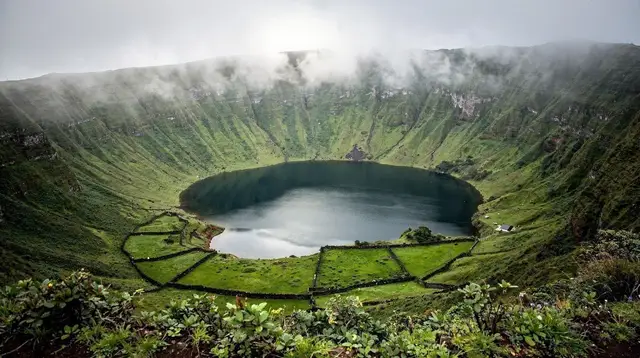
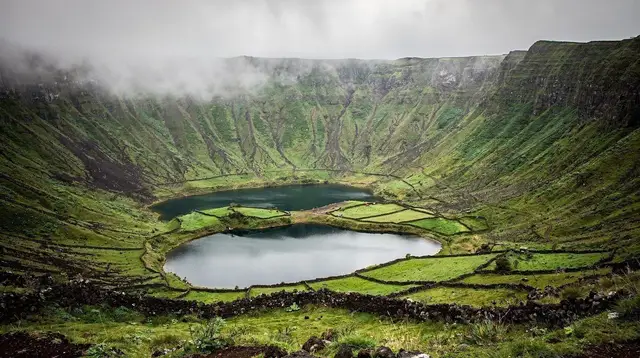
Most first-time visitors to São Miguel spend their days orbiting Ponta Delgada, Sete Cidades and Furnas, and rightly so — those three names carry the island’s biggest headline sights. Nordeste is what is left once you have ticked those off: a rural municipality wrapped around the island’s easternmost tip, thick with dairy pasture, hydrangea hedges and a coast road that seems to find a new viewpoint every few hundred meters. If you have three or more days booked on São Miguel and the crater lakes and thermal pools are already checked off, Nordeste is where the itinerary slows down.
It is worth being precise about what Nordeste is and is not. It is a município — one of São Miguel’s administrative divisions — not a loose way of saying “the northeast of the Azores.” No other island in the archipelago carries the name, and nothing here should be confused with the hot springs and cozido ovens of Furnas, which belong to a different municipality entirely, or with the crater and twin lakes of Sete Cidades on the island’s far west.
Nordeste’s immediate southern neighbor, Povoação, has its own waterfalls and its own claim to being São Miguel’s “birthplace,” but that is a separate stop with a separate identity. Nordeste’s own character is quieter and greener: fewer coach tours, more grazing cattle, and a coastline that drops in dramatic green steps toward the Atlantic.
Why Visit Nordeste After the Island’s Big Names
The case for Nordeste is really a case against rushing. São Miguel’s marquee sights reward a full day each, and by the time most travelers have covered Sete Cidades, Ponta Delgada and Furnas, they have also absorbed most of the island’s tour traffic, parking queues and timed-entry crowds. Nordeste offers the same volcanic, pasture-green scenery with almost none of that friction. Roads are narrower and slower, but also emptier; miradouros here rarely have more than a handful of cars at any one time, even in August.
This makes Nordeste a good fit for a specific kind of traveler: someone who has already banked the essentials and wants one day that feels more like discovery than checklist. It suits photographers chasing empty compositions, hikers looking for trailheads without a queue, and anyone simply tired of matching their schedule to a tour bus timetable. It is a poor fit for a first full day on the island — save it for once you already have a feel for São Miguel’s roads and pace.
The Coastal Miradouros: Ponta do Sossego and Ponta da Madrugada
Nordeste’s reputation rests largely on its viewpoints, and two are consistently singled out. Ponta do Sossego sits above a cliff-edge garden of clipped hedges, hydrangea borders (in season) and gazebos looking straight down a green, terraced coastline into the Atlantic — it is one of the more manicured miradouros on the island, closer to a formal garden than a bare clifftop. Ponta da Madrugada, a little further along the coast road, trades the garden layout for a wilder, more open sweep of ocean and cliff, and is a favored spot for both sunrise and sunset, hence the name (“dawn point”).
Neither viewpoint takes long to visit on its own — fifteen to thirty minutes is enough to walk the paths and take photographs — but the real appeal of this stretch is stringing several stops together. The coast road between them passes half a dozen smaller, unsigned or lightly signed pull-offs with views nearly as good as the two headline spots, and a slow drive with frequent stops is arguably a better use of a Nordeste day than treating the two named miradouros as a checklist. Cloud can roll in quickly at this altitude, so if a viewpoint is socked in when you arrive, it is often worth continuing to the next one and circling back later rather than waiting it out.
Parque das Fontes and Nordeste Village
At the edge of Nordeste’s small village center sits the Parque das Fontes, a municipal garden built around natural springs, with shaded paths, ponds, a modest cascade and picnic tables. It is a gentle, low-key stop rather than a destination in its own right — allow thirty to forty-five minutes — and works well as a midday rest between the exposed, wind-blown miradouros and an early dinner in the village. Nordeste’s center itself is small and unhurried: a scattering of cafés, a parish church, and little of the souvenir-shop density found in Ponta Delgada or Furnas. It is a good place to break for coffee, use a restroom, and refuel before the return drive, rather than a place that needs a long visit on its own.
Driving the Back Roads: A Slow Loop Along the East Coast
The single best way to experience Nordeste is behind the wheel of a rental car, treating the whole municipality as a loop rather than a point-to-point trip. From Ponta Delgada, the coastal route east passes through smaller settlements before climbing into Nordeste’s pasture-covered hills, then drops repeatedly toward the cliffs at each miradouro before climbing again. None of the individual roads are long, but they are narrow, frequently single-track with passing bays, and can be wrapped in fog at altitude even on a clear morning at sea level — a classic Azorean pattern, not a sign anything is wrong.
A realistic loop covers the coastal miradouros, a stop in Nordeste village, and a detour inland or south toward the waterfall trails before looping back. Budget more time than a map suggests: driving here is about the stopping, not the distance. If you would rather not manage narrow roads and blind corners yourself, a private guided option removes that pressure entirely — a private 4x4 jeep adventure through Nordeste covers the same ground with a local driver who already knows which viewpoints to time for the light and which back roads reward the detour.
For general background on renting and driving on the island before you commit to a self-drive day, see the guides on car rental in the Azores and driving in the Azores — both cover the practicalities that apply just as much to Nordeste’s roads as anywhere else on São Miguel.
Hiking Near Nordeste: Waterfalls and the Ribeira dos Caldeirões
Inland from the coast road, the valleys around Nordeste and its southern neighbor Povoação hold some of São Miguel’s better-regarded short hikes. The Ribeira dos Caldeirões area, within Nordeste’s own boundary, is a small forest park built around a stream and a pair of waterfalls, with an old watermill and easy, well-maintained paths — a good option for travelers who want a scenic short walk rather than a demanding trek.
A short distance south, straddling the boundary between the Nordeste and Povoação municipalities, the Salto do Prego waterfall trail is one of the island’s most photographed short hikes: a walk through laurel forest to a waterfall with a natural pool, popular enough that it merits a clear head start on parking in peak season.
Because it sits right at the edge of Nordeste’s territory, it is commonly bundled into Nordeste-focused tours and day plans even though it technically belongs to the neighboring council. A guided Salto do Prego hike with a waterfall picnic handles the logistics — parking, timing and a packed lunch — for travelers who would rather not plan the walk themselves.
Before setting out on any of these trails independently, it is worth reading the general guide to hiking trails on São Miguel, which covers gradings, footwear and seasonal trail conditions that apply across the island, Nordeste included.
Guided Options: Full-Day Tours of Nordeste
Because Nordeste rewards unhurried exploring but punishes uncertain driving on unfamiliar cliff roads, a guided full-day tour is a genuinely reasonable choice here, more so than for some of São Miguel’s better-signposted sights. A full-day tour through Nordeste’s unspoiled countryside and the Ribeira dos Caldeirões strings together the coastal miradouros, the waterfall park and usually a stop in the village, without requiring you to navigate the narrower stretches yourself. It suits travelers without a rental car, or those who would simply rather look at the view than the road.
For a broader look at what a Nordeste day out tends to include and cost, and how the various operators differ, browse the things to do in Nordeste category page, which lists the region’s bookable activities side by side, or the island-wide hiking and trails and jeep and 4x4 tour categories if you are comparing Nordeste against similar activities elsewhere on São Miguel.
Nordeste at a Glance
| Stop | What it is | Time to allow |
|---|---|---|
| Ponta do Sossego | Cliff-edge garden miradouro | 20-30 minutes |
| Ponta da Madrugada | Open coastal viewpoint, popular at sunrise | 20-30 minutes |
| Parque das Fontes | Spring-fed municipal garden, Nordeste village | 30-45 minutes |
| Nordeste village center | Cafés, church, small shops | 30-60 minutes |
| Ribeira dos Caldeirões | Forest park with waterfalls and an old watermill | 45-60 minutes |
| Salto do Prego (Nordeste/Povoação boundary) | Waterfall hike with a natural pool | 1.5-2.5 hours round trip |
Treat this table as a menu, not a fixed schedule — few visitors manage every row in a single day, and the coast road itself, with its unplanned stops, tends to absorb more time than any single attraction.
Practical Tips for a Nordeste Day
Fog and cloud can settle over Nordeste’s higher ground even when the coast below is clear, so check conditions before committing to a viewpoint-heavy plan and build in flexibility to skip ahead if one stop is socked in. The Azores’ own weather proverb — that a single day can carry all four seasons — applies here as much as anywhere on São Miguel, so pack a light rain layer regardless of the forecast; see Azores weather month by month for a fuller picture of what to expect by season.
Fuel up and eat before heading deep into Nordeste’s back roads: options thin out quickly once you leave the village center, and opening hours in rural cafés can be unpredictable outside peak season. If your visit falls between roughly June and August, expect the hydrangea hedges along the coast road and around Ponta do Sossego’s garden to be at or near their best; earlier or later in the year, buds may still be closed or already fading. For general trip-length and seasonal planning that covers Nordeste alongside the rest of the island, see best time to visit the Azores.
Fitting Nordeste Into a São Miguel Itinerary
Nordeste works best slotted in after the island’s headline sights rather than before them — most travelers place it on day four, five or later of a São Miguel stay, once Sete Cidades, Ponta Delgada and Furnas are already covered. It pairs loosely with a light stop in Povoação on the return leg, since the two municipalities share a border and a road, though Povoação’s own sights deserve their own dedicated attention rather than a rushed add-on.
If you are still mapping out how many days to give São Miguel overall and where a slower day like Nordeste fits, the São Miguel in 5 days and São Miguel in 7 days itineraries both build in a day of this kind toward the back half of the trip.
For travelers based in Ponta Delgada or staying near Ribeira Grande, Nordeste is a comfortable, if unhurried, day trip in either direction — just budget the extra time that narrow coastal roads and frequent photo stops tend to demand, rather than trusting a map’s straight-line driving estimate.
Frequently Asked Questions About Visiting Nordeste
What is Nordeste, and is it the same as the northeast of the Azores?
Nordeste is a município (municipality) on the eastern tip of São Miguel island, not a region of the wider Azorean archipelago. No other Azorean island shares the name, and it has no connection to the hot springs of Furnas or the crater lakes of Sete Cidades, which sit in separate municipalities to the west.
How far is Nordeste from Ponta Delgada?
It is around 50 km from Ponta Delgada, which usually takes about an hour by car along the coastal road, longer if you stop at the miradouros on the way. There is no direct bus service that makes this a practical day trip without a car or an organized tour.
Do I need a car to visit Nordeste, or should I book a tour?
A rental car gives the most flexibility for stopping at each miradouro, but Nordeste’s roads are narrow, cliff-hugging and often wrapped in fog at altitude, which is why many visitors prefer a guided jeep or minibus tour instead, especially for a first visit.
What are the must-see miradouros in Nordeste?
Ponta do Sossego and Ponta da Madrugada are the two best known, both perched above sheer green cliffs on the east coast. Nordeste’s stretch of coast road strings together several smaller viewpoints as well, so plan to stop often rather than rushing between the two headline spots.
Can I combine Nordeste with Furnas or Sete Cidades in one day?
Combining Nordeste with Furnas in a single day is possible but rushed, since both merit unhurried time; Sete Cidades sits on the opposite side of the island and is a separate day entirely. Most itineraries treat Nordeste as its own day, sometimes paired lightly with a stop in Povoação on the way back.
What is the Parque das Fontes?
The Parque das Fontes is a small, spring-fed municipal garden at the edge of Nordeste village, with shaded paths, a modest waterfall and ponds. It is a gentle, low-effort stop rather than a hiking destination, and works well as a rest point between the coastal miradouros and the village itself.
When is the best time of year to visit Nordeste?
Late spring through early autumn, roughly May to September, gives the driest trails and the best odds of clear viewpoints, since the Azores’ shifting weather can close in on any given day regardless of season. Outside those months, expect more mist, wind and rain along this exposed stretch of coast.
Are there hiking trails around Nordeste?
Yes, the wider Nordeste and neighboring Povoação area holds some of São Miguel’s best-regarded waterfall walks, including trails toward Ribeira dos Caldeirões and, just across the municipal boundary, the Salto do Prego waterfall. Trail difficulty varies, so check grading before setting out with young children or limited mobility.