São Jorge Cheese: A Taster's and Buyer's Guide
What makes São Jorge cheese different from other Azorean cheeses?
Queijo de São Jorge is a Protected Designation of Origin (DOP) raw cow's-milk cheese made and aged only on the island of São Jorge, with a firm, slightly crumbly texture and a flavor that turns from mild and buttery when young to sharp and peppery when aged past a year. Other Azorean islands make their own cheeses under their own names, so the DOP label is what ties this specific cheese to this specific island.
One Island, One Appellation
Say “Azorean cheese” to most visitors and they’ll picture a single generic product sold in every gift shop from Ponta Delgada to Angra do Heroísmo. That’s the trap worth avoiding before you’ve even landed. What travels under the name queijo de São Jorge is a specific, protected cheese, tied by European Union Protected Designation of Origin (DOP) rules to a single island in the archipelago’s central group: São Jorge. Other islands make their own dairy products under their own names, and none of them can legally call their cheese by this one. If you leave the Azores with a wheel of “authentic Azorean cheese” bought on São Miguel with no DOP seal on it, you’ve bought something else, however good it might be.
The distinction matters for more than pride of place. DOP status locks in where the milk comes from, how the cheese is made, and how long it has to age before it can be sold under each grade name. That’s what gives São Jorge cheese its reputation as one of Portugal’s best-known hard cheeses, alongside names like Serra da Estrela on the mainland, and it’s why a knowledgeable shopper on the island asks about the grade and the seal rather than just the price per kilo.
This guide sticks to the cheese itself: what it is, how it’s aged, what each grade tastes like, and where on São Jorge you can reliably taste and buy it. For the landscape it comes from — the stone-walled coastal plateaus called fajãs where the island’s cattle graze — see our separate São Jorge fajãs hiking guide.
For how this cheese fits into Azorean food more broadly, alongside Pico wine, Furnas cozido and Gorreana tea, see the Azorean food guide. And if you’re weighing São Jorge as a base for your own trip, the 3-day São Jorge itinerary and the island’s things to do page cover the rest of what to build around a cheese-focused day.
From Volcanic Pasture to Aging Cellar
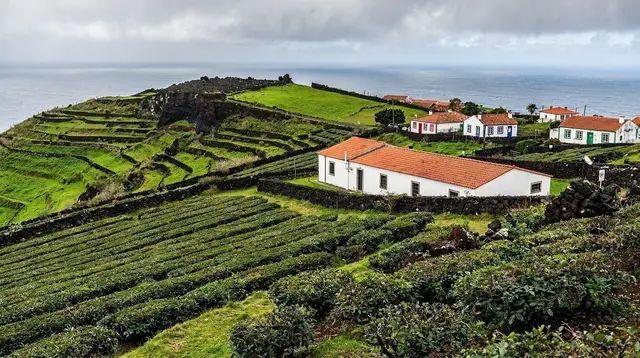
São Jorge’s terrain is what makes the cheese possible in the first place. The island is long and narrow, dominated by a mountainous spine and ringed by the fajãs — flat coastal shelves formed by old lava flows or landslides — where much of the island’s cattle graze on grass kept permanently green by high humidity and mild, rain-fed temperatures year-round. That pasture, and the raw milk it produces, is the starting point the DOP specification protects: the cheese has to be made from milk produced on São Jorge itself, not shipped in from elsewhere in the archipelago.
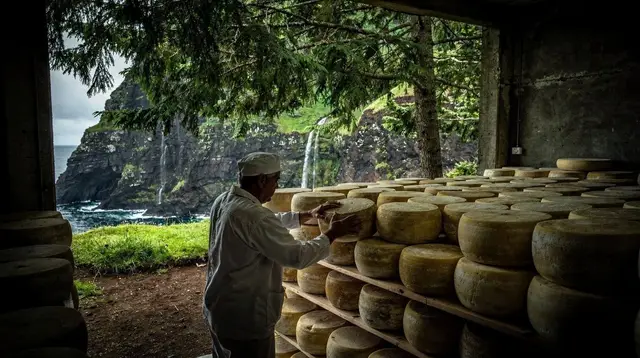
Production follows a traditional method little changed over generations: raw cow’s milk is curdled, the curds are cut, pressed into wheels and salted, and the wheels are then moved to cool, humid cellars to mature. It’s this maturing period, more than any single ingredient, that defines the cheese you’ll actually taste — and it’s also where the DOP rules draw the clearest lines between the grades sold on shop shelves.
Reading the Label: Curado, Meio-Curado and Velho
Almost every wheel or wedge you’ll see on São Jorge, and elsewhere in the Azores, is labeled with an aging grade. Knowing the difference before you buy saves you from ending up with a cheese sharper — or milder — than you expected.
| Grade | Typical aging | Texture | Flavor |
|---|---|---|---|
| Curado | Around 3 months | Firm but still supple, pale yellow | Mild, buttery, slightly tangy |
| Meio-curado | Roughly 4 to 7 months | Firmer, starting to crumble | More pronounced, rounder, a touch of pepper |
| Velho (aged) | A year or more | Dry, dense, crumbly | Sharp, peppery, notably stronger |
As a rule, the longer a wheel has aged, the smaller the holes in the paste, the drier the texture, and the more assertive the flavor becomes — some visitors describe a well-aged velho as verging on spicy. If you’re buying for a picnic or to eat within a day or two, curado or meio-curado are the easiest crowd-pleasers. If you’re taking a piece home as a gift for someone who already likes strong hard cheeses, velho travels well and only improves with a few more weeks in the fridge.
Some shops and cooperatives on the island also sell a small amount of fresh, unaged cheese outside the DOP category — soft, mild and meant to be eaten within days. It’s worth trying if you see it, but it isn’t the cheese the island is internationally known for, and it won’t carry the DOP seal.
Where to See It Made
The most dependable way to see São Jorge cheese production up close, rather than guessing which cooperative might allow a casual walk-in visit on a given day, is a guided cheese tour built around exactly that. A half-day itinerary typically pairs a stop at a working dairy or cooperative with an explanation of the aging process and a structured tasting across two or three grades, so you leave knowing what you’re comparing rather than just what you liked.
a half-day São Jorge cheese tour that combines a dairy visit with a guided tastingIf you’d rather combine the cheese with the landscape it comes from, a guided walk through the island’s forest reserve and fajãs adds the grazing plateaus to the picture before or after a tasting stop.
a guided walking tour through São Jorge’s forest reserve and fajãsFor a faster-paced way to cover more of the island’s dairy country and villages in a single outing, a guided e-bike route is a practical alternative to driving, particularly on São Jorge’s narrower rural lanes.
a guided e-bike tour of São Jorge with helmet and guide includedNone of these substitutes for simply asking at your accommodation which cooperative shops are open to visitors that week — small producers’ hours shift with the season and with milk supply — but they remove the guesswork for a traveler with a fixed window of time on the island.
Tasting It Properly
A worthwhile tasting moves from youngest to oldest: start with curado, move to meio-curado, finish with velho, and taste each on its own before pairing it with anything. The progression makes the differences in texture and sharpness far easier to notice than tasting them in reverse or at random.
Once you’ve tasted the grades on their own, São Jorge cheese pairs naturally with what else the Azores produce. A glass of wine from the island of Pico’s UNESCO-listed vineyards is a classic match, especially with the sharper velho grade, where the wine’s acidity cuts through the cheese’s density.
a guided e-bike tour on São Miguel that includes a cheese tasting stopFor more on the wine side of that pairing, see our guide to Pico’s wine and its UNESCO-listed vineyard landscape. Locally, islanders also eat São Jorge cheese with the archipelago’s own bread, quince paste, or simply on its own as an appetizer — no need to overthink the pairing to enjoy it the way it’s eaten at home.
Buying It for Real
The single most useful habit when buying São Jorge cheese, wherever you are in the archipelago, is to check for the DOP seal rather than trust the word “Azorean” on its own. On the island itself, three types of outlet are consistently reliable:
- Cooperative shops. The island’s dairy cooperatives sell directly to visitors at their own counters, usually at the fairest prices and with the widest choice of aging grades, including cuts you won’t find pre-packaged elsewhere.
- Municipal markets and local supermarkets. Both Velas and Calheta have shops and small markets stocking DOP cheese from local producers, sold by weight and often vacuum-sealed on request.
- Specialty food and craft shops. Alongside cheese, several of these also sell other island products worth combining into a single food-focused shopping stop — see our guide to Azorean crafts and souvenirs for what else to look for.
Airport shops on other islands, and gift shops aimed squarely at cruise passengers, are the places where a mislabeled “Azorean cheese” is most likely to slip past a distracted buyer — it’s worth taking the extra ten seconds there to read the label before paying.
Packing It to Travel
Ask any shop or cooperative counter to vacuum-seal your cheese before you leave — most do this routinely and it’s usually free or close to it. Because the Azores sit inside the EU, the Schengen area and the eurozone, moving cheese onward to another EU country involves no customs declaration or special paperwork; it can go in checked luggage or, sealed, in your carry-on. If your onward trip continues outside the EU, check that destination’s dairy import rules before buying a large piece, since raw-milk cheese is exactly the category some non-EU countries restrict.
If you’re island-hopping before flying home, remember that connections beyond the central group aren’t always daily — see our guide to inter-island ferries if cheese shopping is part of a multi-island itinerary rather than a single stop on São Jorge.
Building It Into a São Jorge Day
Cheese tasting slots naturally into a single morning or afternoon on the island, leaving the rest of a visit for the fajãs, the coastline or Velas itself. If you’re planning more than a passing stop, the 3-day São Jorge itinerary sketches out how to combine a cheese-focused morning with the island’s hiking trails and villages without feeling rushed on any of them.
For a broader look at what else fills the island’s days beyond food, the São Jorge things-to-do page and the archipelago-wide food and gastronomy category are useful starting points, and our short read on what a fajã actually is explains the landscape behind the pastures in plain terms. For a personal, less structured account of tasting it on the island, see our piece on the cheese of São Jorge.
FAQ: Buying and Tasting São Jorge Cheese
What is queijo de São Jorge, exactly?
It is a hard cheese made from raw cow’s milk produced and matured exclusively on São Jorge island, protected under the European Union’s Protected Designation of Origin (DOP) scheme. The designation covers the milk source, the traditional production method and the minimum aging time, not just the recipe.
What’s the difference between curado, meio-curado and velho São Jorge cheese?
Curado is the youngest sold form, generally around three months old, with a firmer but still supple paste and a mild, buttery flavor. Velho, aged a year or more, is drier, more crumbly and noticeably sharper and spicier. Meio-curado sits in between, offering more character than curado without the bite of velho.
Where can I watch São Jorge cheese being made?
The island’s dairy cooperatives run the production, and the most reliable way to see the process up close without arranging your own visit is a guided half-day cheese tour, which typically combines a working dairy or cooperative stop with tasting and an explanation of the aging grades.
Where should I buy São Jorge cheese to make sure it’s the real DOP product?
Look for the DOP seal on the rind or packaging rather than a generic label reading only “queijo dos Açores”. Cooperative shops, the island’s supermarkets and municipal markets on São Jorge sell the certified product directly; once you’re back on the mainland or at a Ponta Delgada gift shop, check the label just as carefully.
Can I taste São Jorge cheese anywhere else in the Azores?
Yes. Because it travels and keeps well, restaurants, delis and specialty food shops across São Miguel, Terceira and other islands stock it. Tasting it fresh on São Jorge itself simply guarantees the shortest possible time between wheel and plate, plus the widest choice of aging grades.
Does São Jorge produce any other cheese besides the DOP wheel?
Some producers on the island also make smaller, fresher cheeses outside the DOP specification, but the wheel known internationally as queijo de São Jorge is the certified, aged raw-milk cheese described in this guide.
How should I pack São Jorge cheese to take home?
Ask the shop to vacuum-seal it, which most on the island will do on request. Because the Azores are within the EU and the Schengen area, cheese travels freely to other EU destinations in checked or cabin luggage; if you’re flying onward outside the EU, check that country’s dairy import rules before you buy a large piece.
Is São Jorge cheese available outside Portugal?
It is exported in smaller quantities to specialty cheese shops in some European markets, but availability is inconsistent, which is part of why visitors buy extra on the island itself rather than counting on finding it later.
tours.food-gastronomy
Verified deep-linked GetYourGuide tours. Book through these links and we earn a small commission at no cost to you.
GetYourGuide does not provide a product photo for this activity — the image shows the meeting point, photographed by us.