Azores Wine: Pico's UNESCO Vines, Terceira and Beyond
Is wine from the Azores only made on Pico?
No. Pico's UNESCO-listed vineyards are the most famous, but Terceira has its own recognised wine region at Biscoitos, and small volcanic-soil plots survive on several other islands. All of them share the same defence against Atlantic wind and salt: low vines walled in by black lava stone.
Wine grown in lava, not soil
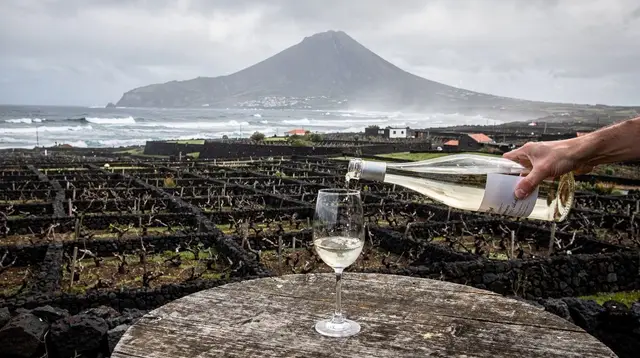
Most people who have heard of Azorean wine picture one thing: the black stone grid of Pico’s vineyards, climbing away from the Atlantic in a checkerboard of tiny walled plots. That picture is accurate, and it is the reason Pico’s wine landscape earned UNESCO World Heritage status in 2004. But it is only half the story.
Head east to Terceira and you find a second, separate wine region at Biscoitos, producing recognised wine of its own inside a very similar-looking stone landscape that is not the same site, not the same appellation, and not a lesser copy of Pico. Smaller volcanic plots survive on other islands too, tucked behind windbreaks that most visitors drive past without noticing.
This page is the archipelago-wide view: what makes Azorean wine Azorean, which islands actually make it, why the vines look the way they do, and how to plan a tasting trip before you commit to an itinerary. If you already know you are heading to Pico and want the detail on its specific UNESCO-listed parcels, the dedicated guide to Pico’s wine landscape and vineyards covers that ground; this page stays one level up, comparing islands rather than describing one in depth.
Why the Azores grow wine at all
Nine volcanic islands in the middle of the North Atlantic are not an obvious place to find vineyards. Wind is constant, salt spray travels inland, rainfall is high, and the ground is often bare cinder rather than soil. Winemaking here goes back to the 15th century, when Portuguese settlers found that the volcanic rock itself, broken into rubble, could be piled into low walls that block wind and trap daytime heat, creating a sheltered microclimate around each vine even when the open landscape a few metres away is being lashed by an Atlantic front.
By the 18th and 19th centuries, Azorean Verdelho had a real export reputation, reaching Russian and British aristocratic tables. Phylloxera and oidium devastated the vineyards in the late 1800s, and much of the archipelago’s wine industry never fully recovered its former scale. What survived is smaller, more artisanal, and increasingly valued for exactly the qualities that once made it hard to sell in bulk: low yields, high mineral content, and a genuinely unusual growing method that exists almost nowhere else in Europe.
Pico: the vineyard everyone recognises
Pico’s vineyard landscape is built from thousands of small rectangular enclosures called currais, each one only a few metres wide, walled in dry-stacked black lava stone with no mortar. The vines are trained low, sometimes almost flat against the ground, so the stone walls do the work of blocking wind and salt that would otherwise scorch or dehydrate the leaves. Seen from above, particularly around Madalena and São Roque do Pico, the result looks like a dark stone lattice running down to the sea.
This is the landscape UNESCO recognised in 2004, and it remains the most visited and most organised wine region in the Azores, with tasting rooms, small museums and cooperative wineries built around it. Because this page stays at archipelago level, the detail on Pico’s specific listed parcels, their history and which stretches are open to visitors lives in the separate Pico wine and UNESCO vineyards guide — worth reading in full once you know Pico is on your route.
A number of operators run half-day and full-day visits that combine a walk through the stone-walled plots with a tasting and a meal; a wine-focused tour of Pico’s vineyards or a full-day wine and food circuit around the island are the two most common ways to see it without arranging cellar visits yourself.
Terceira: Biscoitos and a landscape of its own
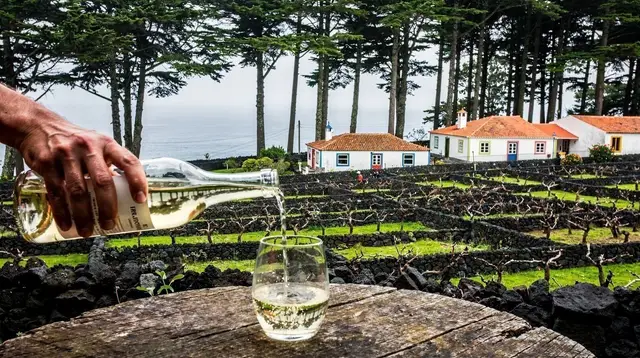
Terceira’s wine region sits at Biscoitos, on the island’s north coast, and it is easy to underestimate if you have already seen photographs of Pico. The technique looks similar at first glance — vines low to the ground, protected by stone enclosures called curraletas rather than currais — but Biscoitos is a distinct site with its own appellation, its own cooperative winery, and centuries of separate history that predate any UNESCO listing. Its wines, mostly white, have their own local following on the island and in Angra do Heroísmo’s restaurants.
Because Biscoitos is smaller and less geared toward drop-in tourism than Pico, visiting it well usually means booking a tasting in advance rather than expecting to wander in. The detail on visiting Biscoitos itself — what’s there, how to get in, what a tasting involves — lives on its own destination page for Biscoitos; this page’s job is only to make sure Biscoitos doesn’t get skipped over by a visitor who assumes Pico is the only island that matters for wine. Anyone building an itinerary around Angra do Heroísmo, the UNESCO-listed town less than half an hour from Biscoitos, is close enough that a wine detour costs almost nothing extra.
The grapes: bred by wind and salt as much as by winemakers
Verdelho is the grape most associated with the Azores historically, the one that built the export reputation before phylloxera. It survives today in smaller plantings on Pico and Terceira, often blended rather than bottled alone. Arinto dos Açores (sometimes just called Arinto, though genetically distinct from the mainland grape of the same name) and Terrantez do Pico are the other traditional whites still found in the old stone plots, both valued for high acidity and a saline, mineral edge that growers on the mainland cannot replicate.
Red grapes exist too, though the Azores are overwhelmingly a white-wine archipelago; salt and wind favour thick-skinned, low-yield whites over the varieties that thrive in the warmer, drier mainland regions. What unites the varieties actually planted here is less about flavour profile on paper and more about survival: vines that can be trained flat, that tolerate direct salt exposure, and that ripen despite the Azores’ famously changeable weather, where a clear morning can turn to rain within hours.
Currais and muros: one technique, several islands
The stone-wall technique that makes Azorean viticulture recognisable is not unique to Pico. The word for the enclosure changes by island — currais on Pico, curraletas around Biscoitos on Terceira — but the underlying logic is identical everywhere it appears: dry-stacked local lava rock, no mortar, built low enough to trap ground heat and block horizontal wind, arranged in rectangular or irregular grids that follow the shape of old lava flows rather than a planned survey line.
This is worth understanding before visiting either island, because it reframes what you’re looking at. The stone walls are not decorative field boundaries; they are the entire reason a vine can survive that close to the open Atlantic. A visitor who only sees Pico’s grid might assume it’s a one-off engineering feat specific to that island’s UNESCO listing. Seeing the same logic reapplied, independently, at Biscoitos on a different island with a different geology makes clear it is an Azorean solution to an Azorean problem, not a single site’s peculiarity.
Smaller plots on other islands
Outside Pico and Terceira, organised wine tourism thins out fast. Small legacy plots survive in sheltered pockets on a few other islands, generally family-run, rarely open for scheduled tastings, and not built around visitor infrastructure the way Pico and Biscoitos are. Graciosa — already the island with the least tourism infrastructure in the archipelago and, as of this review, no bookable activities listed on GetYourGuide at all — is a good example of where wine survives quietly rather than as an attraction. Treat any island beyond Pico and Terceira as a place where you might stumble on a small vineyard, not as a planned wine-tasting stop.
Tasting wine as a visitor: what it actually looks like
On Pico, tasting rooms and small cooperative wineries cluster around Madalena and along the coast road toward São Roque do Pico, several open to walk-in visitors during the day, with more formal tastings and cellar tours needing a booking. Combining a vineyard walk with lunch is common; a guided food and wine tour on São Miguel takes the same pairing of stone-plot vines, local cheese and Azorean cooking and applies it to São Miguel’s own small-scale producers and food traditions, useful if your itinerary doesn’t reach Pico or Terceira at all.
On Terceira, Biscoitos tastings tend to happen at the local cooperative winery and a handful of small producers, generally with advance notice appreciated even if not strictly required. Expect a shorter, more informal visit than Pico’s more built-out tourism circuit, and expect the wine itself — mostly dry whites — to taste noticeably different: brighter acidity, a more overtly saline finish, shaped by a slightly different exposure to the Atlantic than Pico’s south-facing plots.
Pico versus Terceira wine, compared
| Pico (UNESCO, 2004) | Terceira – Biscoitos | |
|---|---|---|
| Stone enclosure name | Currais | Curraletas |
| Visitor infrastructure | Extensive: tasting rooms, museums, organised tours | Smaller: cooperative winery, a handful of producers |
| Booking needed | Often optional for casual tastings | Usually recommended in advance |
| Best paired with | A Pico stay, walking the vineyard landscape itself | A visit to nearby Angra do Heroísmo |
| Wine style | Mineral whites, some reds, Verdelho-based blends | Dry, saline whites, distinct acidity profile |
| How to get there | Fly or ferry to Pico (Pico-Faial-São Jorge Triangle route runs year-round) | Fly directly to Terceira |
Planning a wine trip before choosing your itinerary
Because wine tourism concentrates on two islands rather than spreading evenly across the archipelago, it is worth deciding how much wine matters to your trip before you lock in which islands you’re visiting, not after. A traveller who wants both Pico’s vineyard landscape and Terceira’s Biscoitos wine in one trip needs to plan for two separate islands, two separate flights or a flight-plus-ferry combination, and two different kinds of visit — one built around infrastructure, one built around smaller, quieter producers.
If wine is a secondary interest rather than the main reason for the trip, Pico alone covers the more visitor-ready version of Azorean viticulture, and a Pico and Faial in 5 days itinerary leaves comfortable room for a vineyard afternoon alongside whale watching and the Pico ascent.
Travellers island-hopping through the central group can also use the Pico-Faial ferry day trip to add a Pico wine stop onto a Faial-based stay without switching accommodation. For a broader read on which island suits your interests before booking anything, the guide to choosing an Azores island covers wine as one factor among several, alongside hiking, beaches and whale watching.
Wine also pairs naturally with food on these islands: the same stone-walled landscapes that grow Verdelho and Arinto sit close to where São Jorge’s cheese is made and where cozido das Furnas is slow-cooked in the ground on São Miguel, so a food-and-wine-focused Azores trip rarely means visiting vineyards in isolation.
A combined food and wine tour on São Miguel is one practical way to taste the archipelago’s food culture and its wine in the same afternoon if your route doesn’t include Pico or Terceira. If you’d rather browse everything bookable under this theme across the islands, the wine-tasting activities hub lists current tours by island.
Frequently asked questions about Azorean wine
Is wine from the Azores only made on Pico?
No. Pico’s UNESCO-listed vineyards are the most famous, but Terceira has its own recognised wine region at Biscoitos, and small volcanic-soil plots survive on several other islands. All of them share the same defence against Atlantic wind and salt: low vines walled in by black lava stone.
What makes Azorean wine different from mainland Portuguese wine?
It is grown directly in volcanic ash and cinder rather than conventional soil, on vines trained low inside stone enclosures called currais on Pico or curraletas on Terceira, built to block sea wind and salt spray. The mineral, saline character this produces is the signature of Azorean wine and is rarely found in mainland Portuguese regions.
What grape varieties are grown in the Azores?
Verdelho is the historic white grape of the islands, once exported to Russian and British courts before phylloxera and oidium nearly wiped it out in the 19th century. Arinto dos Açores, Terrantez do Pico and Fernão Pires are also grown, alongside some newer plantings chosen for resilience to wind and salt rather than for large yields.
Can I visit vineyards on more than one island?
Yes, and it is worth doing deliberately rather than by accident. Pico and Terceira are the two islands with an organised wine-tourism circuit of wineries, tasting rooms and interpretation centres; a Pico-Faial-São Jorge ferry hop or a separate flight to Terceira lets a visitor compare both landscapes in one trip.
Is Pico wine or Terceira wine easier to taste as a visitor?
Pico has more tasting rooms and organised tours built around its UNESCO status, so it is generally the easier first stop. Terceira’s Biscoitos wine region is smaller and less set up for casual drop-in visits, so booking ahead or joining a guided tour matters more there.
When is the best time to visit Azorean vineyards?
The vines are visually at their fullest from late spring through summer, and the August-September harvest is the liveliest season to visit, with some wineries opening for picking and pressing. Outside those months the stone-walled plots are still worth seeing, but tastings and cellar visits are easier to arrange in the warmer months.
Are Azorean wines exported outside Portugal?
Some Pico and Terceira producers export limited volumes, mostly to mainland Portugal and a handful of specialist wine importers abroad, but total production is small by international standards. Most visitors only encounter these wines by drinking them on the islands or in restaurants in Lisbon and Porto.
tours.wine-tasting
Verified deep-linked GetYourGuide tours. Book through these links and we earn a small commission at no cost to you.
GetYourGuide does not provide a product photo for this activity — the image shows the meeting point, photographed by us.