Azores in 7 Days: São Miguel and Terceira
Why São Miguel and Terceira together
Nine islands make up the Azores, and no first-time visitor needs to attempt all of them. This itinerary picks two that complement each other well: São Miguel, the largest and most visited island, for its crater lakes, thermal valleys and green pastureland, and Terceira, for a completely different register — a UNESCO-listed colonial port town, lava-planted vineyards and a slower, more historic pace.
The two islands sit roughly 160 km apart, and the connection between them is a short SATA Air Açores flight, not a ferry — inter-island ferries mostly serve the central group around Faial, Pico and São Jorge, well away from this route. Budget the flight itself as a fixed point in the week rather than something to squeeze in at the last minute.
This is a mid-range, easy-paced plan: no early alarms for summit hikes, no back-to-back long drives, room to sit at a thermal pool for an afternoon. A rental car is assumed on both islands, since driving in the Azores is the only practical way to reach Furnas, Sete Cidades or the villages around Angra at your own pace. If you would rather commit the full week to one island in more depth, see our dedicated São Miguel in 7 days itinerary instead; if you have more time and want a third island added to the mix, ten days across three islands is the longer version of this idea.
One planning note worth repeating before the day-by-day plan: the Azores run on UTC-1, one hour behind mainland Portugal. If you are connecting through Lisbon, double-check local arrival times so you don’t misjudge how much daylight is left on your first day.
Day 1: Arrival and Ponta Delgada
Most international and connecting flights land at Ponta Delgada airport on São Miguel. Collect your rental car and use the rest of the day gently — this is a trip where the first afternoon is for settling in, not sightseeing on a schedule. Walk the black-and-white cobbled streets of the historic centre, the three arches of the Portas da Cidade, and the waterfront marina.
If you’re not too jet-lagged, an evening food walk is a good low-effort way to get oriented and try local specialties without planning a single restaurant yourself — the Fat Dolphin food walking tour in Ponta Delgada covers several stops on foot in a couple of hours. Sleep in Ponta Delgada tonight; it’s your base for the next two nights.
Day 2: Sete Cidades and the twin crater lakes
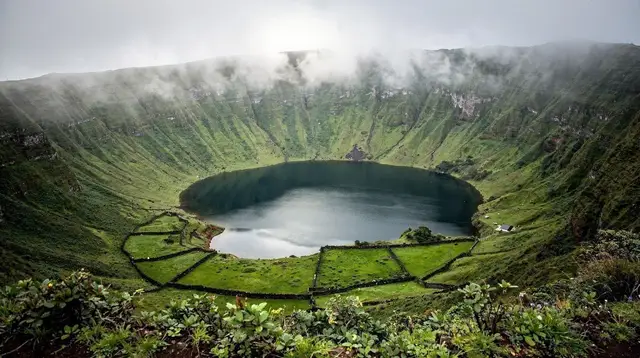
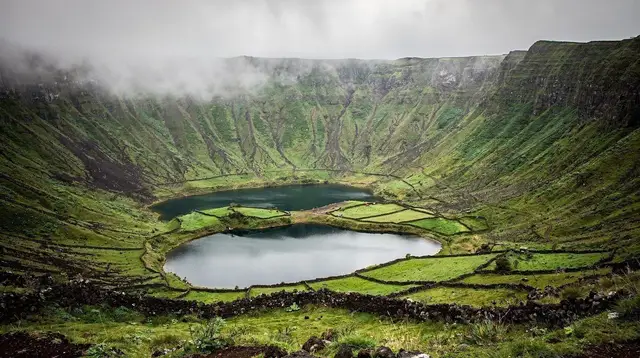
Devote today to Sete Cidades, the volcanic caldera holding the famous twin lakes — one traditionally described as blue, the other green, seen together from the Vista do Rei viewpoint. It’s about 40 minutes from Ponta Delgada by car, and the crater floor itself, with its village, church and lakeside paths, is worth a few unhurried hours rather than a quick photo stop.
If you’d rather not navigate the viewpoints and back roads yourself, a guided day tour bundles the main stops with some of the area’s other craters into one organized outing — see the Sete Cidades and Fire Lake day tour from Ponta Delgada. On the way back, if time allows, a detour to Lagoa do Fogo, the island’s highest crater lake, adds a very different, starker landscape to the day. Return to Ponta Delgada for the night.
Day 3: Furnas — hot springs and the cozido
Today moves east to the Furnas valley, one of the most distinctive thermal areas anywhere in the Azores. Two hot-spring experiences anchor the day, and they suit different moods: the Terreiro da Terra Nostra Park botanical garden built around a large mineral-rich pool at around 40°C, good for a longer, more scenic soak, and the smaller Poço da Dona Beija pools, more purely about the water itself. Whichever you choose — or both, if you split the day — pack a dark swimsuit and a towel you don’t mind staining: the iron-rich water leaves a rust-orange tint on light fabric that doesn’t wash out easily.
For lunch, this is the place to try the cozido das Furnas, a meat-and-vegetable stew slow-cooked for six to seven hours in the volcanic ground itself. Restaurants serving it need booking a day or two ahead (more in July and August), and it’s a lunch-only dish since the pots go into the ground before dawn and come out mid-morning — don’t plan on ordering it on a whim.
A packaged version of the day, pairing the cozido experience with the thermal pools, is available as the Cozido das Furnas and Thermal Pools experience, useful if you’d rather not chase restaurant reservations yourself. Overnight in Furnas or back in Ponta Delgada, depending on your next morning’s flight time.
Day 4: Tea, coast and transfer day
A lighter day before the flight. If you’re staying near Furnas, the Gorreana tea plantation — Europe’s oldest working tea estate — is a short drive away and free to walk through, with a small shop and tasting room. From there, work your way back toward Ponta Delgada along the coast, stopping wherever looks good; the south-coast villages between Vila Franca do Campo and the capital make an easy, unstructured final stretch on São Miguel.
Return the rental car at Ponta Delgada airport in time for your SATA Air Açores flight to Terceira — the flight itself runs well under an hour, and this is the one leg of the week you should book in advance rather than assume you can arrange locally. Land in Terceira, pick up a second rental car, and settle into Angra do Heroísmo for the next three nights.
Day 5: Angra do Heroísmo, UNESCO old town
Spend today on foot in Angra do Heroísmo, the only Azorean town inscribed on the UNESCO World Heritage list, recognized since 1983 for its role as a major stopover port on the Atlantic trade routes during the Age of Discovery. The pastel-fronted historic centre, the Sé Cathedral, and the climb up Monte Brasil — the old volcanic promontory overlooking the harbour, now a park with sweeping views — are all walkable from the centre. Compared with São Miguel’s outdoor, crater-lake pace, this is a slower, more architectural day, and a good contrast partway through the week. For a wider comparison of what each island does best, see São Miguel vs Terceira.
Day 6: Algar do Carvão and the Biscoitos vineyards
Head inland and along the north coast today. The Algar do Carvão is an extinct volcanic chimney you descend into by staircase, reaching a cavern with its own microclimate, hanging algae formations and a small lake at the bottom — one of the more striking lava-cave experiences in the archipelago. Afterward, drive to Biscoitos, where vines have been planted directly into partitioned pockets of lava rock for generations; the small wine museum and tasting rooms here give a very tangible sense of how differently agriculture works on a volcanic island.
If you have any appetite left for water after the cave and vineyards, Terceira’s coastline also offers one of the week’s more memorable wildlife encounters — dolphins are resident here for much of the year, and several small operators run swim experiences from Angra’s harbour, such as the Terceira swimming-with-dolphins excursion. As with any wildlife outing in the Azores, treat it as a good chance rather than a guarantee — no operator can promise a sighting on a given day.
Day 7: Slow morning and departure
Keep the last day light. If your flight home leaves from Terceira, use the morning for anything left unfinished — a return visit to Angra’s old town, a last coastal drive, or simply breakfast with a view of the harbour before returning the car. If instead your international departure routes back through São Miguel, build in enough buffer for the connecting SATA flight and remember you’ll be moving from UTC-1 back toward whatever time zone your onward flight departs in.
Making the most of a two-island week
A few practical notes make this itinerary run more smoothly. Book the inter-island flight and any cozido restaurant reservation before you land — both are the two things on this route that don’t work well as same-day decisions. Rent the car separately on each island rather than trying to carry one across; there’s no single island-hopping rental network in the Azores. And keep half an eye on the sky at all times — the Azorean saying about “four seasons in one day” is not a figure of speech, and a bright morning in Sete Cidades or Angra can turn to rain within the hour, then clear again. None of this requires rescheduling; it just means not over-planning the day around a single weather forecast.
| Day | Island | Focus |
|---|---|---|
| 1 | São Miguel | Arrival, Ponta Delgada |
| 2 | São Miguel | Sete Cidades crater lakes |
| 3 | São Miguel | Furnas hot springs and cozido |
| 4 | São Miguel → Terceira | Gorreana tea, flight, arrival in Angra |
| 5 | Terceira | Angra do Heroísmo UNESCO old town |
| 6 | Terceira | Algar do Carvão, Biscoitos vineyards |
| 7 | Terceira | Slow morning, departure |
If whale and dolphin watching matters more to your trip than this itinerary allows, note that São Miguel’s waters also host sperm whales and dolphins for much of the year, with a heritage angle you can add on Day 1 or 2 through the São Miguel whaling heritage tour, which covers the old lookout tradition rather than just the boat trip itself. And for travelers weighing whether Terceira’s dolphin encounters beat São Miguel’s, the Terceira whale watching and swimming with dolphins combination folds both into one outing on the island’s side of the week.
FAQ: planning a 7-day São Miguel and Terceira trip
Do I need to fly or can I take a ferry between São Miguel and Terceira?
You need to fly. The route between São Miguel and Terceira is served by SATA Air Açores, not by ferry — inter-island ferries in the Azores mainly connect the central group of Faial, Pico and São Jorge, which sit close enough together for regular sailings.
Is a car necessary on both islands?
Yes. Public transport between villages is limited on both São Miguel and Terceira, and car rental is arranged separately on each island — there’s no single rental agreement that follows you across the inter-island flight.
How far in advance should I book the São Miguel–Terceira flight?
Book it as soon as your dates are fixed, ideally alongside your international flights. It’s a short domestic hop, but treating it as a flexible, last-minute booking risks limited seat availability or scheduling it too close to other plans.
Will I definitely see whales or dolphins on this trip?
No sighting can be guaranteed on any single outing, in the Azores or anywhere else. Dolphins and sperm whales are present in Azorean waters most of the year, and operators report high success rates overall, but neither is a certainty on a specific day or specific tour.
Is seven days too rushed to enjoy both islands properly?
Not at this pace. Four days on São Miguel and three on Terceira leaves room for slow mornings and unhurried thermal-pool afternoons rather than a checklist — it’s a deliberately easy itinerary, not a compressed one.
Can I do the cozido das Furnas without booking ahead?
It’s risky. Restaurants serving cozido need advance notice, typically a day or two (longer in July and August), because the pots are buried in the volcanic ground before dawn and only a fixed number are prepared each day.
Which island should I spend more time on if I have to choose?
São Miguel offers more variety of landscapes and activities for a first-timer, while Terceira offers depth in one place — its UNESCO old town and lava-vineyard countryside. This itinerary weights São Miguel slightly heavier for that reason, but see São Miguel vs Terceira if you want to shift the balance.
Does this itinerary work in winter as well as summer?
The overall structure works year-round, though hydrangeas won’t be in bloom outside June to August and winter brings more rain and wind, which can affect outdoor stops like Sete Cidades viewpoints or the dolphin excursions. See best time to visit the Azores before locking in a season.
tours.7 days
Verified deep-linked GetYourGuide tours. Book through these links and we earn a small commission at no cost to you.
GetYourGuide does not provide a product photo for this activity — the image shows the meeting point, photographed by us.