Common Mistakes in the Azores
What's the most common mistake travelers make when planning an Azores trip?
The most common mistake is underestimating how long everything takes — driving between sights on one island, moving between islands, and getting a table for cozido or a slot on Montanha do Pico. Most last-minute problems trace back to not booking the Pico climb, whale-watching, or a Furnas restaurant early enough, and to renting a car too small for narrow, foggy mountain roads.
Most Azores trips don’t go wrong because of a bad flight or a rained-out afternoon. They go wrong in the planning stage, weeks before departure, when a traveler assumes the archipelago will behave like a more familiar island destination — that distances are short, that boat trips and mountain hikes can be booked on arrival, and that one rental car will do for any island. Nine volcanic islands spread across the middle of the North Atlantic don’t work that way. This page runs through the mistakes that come up again and again in the final week of preparation, so you can check them off rather than discover them on the ground.
Treating map distance like driving time
On paper, São Miguel looks like an island you could circle in a morning. In practice, roads between Sete Cidades, Furnas, and Nordeste wind along crater rims and coastal cliffs, drop into valleys, and climb back out, and a 40 km stretch can easily take over an hour. The same applies on Terceira, Pico, and São Jorge: a route that looks like a quick hop on a map is rarely a quick hop in a car.
The fix is simple but easy to skip when you’re excited about an itinerary: read driving in the Azores before you finalize a day-by-day plan, and build routes around fewer stops with more time at each, not a checklist of every viewpoint on the island. If you’re still deciding how many days a given island deserves, how many days in the Azores is a better starting point than squeezing an island into a single rushed day.
Renting a car that’s wrong for the roads
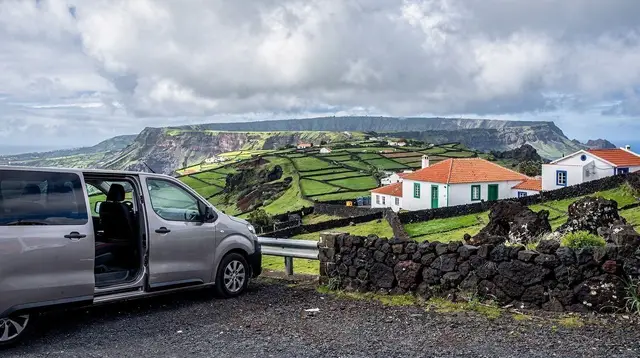
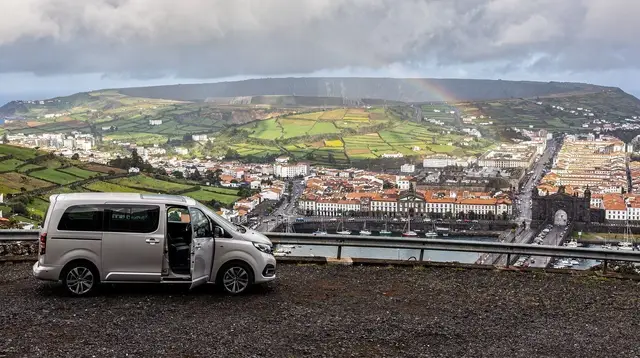
Choosing a rental car by price alone is one of the most common mistakes visitors make. Roads here are narrow, frequently sinuous along cliffs or crater edges, and fog can drop visibility with little warning at altitude — especially on the highlands of São Miguel, Pico, and São Jorge. Cattle grazing loose near pasture roads is a real hazard on some islands, not a postcard cliché. A car that felt perfectly adequate in a city can feel undersized and underpowered on a mountain crossing at dusk.
Read car rental in the Azores before booking, and remember that each island is rented separately — there is no single archipelago-wide rental network, so a car booked on São Miguel does not travel with you to Pico or Terceira. Driving here is also on the right, as on the rest of Portugal, which is one less thing to adjust to if you’re used to right-hand driving countries, but not a reason to skip the rest of the preparation.
Not booking the Montanha do Pico climb ahead of time
The ascent of Montanha do Pico — at 2,351 m, the highest point in Portugal — is not an open trail you show up to at dawn. Registration through the Casa da Montanha is mandatory, the number of climbers allowed per day is capped, and every hiker is issued a GPS locator that must be returned at the end of the walk. Fees are tiered by how far you go (the shelter, the crater rim, or the final push to the Piquinho), plus a returnable deposit or exoneration charge on the tracker, and residents of the autonomous region climb free — figures worth checking directly against the current regulation rather than treating as fixed forever.
Visitors who assume they can register the morning of the hike are often turned away or bumped to a later date, which can wreck a tightly scheduled Pico stop. If you’d rather not manage logistics, permits, and a guide yourself, an organized Pico island day tour handles much of this for you. For anyone considering a summit overnight rather than a same-day ascent, Mount Pico overnight camping spells out the extra planning that involves, and climbing Mount Pico covers the route itself in detail.
Assuming whale watching can be booked the day before
The Azores are one of the best places in the world to see cachalots (sperm whales) and dolphins, with several species resident close to shore for much of the year, and greater whales like blue and fin whales passing through mostly in spring. But ‘resident’ and ‘seasonal’ don’t mean ‘available on demand.’ Boats have limited capacity, popular time slots go first, and no operator can promise a sighting on any given outing — average success rates are high but never absolute. Waiting until you land to book a spot, especially in the busier summer months, is one of the more avoidable regrets travelers report.
If whale or dolphin watching is a priority rather than a maybe, book it as early as your dates allow, and treat a Azores sunset boat tour or similar outing as something to lock in during the planning phase, not the night before. Whale watching in the Azores and whale season in the Azores go deeper into which months favor which species — worth reading before you assume any single month, including summer, is automatically ‘whale season’ for every kind of animal.
Confusing the Azores with Madeira
The Azores and Madeira are both Portuguese Atlantic archipelagos, both volcanic, and both green — and travelers researching one sometimes copy vocabulary and expectations from the other without noticing. The clearest example: Madeira’s famous irrigation-channel paths are called levadas, a word that belongs specifically to that archipelago. In the Azores, coastal and crater-rim walking paths are called trilhos, and they’re a different kind of trail entirely, built for different terrain. Using ‘levada’ to describe an Azorean hike is a small slip that signals a bigger one — planning based on the wrong island group’s climate, ferry network, or hiking style.
A handful of place names don’t help: both archipelagos have a São Jorge and a Faial, and both have a Calheta and a São Vicente, none of them the same place. If your research pulls up conflicting details about opening hours, trail names, or best months to visit, check which archipelago the source is actually describing. Azores vs Madeira lays out the practical differences if you’re trying to decide between the two or simply want to stop mixing them up.
Not accounting for inter-island transport gaps
Not every pair of islands is connected the same way, and assuming so causes some of the tightest last-minute scrambles. The Pico-Horta (Faial) ferry crossing, part of what’s known locally as the ‘Triangle’ with São Jorge, runs year-round and several times a day — genuinely dependable. The wider ferry network linking the rest of the central group, including Terceira and Graciosa, generally only operates from June to September. Flores and Corvo, the westernmost islands, have the most weather-sensitive flight and ferry links in the archipelago and can be disrupted for days at a stretch outside the main season.
| Route | Typical availability |
|---|---|
| Pico ↔ Horta (Faial) | Year-round, several sailings daily |
| Wider central group (incl. Terceira, Graciosa) | Roughly June–September |
| Flores ↔ Corvo | Weather-dependent, can pause for days |
Never book a tight same-day connection — a flight home right after an inter-island hop, for example — around anything but the Triangle route. Inter-island ferries in the Azores and inter-island flights (SATA) cover the specifics island by island, and it’s worth reading both before locking in a multi-island itinerary.
Leaving Furnas’ cozido to chance
The cozido das Furnas — a stew of meats and vegetables slow-cooked for six to seven hours in the volcanically heated ground near the Lagoa das Furnas — is one of the most memorable meals in the Azores, and one of the easiest to miss through poor timing. The pots are buried before dawn and lifted in late morning, so it’s served at lunch only, and restaurants generally ask for a reservation one to two days ahead, extending to two or three days in July and August. Turning up hoping for a table on the day, especially in high season, often means leaving Furnas without trying it.
Pair a Furnas visit with an early reservation call or online booking, not a same-day walk-in plan. The cozido das Furnas guide explains how the cooking process actually works and what to expect on the plate.
Ignoring the “four seasons in one day” reality
Azorean weather shifts fast — locals describe it as four seasons in a single day, with fronts moving through quickly enough to turn sunshine into rain and back within a few hours. Travelers who plan an entire day around the morning forecast, or cancel an outdoor activity at the first cloud, often miss windows of clear weather later on. It also means the Azores are not a dependable dry-and-sunny bet the way the Canary Islands can be — expect higher humidity and cloud cover year-round, with July and August only statistically drier, never guaranteed rain-free.
Keep half a day’s plans flexible rather than fixed, and have an indoor or covered alternative ready for a sudden shower — a farm visit like the Furnas 4WD tour or a coastal outing you can shift by an hour or two both work well around unpredictable weather.
Timing a trip around hydrangeas that aren’t there yet
The hydrangea hedges that line so many Azorean roads in photographs are a summer phenomenon, not a year-round one. Flowering usually begins in May-June and peaks in July-August, fading toward early autumn. A visit planned for late April or September in the hope of postcard-blue hedgerows will often show only early buds or a hedge past its best. If hydrangeas are part of the reason you’re visiting, check the hydrangea season guide against your actual travel dates before you commit.
A quick pre-departure checklist
| Task | Why it matters |
|---|---|
| Confirm Pico climb registration and time slot | Quota-limited, GPS-tracked, not a walk-up hike |
| Book whale/dolphin watching | Limited capacity, no sighting is guaranteed |
| Reserve a Furnas restaurant for cozido | Cooked once, served lunch-only, books out in summer |
| Choose a rental car suited to mountain roads | Narrow, winding roads and frequent fog at altitude |
| Check ferry/flight schedules for your exact islands | Only the Pico-Faial-São Jorge Triangle runs year-round |
| Re-check bloom dates if hydrangeas matter to you | Peak is July-August, not spring or late autumn |
| Build slack into daily driving plans | Distances take longer than the map suggests |
None of these fixes take long once you know to look for them — the point of this list is simply to move them from ‘discovered on day two’ to ‘handled before you land.’
FAQ: last-minute Azores planning questions
What is the single biggest planning mistake first-time visitors make in the Azores?
Underestimating time. A short distance on the map can take much longer on narrow, winding roads, and moving between islands depends on flights or ferries that don’t run on a mainland-style schedule. Build in slack rather than a tight island-per-day plan.
How far in advance should I book the Montanha do Pico climb?
As early as your dates are fixed. The ascent is capped by a daily quota, requires registration through the Casa da Montanha, and issues a GPS tracker you must return — it is not a walk-up trail, and popular slots, especially for a sunrise start, fill well before arrival.
How far in advance should I book a whale-watching or dolphin trip?
Several days to a couple of weeks, especially in peak season (roughly June to September) or if you have only one or two days on an island. Operators do sell out, and results are never guaranteed, so give yourself more than one chance if watching cetaceans is a priority.
What size of rental car do I actually need for the Azores?
Enough car for narrow, steep, sometimes fog-covered roads with tight bends near crater rims and coastal cliffs. A car that felt fine in a city is often the wrong choice here; many visitors find a slightly larger or higher-clearance vehicle far less stressful, particularly on São Miguel and Pico.
Are the Azores the same as Madeira?
No. They are two separate Portuguese archipelagos with different volcanic histories, different hiking networks, and different peak seasons. A frequent slip is describing an Azorean coastal or crater trail as a “levada” — that word belongs to Madeira; in the Azores these paths are called trilhos.
Does rain in the morning mean the whole day is ruined?
Not necessarily. Azorean weather is famous for changing several times within a single day, sometimes moving from cloud to sun and back within hours. A grey start is common and often not a reliable forecast for the afternoon.
Can I count on seeing hydrangeas in bloom in May or September?
Only partially. Hydrangeas typically start flowering in May-June and reach full bloom in July-August, tapering off toward early autumn. A May or September visit usually means early buds or fading flowers rather than the classic hedge-lined roads of midsummer.
How much extra time should I add for inter-island ferries or flights?
More than you think, and it depends which islands. The Pico-Faial-São Jorge “Triangle” ferry runs year-round and is the most dependable inter-island link; wider central-group ferry routes run roughly June to September only, and Flores-Corvo connections are the most weather-sensitive in the archipelago, so avoid scheduling a tight flight connection around them.
Trip-planning essentials on GetYourGuide
Verified deep-linked GetYourGuide tours. Book through these links and we earn a small commission at no cost to you.
GetYourGuide does not provide a product photo for this activity — the image shows the meeting point, photographed by us.