Free Things to Do in the Azores
What can you do for free in the Azores?
Miradouros, coastal and crater-rim trails, free-access natural pools, historic town walks in Ponta Delgada, Angra do Heroísmo and Horta, and open-air religious festivals cost nothing across the islands. Paid highlights like Parque Terra Nostra in Furnas and the Algar do Carvão charge an entrance fee, so treat free stops as extras between booked excursions rather than substitutes for them.
A rental car, a full tank of fuel and a pair of decent shoes cover most of what the Azores do best, at no extra charge. This is a nine-island archipelago built on volcanic craters, cliff-top pastures and Atlantic coastline, and a striking share of what makes it worth visiting sits in the open air, unstaffed and unticketed. That matters for anyone stretching a budget, and it matters just as much for a traveller who has already booked a whale-watching trip or a jeep tour and wants to fill the gaps between them without spending more.
This guide gathers what genuinely costs nothing across the islands: miradouros, marked trails, open-access coastline, historic town centres, and the open-air festivals that punctuate the Azorean calendar. It does not repeat the day-to-day budget breakdown covered in Azores daily budget, the full natural-pool roundup in Azores natural swimming pools, the hike-by-hike detail in Best hikes in the Azores, or the date-by-date list in Azores festivals calendar. Instead, it draws the line between free and paid clearly enough that you don’t plan around a site that turns out to charge admission.
Miradouros: the free viewpoints that do the heavy lifting
The single best free activity in the Azores is also the simplest: driving or walking to a miradouro. These are marked, open-access viewpoints maintained by the regional government, with no gate, no ticket booth and no opening hours to work around.
On São Miguel, the crater-rim miradouros above Sete Cidades — Vista do Rei and Miradouro da Boca do Inferno among them — look down over the twin blue-and-green lakes at no cost at all; the full walking and viewpoint breakdown is in Sete Cidades crater guide. The viewpoint over Lagoa do Fogo, the crater lake at the island’s high central point, is free too, though the descent to the lakeshore itself is a proper hike rather than a stroll — see Lagoa do Fogo guide before attempting it.
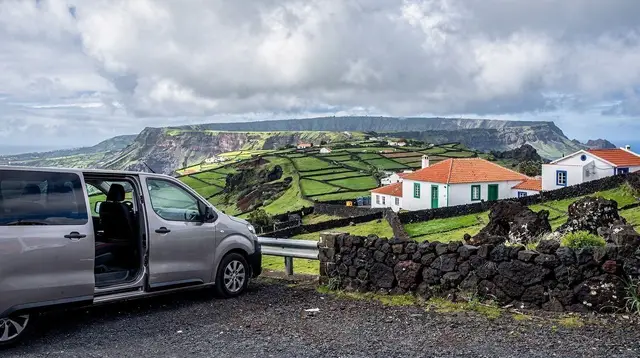
Every island has its own version of this. Terceira, Pico, Faial, São Jorge, Flores and Graciosa all have roadside or short-walk miradouros looking over fajãs, calderas or the ocean, usually with a bench, an information panel, and nothing to pay. Chase the weather rather than the clock here: the Azorean habit of “four seasons in one day” means a miradouru shrouded in cloud at 9am can be perfectly clear by noon, so it is worth returning rather than writing a viewpoint off after one grey visit.
Hiking trails that cost nothing to walk
The Azores’ official PR (pedestrian route) trail network is free to walk, unguided, at any time, and covers all nine islands. Trailheads are marked, most are reachable by car, and none of them charge an entrance fee — a genuine point of difference from many of the archipelago’s staffed attractions.
São Miguel carries the largest concentration of these routes; see São Miguel hiking trails for the full list. São Jorge’s fajã trails, which drop from the island’s high central plateau down to sea-level lava platforms, are covered in São Jorge fajãs hikes, and Flores’ waterfall-and-crater-lake circuits are in Flores hiking trails. For a general sense of how these routes are graded and what “easy” versus “difficult” actually means on the ground, Azores trail grading explained is worth a read before committing to anything ambitious.
One clear exception belongs on this list precisely because it is easy to assume otherwise: the ascent of the Montanha do Pico, at 2,351 m the highest point in Portugal, is not a free, walk-up trail. It requires registration at the Casa da Montanha, a daily quota of climbers, and the loan of a GPS tracking device against a deposit or exoneration fee — full detail in Climbing Mount Pico. Every other marked PR trail on the island, by contrast, is open and free.
Brief, practical safety notes apply to all of this free hiking: fog can descend fast on the high ground of São Miguel, Pico and São Jorge, cutting visibility with little warning, and free-roaming cattle occasionally cross ridge-line pasture roads. Neither should stop you from hiking; both are worth knowing before you set out.
Coastline and natural pools with open access
Much of the Azores’ volcanic coastline is public and free to walk, swim from or photograph, and this is where a lot of the archipelago’s best scenery sits with no admission charge at all. The full site-by-site rundown, including which pools have lifeguards, changing rooms or seasonal closures, lives in Azores natural swimming pools — this guide only flags the general rule: an unstaffed lava-rock pool or a public beach costs nothing, while a maintained, landscaped pool complex usually does.
That distinction matters most in Furnas, on São Miguel, where two hot-spring sites sit close together but work very differently. The Parque Terra Nostra, with its large iron-rich thermal pool inside a historic botanical garden, is a paid site — budget in the region of 17 EUR for an adult ticket; see Terra Nostra Park thermal pool for current hours and pricing. It is a genuinely worthwhile stop, but it is not a free activity, and treating it as one is the single most common budgeting mistake on this list.
Town and city walks that cost nothing
Three Azorean town centres reward an unhurried, free walk more than almost any paid activity on the islands.
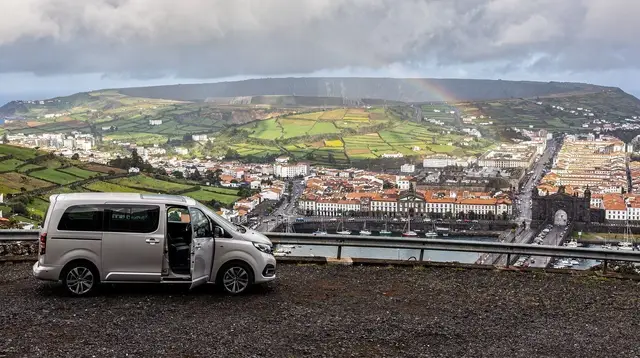
Ponta Delgada, the capital on São Miguel, has a compact historic core built around the black-and-white Portuguese cobblestone (calçada) that lines its main streets, along with the Portas da Cidade gate and the harbourfront promenade — see Ponta Delgada walking guide for a self-guided route.
Angra do Heroísmo, on Terceira, is a UNESCO World Heritage centre in its own right, its historic street grid still tracing the port town that once served ships crossing between Europe, Africa and the Americas; walking it costs nothing, and Angra do Heroísmo UNESCO guide covers the layout. The nearby Monte Brasil volcanic headland, overlooking the town and harbour, is likewise open and unticketed.
Horta, on Faial, adds a different kind of free attraction: the harbour walls and pavements around its marina are covered end to end in murals left by visiting sailors over decades, a tradition said to bring bad luck to any boat that leaves without adding one. Wandering the marina and stepping into the legendary Peter Café Sport costs nothing beyond a drink if you choose to sit down — full context in Horta marina and Peter Café Sport.
Festivals: free, open-air and genuinely local
Much of the Azores’ festival calendar is free to attend, because these events are rooted in parish life rather than ticketed tourism. The Divino Espírito Santo (Holy Spirit) festivities, held across the islands through spring and summer, involve open processions, free community meals in some parishes, and decorated chapels called impérios that anyone can walk past and photograph at no cost — see Azores religious festivals for how these are organised island by island, and Azores festivals calendar for dates.
Terceira’s touradas a corda — bulls run through village streets on a long rope, held by handlers — draw crowds who watch from behind barriers or from balconies for free; only certain built seating at the largest events, such as the Sanjoaninas in Angra do Heroísmo, is ticketed. The mechanics and safety context of this local tradition are explained in Terceira bull-running explained.
Free vs. paid: sites that get mixed up
A handful of well-known Azorean sites sound like they should be free — they are natural features, after all — but are staffed, maintained or gated, and charge accordingly. Keeping the two categories straight avoids the most common Azores budgeting mistake.
| Site | Island | Free or paid | Why |
|---|---|---|---|
| Sete Cidades miradouros | São Miguel | Free | Open, unstaffed crater-rim viewpoints |
| Lagoa do Fogo viewpoint | São Miguel | Free | Roadside miradouro, no gate |
| Parque Terra Nostra, Furnas | São Miguel | Paid | Maintained botanical garden and thermal pool, entry fee |
| Poça da Dona Beija, Furnas | São Miguel | Paid | Managed thermal pool complex, entry fee |
| Algar do Carvão | Terceira | Paid | Staffed lava tube with lighting and walkways |
| Angra do Heroísmo historic centre | Terceira | Free | Open streets and public squares |
| Horta marina murals | Faial | Free | Open harbourfront, public access |
| Montanha do Pico ascent | Pico | Paid registration | Quota, GPS loan, exoneration fee |
Planning free time around paid excursions
Free activities work best as connective tissue rather than as the entire plan. A morning miradouro before a paid boat trip, or a free coastal walk on a day when a booked activity is weather-dependent, keeps the itinerary moving without adding cost. A sunset boat tour around the Azores pairs naturally with a free late-afternoon walk along a marina beforehand, since both depend on calm evening light rather than a fixed schedule.
On Pico, a free morning at a lava-rock miradouru over the currais vineyards sits well alongside a paid Azores Pico Island tour, which covers ground — the Casa da Montanha, more distant fajãs, the whaling museum area — that is harder to reach without a vehicle or a guide. On São Miguel, the free viewpoints around Furnas complement rather than replace a paid São Miguel Furnas 4WD tour, which reaches back-road viewpoints a rental car generally cannot.
Even a single half-day paid activity, such as a half-day dairy farm tour on São Miguel, leaves the rest of the day free for a walk through Ponta Delgada or a stop at a nearby miradouro at no extra cost — the point being that a tight budget and a full itinerary are not mutually exclusive in the Azores.
A short island-by-island free checklist
- São Miguel — Sete Cidades and Lagoa do Fogo miradouros, Ponta Delgada’s historic centre, the Vila Franca do Campo waterfront looking out to the islet.
- Terceira — Angra do Heroísmo’s UNESCO streets, Monte Brasil, roadside views over the Biscoitos vineyards.
- Pico — Lava-field miradouros over the currais, the Lajes do Pico waterfront where the island’s whaling history began.
- Faial — Horta’s marina murals, the rim viewpoint over the Capelinhos volcano site, Caldeira do Faial’s crater-rim trail.
- São Jorge — Fajã-facing miradouros along the north coast road, the descent trails into the fajãs themselves.
- Flores — Roadside views over the Lagoa Funda and Lagoa Comprida crater lakes, waterfall viewpoints along the main road.
- Corvo — The Caldeirão crater-rim walk, free and largely untouristed given how few visitors reach the island at all.
- Santa Maria — The Praia Formosa beachfront and the red-toned Barreiro da Faneca viewpoint.
- Graciosa — The Caldeira da Graciosa crater-rim walk and the windmill-dotted approach to Santa Cruz da Graciosa; note that Graciosa currently has no bookable excursions listed at all, which makes its free sites especially central to a visit.
Frequently asked questions about free things to do in the Azores
What are the best free things to do in the Azores?
Miradouros (viewpoints) reached by a short walk or a drive, marked hiking trails, free-access natural pools along the coast, and the historic centres of Ponta Delgada, Angra do Heroísmo and Horta top the list. All cost nothing beyond getting there, usually by rental car.
Is the Parque Terra Nostra in Furnas free to visit?
No. Terra Nostra is a paid botanical garden and thermal pool, with an entrance fee of roughly 17 EUR for adults. It is a worthwhile paid stop in Furnas, but it is not a free activity, unlike the free miradouros and trails around the same valley.
Do I need to pay to see Sete Cidades or Lagoa do Fogo?
No. The crater-rim miradouros above Sete Cidades and Lagoa do Fogo on São Miguel are open, unstaffed viewpoints with free public access at any time. Only guided tours, shuttle transport or organised activities around them are paid.
Are Azorean festivals free to attend?
Most parish-level religious festivals, such as the Divino Espírito Santo celebrations, are free and open-air, funded by local brotherhoods rather than ticketed. Some Terceira bull-running events (touradas a corda) and concert stages during larger festivals may rope off paid seating, but street viewing itself is free.
Can I hike in the Azores without a guide or fee?
Yes, on the marked PR trail network maintained by the regional government, which has no entrance fee and does not require a guide. Some specific experiences, like the summit push on Montanha do Pico, require a paid registration and are the exception, not the rule.
Is the Algar do Carvão lava cave free?
No. The Algar do Carvão on Terceira is a maintained, staffed site with an entrance fee, unlike the open-air Furna do Enxofre viewpoint area on Graciosa or a natural, unstaffed miradouro. Budget for a small ticket price if it is on your Terceira itinerary.
Trip-planning essentials on GetYourGuide
Verified deep-linked GetYourGuide tours. Book through these links and we earn a small commission at no cost to you.
GetYourGuide does not provide a product photo for this activity — the image shows the meeting point, photographed by us.