Rainy Day Activities in the Azores
What can you do in the Azores when it rains?
Go underground or under a roof: lava caves such as Algar do Carvão and Furna do Enxofre, tea and wine tastings at Gorreana or on Pico, São Jorge cheese dairies, and a long cozido das Furnas lunch all run regardless of weather. Azorean showers are usually short, so plan a covered morning and leave the outdoor half of the day for whenever the sky clears.
Your Wet-Weather Game Plan, Island by Island
You wake up, pull back the curtain, and the sky over São Miguel or Terceira has gone the colour of wet slate. This is not a reason to write off the day. The Azores’ “four seasons in one day” pattern means a grey, dripping morning very often clears by early afternoon — but until it does, the trick is choosing activities that are covered in the literal sense, not just sheltered from the wind on a headland somewhere. This page is built to be read fast, ideally the night before or over breakfast, so you can commit to a plan and stop watching the forecast.
The table below is a starting point for whichever island you’re on. Everything in it is under a roof or underground — nothing here depends on the rain actually stopping.
| Island | Genuinely covered fallback | Roughly how long |
|---|---|---|
| São Miguel | Gruta do Carvão lava tube (Ponta Delgada), Gorreana tea factory, cozido lunch in Furnas | 1–3 hours each |
| Terceira | Algar do Carvão volcanic chimney, Angra do Heroísmo’s covered arcades and cafés | 1–2 hours |
| Pico | Wine cellar and adega visits around Criação Velha and Santa Luzia | 1–2 hours |
| Faial | Peter Cafe Sport in Horta (scrimshaw collection upstairs, bar downstairs) | 1 hour+ |
| São Jorge | Queijaria (cheese dairy) visits and tastings | 1 hour |
| Graciosa | Furna do Enxofre volcanic cave and lake | 1 hour |
| Flores / Corvo / Santa Maria | Fewer indoor options — build in flexible days rather than a fixed plan | — |
Go Underground: Lava Caves and Volcanic Tubes
The most reliably dry activity in the entire archipelago is also one of its most distinctive: going inside a volcano. The Azores sit on a junction of three tectonic plates, and that volcanic plumbing left behind lava tubes and collapsed chimneys that make for a proper rainy-day outing regardless of what’s happening on the surface.
On Terceira, the Algar do Carvão is a vertical volcanic chimney you descend into by staircase, opening onto a chamber with its own microclimate, ferns growing on the walls, and a small lake at the bottom. It’s genuinely underground and genuinely unaffected by rain — read the practicalities in the Algar do Carvão guide before you go, since opening hours vary by season.
On Graciosa, the Furna do Enxofre is the largest known volcanic cave in Europe, with its own underground lake and active sulphur fumaroles. It’s part of what makes the island a UNESCO biosphere reserve, and it’s an easy pick for a wet morning since — like Algar do Carvão — the weather outside is irrelevant once you’re inside. The full Furna do Enxofre guide covers access and what to expect from the sulphur smell (it’s real, and part of the experience).
On São Miguel, the closest equivalent is the Gruta do Carvão, a lava tube inside the city limits of Ponta Delgada — useful precisely because it doesn’t require a drive out to the countryside in bad conditions. If you’re based in Ponta Delgada and the rain has set in for the morning, this is the fastest indoor option on the island. For a wider view of which tubes and chimneys exist across the archipelago and how they compare, the lava caves guide is worth bookmarking before your trip.
Tastings Under a Roof
Food and drink are where the Azores’ rainy-day options get genuinely good, because so much of the archipelago’s produce is processed indoors, in working buildings you can actually tour.
Gorreana, on São Miguel, is the oldest tea plantation in Europe still in production, and its factory floor — the drying and rolling machinery — is entirely under cover, with a café attached where you taste the finished leaves. It’s one of the few sites on the island where the visit is designed to happen indoors even in good weather; see the Gorreana tea plantation guide for opening times.
Pico’s wine cellars are a different kind of indoor stop. The island’s UNESCO-listed vineyard landscape — the stone-walled currais around Criação Velha and Santa Luzia — is an outdoor sight best saved for a clear day, but many of the adegas built into that landscape have covered tasting rooms where you can sit out a shower with a glass of the local verdelho. The Pico wine and UNESCO vineyards guide lists which cellars are set up for visitors.
São Jorge’s cheese dairies work the same way: the queijarias producing the island’s protected-origin, raw-milk cheese are working indoor spaces, and a tasting is a genuine roof-over-your-head activity rather than a rain-adjacent one. Details are in the São Jorge cheese guide.
Then there’s the cozido das Furnas, which deserves a special mention because it solves a different rainy-day problem: what to do with a long, unhurried midday when you don’t want to be outside at all. The meat, sausage and vegetable stew is cooked for six to seven hours in the geothermally heated ground near the Lagoa das Furnas, with no direct flame — just volcanic steam.
It’s served exclusively at lunch, since the marmites are buried before dawn and dug up mid-morning, and restaurants generally want 24 to 48 hours’ notice (stretching to 48–72 hours in July and August). That lead time is the catch: if you want cozido on a specific rainy day, call ahead the evening before rather than deciding at breakfast. Full ordering logistics are in the cozido das Furnas guide, and the wider Azorean food guide covers other dishes worth seeking out on a slow indoor day.
Thermal Pools: A Partial Answer, Not a Full One
It’s tempting to file thermal bathing under “rainy day activities,” and there’s something to that — soaking in warm, iron-rich water at 35–40°C while it drizzles is one of the more memorable things you can do on São Miguel. But it’s worth being honest about the limits: Terra Nostra Park and Poça da Dona Beija are both outdoor pools. You’ll be dry in the water and soaked getting to and from the changing rooms in anything heavier than a light shower.
Treat a thermal soak as a good middle-of-the-day activity to slot in once a downpour has eased to drizzle, not as the anchor of a genuinely wet, all-day forecast — for that, lean on the underground and indoor options above instead. If you want a fully indoor equivalent, several islands also have proper spa and wellness centres; the Azores spa and wellness guide rounds those up separately from the natural pools, and the full picture of the archipelago’s hot springs — sources, temperatures, and which pools suit which traveller — is in the dedicated Azores hot springs guide.
Museums, Marinas and Small-Town Shelter
Every main town has at least a small municipal museum or heritage house, and these are underrated rainy-day filler, particularly in Angra do Heroísmo’s UNESCO-listed historic centre, where covered arcades along the main streets let you window-shop and duck into cafés without much exposure between stops.
In Horta, on Faial, the marina is famous for the painted murals left by generations of transatlantic sailors — an outdoor sight, admittedly, but a quick one you can take in under an umbrella on the way to Peter Cafe Sport, the marina’s landmark bar, which is fully indoors and doubles as an informal museum of scrimshaw (carved whale-tooth and bone art) upstairs. It’s a solid hour or two of shelter with a drink in hand; see the Horta marina and Peter Cafe Sport guide for details.
The archipelago’s whaling past, which that scrimshaw collection reflects, is covered in more depth in the Azores whaling history guide, and if you’re drawn to the handicraft side of a rainy afternoon — scrimshaw, wickerwork, wool — the Azores crafts and souvenirs guide points to where those crafts are still made and sold.
If You’d Rather Book a Tour and Work Around the Rain
Some tour formats hold up better than others when the forecast turns. Here’s an honest read on the ones worth considering, rather than a blanket “book anything, it’ll be fine.”
A dairy farm visit spends most of its time in covered milking barns and an indoor tasting room, which makes it one of the few operator-run activities that genuinely works when it’s tipping down outside:
a half-day dairy farm visit with a covered barn tour and cheese tastingBoat trips are the opposite case, and it’s worth being upfront about that. Most cabins on Azorean whale-watching and sunset boats offer partial shelter at best, and a full day of steady rain also tends to mean rougher water and lower visibility for wildlife. If the forecast for your booked day looks genuinely wet from morning to night, the better move is asking the operator to shift your slot rather than treating something like a traditional sunset boat trip along the coast as a rainy-day plan in its own right — book it for the day after, once the front has moved through.
A jeep or 4WD tour sits somewhere in between: you spend most of the drive time inside a covered vehicle, stepping out only at viewpoints and stops, which makes it a reasonable option on a day of scattered, passing showers rather than one of sustained rain. On São Miguel, that’s the shape of the 4WD tour through the Furnas valley
— worth checking the forecast for actual sustained rain versus intermittent showers before you commit, since the outdoor stops (hot springs, viewpoints) are where you’ll get wet if it’s coming down hard.
What Not to Force in the Rain
A few things are worth deliberately skipping rather than pushing through, both for enjoyment and for safety. The crater viewpoints — Sete Cidades, Lagoa do Fogo — are frequently fogged in on São Miguel’s highlands during unsettled weather, to the point where the famous twin-lake view can simply not be there when you arrive; the same applies to high ground on Pico and São Jorge.
Fog at altitude on these islands can drop visibility very fast, which matters if you’re driving narrow, winding roads on a crater rim — a real hazard, not a scenic inconvenience, and one worth respecting given that free-ranging cattle can also be on those same roads. Coastal and fajã trails get slick on wet volcanic rock, and a scheduled sunset boat trip loses its entire point under a solid grey ceiling. None of these are activities to abandon for the whole trip — just ones to hold for a clearer window, which, given how quickly Azorean weather turns, often arrives before the day is out.
FAQ: Rainy-Day Plans in the Azores
What’s the single best rainy-day activity in the Azores?
On São Miguel it’s the Gruta do Carvão lava tube in Ponta Delgada or Algar do Carvão on Terceira — both are underground, unaffected by weather, and open on a fixed schedule you can check the night before.
Are the lava caves safe to visit when it’s pouring outside?
Yes. Algar do Carvão, Furna do Enxofre and Gruta do Carvão are enclosed volcanic tubes and chambers, so surface rain doesn’t reach the interior. Wear closed shoes for damp, uneven volcanic rock and bring a light layer, since underground air stays cool year-round.
Can I still do the cozido das Furnas lunch if I only decide the night before?
It’s tight but possible outside July and August. The marmites are buried in the fumaroles before dawn, so restaurants need 24 to 48 hours’ notice (48 to 72 hours in high summer) — call as early in your rainy day as you can, ideally the evening before.
Do the thermal pools count as a rainy-day activity?
Only partly. Terra Nostra and Poça da Dona Beija are outdoor pools, so a soak in the rain is atmospheric but not dry — treat them as a bonus once you’ve built the rest of the day around genuinely covered options.
Is it worth booking a boat tour if the forecast shows rain all day?
Not usually. Most Azorean boats offer only partial cabin shelter, and choppy, low-visibility conditions cut into wildlife sightings. If a full wet day is forecast, ask the operator about moving your booking rather than riding it out.
Which islands have the best indoor backup options if I’m island-hopping?
São Miguel and Terceira have the deepest bench — lava caves, tea or wine tastings, museums and thermal facilities within a short drive of the main towns. Smaller islands like Corvo and Graciosa have far fewer indoor fallbacks, so build slack into an itinerary there.
Do I need to pre-book tastings and dairy farm visits, or can I just show up?
Small operations like tea factories and cheese dairies often accept walk-ins outside peak season, but a dairy farm tour or wine cellar visit booked through a tour operator needs advance reservation, same as any scheduled activity.
For the bigger climate picture behind why these mornings happen at all, see what nobody tells you about Azores weather and the month-by-month breakdown in the Azores weather guide; for a first-person account of riding one out, there’s also what to do in the Azores when it rains.
Trip-planning essentials on GetYourGuide
Verified deep-linked GetYourGuide tours. Book through these links and we earn a small commission at no cost to you.
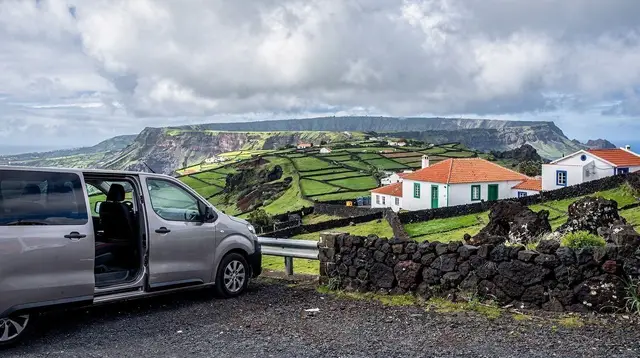
GetYourGuide does not provide a product photo for this activity — the image shows the meeting point, photographed by us.