Money and Payments in the Azores
Do I need to exchange money before visiting the Azores?
No — the Azores are part of Portugal, the European Union and the eurozone, so travelers coming from other euro countries need no currency exchange at all. Visa and Mastercard are accepted almost everywhere, and Multibanco ATMs reach even small towns, though it's still worth carrying some cash for rural cafés, local markets and the smallest islands.
Do You Need to Exchange Money Before Flying to the Azores?
If you’re used to researching exchange rates and pre-ordering foreign banknotes before a trip, the Azores are refreshingly simple: for most visitors, there is nothing to exchange. The archipelago is an autonomous region of Portugal, which places it inside the European Union, the Schengen area, and — the detail that matters most for this page — the eurozone. The currency is the euro, the same euro used in Lisbon, Paris or Berlin, and no separate Azorean currency or exchange rate exists.
That single fact removes an entire category of pre-trip planning for anyone already living with euros day to day. There’s no need to queue at a currency exchange counter, no need to guess at a rate, and no leftover foreign coins to deal with when you get home.
If you’re arriving from outside the eurozone — the United States, the United Kingdom, Canada, Australia and similar — the simplest approach is usually not to buy euros in advance at all, but to withdraw them from a local ATM after landing, at a real interbank rate rather than an airport kiosk markup. For a fuller sense of what things actually cost once you’re spending those euros, see the separate guide to daily budgeting in the Azores; this page sticks to the mechanics of paying, not the price tags themselves.
One easy trap catches first-time visitors who are more familiar with Portugal’s mainland: assuming the Azores must be “somewhere different” simply because they’re a nine-island group out in the Atlantic. They aren’t different in this respect. Ponta Delgada, Angra do Heroísmo and every village on every island transact in the same euro coins and notes as Porto or Faro. The one genuine oddity travelers should note is unrelated to money: the Azores run on their own time zone, UTC-1, one hour behind mainland Portugal — worth knowing when comparing bank opening hours or app timestamps, but it has no bearing on the currency itself.
Card Acceptance Across the Islands
Card payment is the default way most visitors pay for most things in the Azores, and it works well on the larger, more visited islands. Hotels, mid-range and upper restaurants, supermarkets, fuel stations, car rental desks at Ponta Delgada Airport and most organized tours accept Visa and Mastercard without difficulty, and contactless tap-to-pay is now standard at the majority of modern terminals. American Express is accepted far less consistently and shouldn’t be relied on as a sole payment method.
Where card acceptance gets patchier is at the small, family-run end of things — a countryside café, a fruit stand by the road, a tiny snack bar in a village square — and on the smaller, quieter islands where fewer businesses have invested in a card terminal. Corvo, Graciosa and rural pockets of Flores and São Jorge are where a traveler relying purely on plastic is most likely to hit a wall. It isn’t that these islands reject modern payment on principle; it’s simply that a card machine and its monthly fee make less economic sense for a business serving a handful of customers a day.
A practical habit worth adopting for the whole trip: pay by card for the larger, planned expenses — accommodation, car rental, restaurant dinners, prepaid activities — and keep cash on hand for everything smaller and more spontaneous. Booking certain activities online in advance with a card, rather than expecting to pay cash on the day, also sidesteps the question entirely for that expense. A half-day dairy farm visit on São Miguel or a sunset boat tour along the coast, for instance, is typically paid for online at the time of booking, which is one less thing to budget in cash once you’re on the island.
| Payment context | Card acceptance | Notes |
|---|---|---|
| Hotels, mid-to-large restaurants | Wide | Visa/Mastercard standard; Amex inconsistent |
| Supermarkets, fuel stations | Wide | Contactless common on newer terminals |
| Car rental desks | Wide | A card is usually required for the deposit hold |
| Small rural cafés, farm stands | Limited | Often cash-only or card-only above a minimum |
| Local weekly markets | Limited | Mostly cash |
| Smallest islands (Corvo, Graciosa) | Patchier | Fewer terminals overall; carry more cash |
Multibanco: Portugal’s ATM Network, Available on Every Island
The other half of the Azorean payment picture is Multibanco, the shared interbank network that runs Portugal’s ATMs and much of its in-person card payment infrastructure. It’s a genuinely useful thing to understand before arriving, because unlike some island destinations where cash machines cluster only in the capital, Multibanco reaches surprisingly far down the settlement hierarchy — a small ATM is often present even in towns that don’t otherwise look built for tourism.
On São Miguel and Terceira, ATMs are frequent enough that running out of cash is rarely a real risk; you’ll pass several in any town of meaningful size, from Ponta Delgada to Angra do Heroísmo to smaller centers like Ribeira Grande or Praia da Vitória.
Pico and Faial have working Multibanco machines in their main towns, Madalena and Horta among them. It’s on the smallest, most remote islands — Corvo above all, and to a lesser extent Graciosa and Flores — that the ATM network gets genuinely thin: a single machine may serve an entire island, and if it’s temporarily out of service or out of cash, there’s no backup around the corner. A sensible habit on those islands is to withdraw what you expect to need as soon as you land, rather than assuming you can top up whenever convenient.
Foreign debit and credit cards on the Visa and Mastercard networks generally work fine at Multibanco machines for cash withdrawal. What you pay for that withdrawal, though, has nothing to do with the Azores and everything to do with your own bank: some cards charge a flat ATM fee, some add a percentage-based foreign transaction fee even though you’re spending in euros, and some — increasingly, cards designed for travel — waive both. It’s worth checking your card’s terms before departure rather than discovering the charge on your statement afterward. This is purely a banking question, separate from how much you’ll actually want to spend day to day, which is covered in the daily budget guide.
Where You’ll Actually Need Cash
Card coverage in the Azores is good enough that a traveler could, in theory, go almost the whole trip barely touching cash on São Miguel or Terceira. In practice, a modest cash buffer makes island life noticeably smoother, and there are a few recurring situations where it genuinely matters rather than being a mere preference:
- Rural cafés and snack bars. The kind of small, independently run café you’ll want to stop at on a countryside drive — near Furnas, around Lagoa do Fogo, or scattered across São Jorge’s fajãs — is exactly the kind of business least likely to have invested in a card terminal.
- Local markets and farm stands. Weekly produce markets and roadside stands selling fruit, cheese or honey are almost always cash transactions.
- Parking and small municipal fees. Some street parking meters and small local fees are coin- or cash-based rather than card-enabled.
- The smallest islands. On Corvo, Graciosa and rural Flores, cash is the safer default for anything beyond the largest businesses.
- Tipping. Rounding up a bill or leaving a small tip in cash is the norm in Portugal generally; the full etiquette around amounts and when it’s expected is covered separately in the tipping and etiquette guide rather than here.
None of this means carrying large sums. A reasonable approach is to keep a modest amount of cash on you at all times — enough to cover a meal, a coffee stop and a small purchase or two — and to top it up from an ATM whenever you pass one in a larger town, rather than trying to estimate a whole trip’s cash needs in one withdrawal.
Practical Payment Tips Before You Go
A short pre-trip checklist covers most of what actually trips travelers up on the money side of an Azores trip:
- Tell your bank you’re traveling, or at least check that international use is enabled on your card — some banks flag unusual-location transactions and block a card mid-trip otherwise.
- Check your card’s fees: a foreign transaction fee, an ATM withdrawal fee, or both, can quietly add up over a week of small withdrawals.
- Carry two payment methods if possible — a primary card and a backup, plus a small cash reserve — since losing a single wallet on a small island is more disruptive than it would be in a large city.
- Withdraw cash as soon as you land on a smaller island such as Corvo, Graciosa or Flores, rather than assuming you’ll find an ATM later.
- Decline dynamic currency conversion if a card terminal or ATM offers to charge you in your home currency “for your convenience” — it almost always comes at a worse rate than letting your own bank convert the euro amount.
- Keep some coins handy for parking meters and small cash purchases.
- Don’t overthink the exchange question — because the Azores are in the eurozone, the only real currency decision for most travelers is how much cash to carry, not what currency to carry it in.
For the logistics that sit next to money on a planning checklist — getting online for maps and mobile payment apps, choosing where to stay, or working out how much a typical day actually costs — the related guides on SIM cards and internet, where to stay in the Azores and the daily budget breakdown pick up where this page leaves off.
And if a rental car is part of the plan — genuinely useful for reaching rural cafés and small markets in the first place — the car rental and driving in the Azores guides cover what a card deposit hold and local driving conditions look like in practice.
A Note on Booking Activities in Advance
Because card acceptance is strongest for planned, pre-booked expenses and weakest for small, spontaneous ones, it’s worth applying that logic to how you book activities as well as how you pay for meals. Reserving something like a half-day fishing trip out of one of the coastal harbors or a guided day tour around Pico online, ahead of time, settles the payment cleanly by card before you ever set foot on the island — one less thing to plan around cash availability once you’re there, and one fewer moment where a small operator’s card terminal (or lack of one) becomes your problem on the day.
Frequently Asked Questions About Money and Payments in the Azores
Do I need to exchange currency before traveling to the Azores?
No. The Azores are an autonomous region of Portugal, inside the European Union, the Schengen area and the eurozone, and the currency is the euro. Anyone arriving from another euro-using country needs zero currency exchange; travelers from outside the eurozone can simply withdraw euros from a local ATM on arrival rather than pre-buying cash at home.
Is the euro used on all nine Azores islands?
Yes. All nine islands — from São Miguel to the smallest, Corvo — use the euro, since the whole archipelago shares Portugal’s EU and eurozone status. There is no separate island currency and no local exchange rate to think about anywhere in the group.
Are credit and debit cards widely accepted in the Azores?
Visa and Mastercard are accepted at the great majority of hotels, restaurants, car rental desks and supermarkets across the larger islands, and contactless payment is standard at most tills. Acceptance thins out on the smallest islands and at very small, family-run cafés and market stalls, where a card terminal may simply not be worth the cost to the owner.
What is Multibanco and will my foreign card work at Azorean ATMs?
Multibanco is Portugal’s shared interbank ATM and payment network, and its machines are common even in small Azorean towns, not just the main cities. Foreign Visa and Mastercard debit or credit cards generally work at Multibanco ATMs for cash withdrawals, though your own bank sets the fee and any foreign transaction charge on top.
Which places in the Azores are still cash-only?
Small rural cafés, farm stands, weekly local markets, some fajã restaurants on São Jorge, parking meters in a few towns and the smallest guesthouses are the places most likely to expect cash. On the smaller islands such as Corvo, Graciosa and Flores, card terminals are less universal than on São Miguel or Terceira, so cash covers the gap.
Will my bank charge foreign transaction fees in the Azores?
That depends entirely on your own card and bank, not on anything specific to the Azores — a Portuguese Multibanco withdrawal is treated by your bank the same as any other transaction in the eurozone. Check your card’s foreign transaction fee and ATM withdrawal fee before leaving home, and consider a fee-free travel card if you plan to withdraw cash more than once or twice.
How much cash should I carry on a smaller island like Corvo or Graciosa?
Enough for a couple of meals, a coffee stop and small purchases — in practice often somewhere in the range of 40 to 80 euros per person per day held as a buffer, topped up as needed. Both islands are small enough to check on arrival whether an ATM is working before relying on it, since options are limited if a single machine is temporarily out of service.
Can I use contactless payment or mobile wallets in the Azores?
Yes, contactless card payment and phone-based wallets such as Apple Pay and Google Pay work at most modern card terminals in the Azores, especially on São Miguel, Terceira, Pico and Faial. Smaller, older terminals on quieter islands may still require a card to be inserted and a PIN entered rather than tapped.
Trip-planning essentials on GetYourGuide
Verified deep-linked GetYourGuide tours. Book through these links and we earn a small commission at no cost to you.
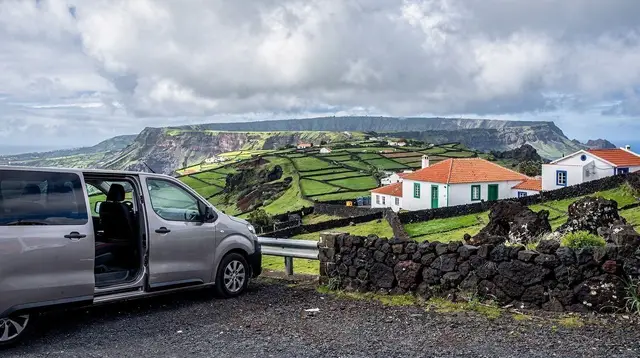
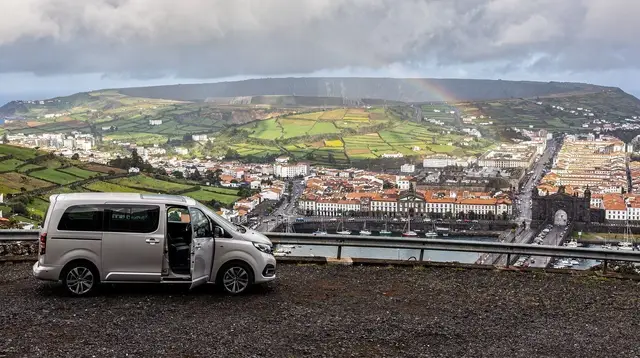
GetYourGuide does not provide a product photo for this activity — the image shows the meeting point, photographed by us.