A village built on a fajã, not just named after one
Fajã Grande is the last village on the road along the western coast of Flores, and for many visitors it feels like the last village anywhere. The name describes the ground it stands on: a fajã, a flat shelf of land formed at the foot of tall cliffs by an old lava flow or a landslide that slid down and settled at sea level. Flores is dotted with these shelves, and Fajã Grande — literally “big fajã” — is the largest and best known of them, wedged between dark cliffs streaked with waterfalls and the open Atlantic.
It’s worth pausing on that word, because it causes real confusion elsewhere in the Azores. Fajãs also define a whole different corner of the archipelago on São Jorge, where the term is just as central to how locals describe their island.
The two sets of fajãs share a name and a rough geological origin, but they are not the same place, the same island, or even the same kind of scenery — São Jorge’s fajãs cluster along a very different stretch of coast, some built around a lagoon rather than a waterfall. If you’re planning a trip that touches both islands, our comparison of Flores versus São Jorge and this note on what a fajã actually is are worth reading before you assume the two match up.
Geographically, Fajã Grande sits at the far western tip of Flores, which itself is the westernmost inhabited island of the Azores archipelago and, by extension, is often described as marking the western edge of the European continent in a geographic sense — Flores and neighboring Corvo sit further into the Atlantic than any other populated European land. That framing is more of a curiosity for most visitors than a reason to come, but it does explain the particular feeling of the place: single-track roads, a scatter of houses in volcanic stone, and cliffs that simply run out of island.
What actually brings people here
The short answer is water falling off cliffs. Fajã Grande sits directly below a band of tall, green cliffs that catch cloud and rain rolling in off the Atlantic, and the runoff has nowhere to go but straight down. The result is one of the most concentrated stretches of waterfalls anywhere in the Azores, visible from the village itself and multiplying as you walk the coastal path north toward Fajãzinha.
The single best-known cascade is the Poço do Bacalhau, a short, easy walk from the village center. Water drops into a dark natural pool ringed by volcanic rock, and on a still day the pool is calm enough for a swim — cold, but manageable in summer. It’s the kind of spot that photographs well at almost any hour, though early morning tends to have the softest light and the fewest other visitors. If you’re chasing waterfalls more broadly across Flores, our overview of best hikes in the Azores and the island-specific Flores hiking trails guide map out the fuller network; this page sticks to what’s reachable directly from Fajã Grande.
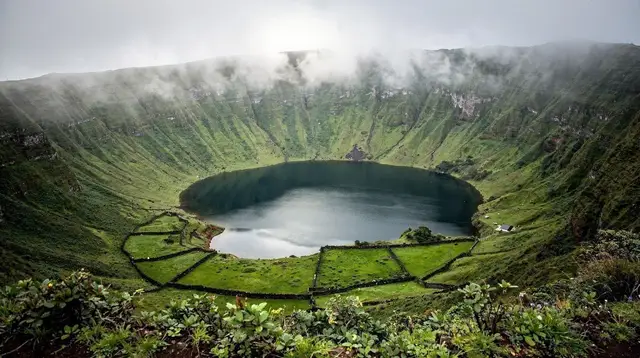
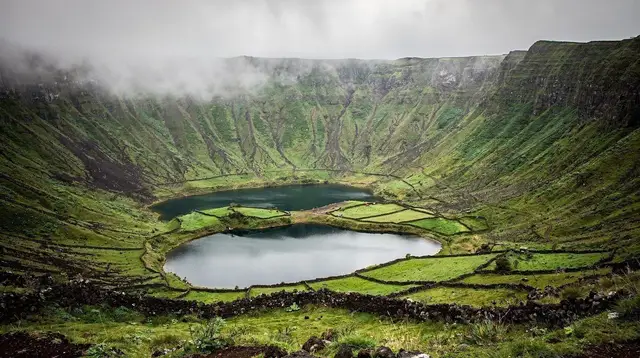
Beyond the falls themselves, the appeal is more atmospheric than checklist-driven: whitewashed houses with black volcanic-stone trim, small vegetable plots, cattle on impossibly green slopes, and a silence broken mostly by running water and wind. It is, without much competition, one of the quietest corners of the whole archipelago — a point our long-form piece on the quietest island in the Azores leans on directly.
Getting to Fajã Grande
There is no way around it: reaching Fajã Grande takes some planning. Flores itself is served by SATA Air Açores flights, usually routed through Ponta Delgada on São Miguel, and Flores Airport sits on the opposite, eastern side of the island from Fajã Grande — expect a drive of 25 to 30 minutes once you land. If you’re arriving by sea rather than air, our guide to inter-island ferries covers which routes actually run reliably outside the busy summer months, since the western group’s connections are the most weather-sensitive in the archipelago.
Once on Flores, a rental car is close to essential. Public transport between villages is sparse and not built around tourist schedules, and the drive itself — narrow, winding, occasionally shrouded in cloud near the plateau — is part of the experience rather than an obstacle to rush through. See car rental in the Azores for what to expect island by island; on Flores specifically, book ahead in summer, since the fleet is small.
Several tour operators also run guided transport that removes the planning entirely. A full-day guided circuit is a reasonable way to see Fajã Grande alongside the island’s crater lakes and high plateau without worrying about navigation:
a full-day guided tour of Flores with a local guide, covering Fajã Grande and the island’s crater lakes
is one option, and travelers who’d rather not drive at all often prefer a van tour around Flores that takes in the western villages without renting a car.
Walking the coast to Fajãzinha
North of Fajã Grande, a coastal path follows the cliffline to the neighboring village of Fajãzinha — smaller, quieter still, and framed by its own waterfall dropping almost onto the village church. The walk itself is one of the more accessible on the island: well-marked, moderate in length, and rewarding at almost every turn with a new angle on the cliffs and the sea below. It is not, however, the full hiking network of Flores — for longer routes, the high plateau, and the crater lakes further inland, the dedicated Flores hiking trails guide is the place to plan from; this page only covers the stretch that starts and ends at Fajã Grande.
Independent walkers manage the route without difficulty in normal conditions, but a guided version adds real value if you want context on the geology, the plant life, or the history of how these villages survived so remotely for centuries. A guided version worth considering is:
a guided coastal hike along Flores’ wild west coast between Lajedo and Fajã Grande
which threads together several of the fajãs on this side of the island rather than stopping at just one.
For a broader day that mixes walking with swimming stops at some of the island’s natural pools and highland lakes, consider:
useful if Fajã Grande is one stop within a fuller island day rather than the whole plan. Our natural swimming pools guide covers what to expect from these spots archipelago-wide, water temperature included.
Where to stay and how to plan around it
Fajã Grande has a genuinely small number of places to sleep — a handful of guesthouses and rural tourism properties, several within a short walk of the waterfall trailhead — and that small supply fills up faster than the village’s size suggests, especially through July and August. Booking ahead is not optional if you want to actually stay in the village rather than commute in from elsewhere on Flores.
Most visitors treat Fajã Grande as one stop within a longer Flores stay rather than a standalone destination, which is the right instinct: a single night lets you see the waterfall without crowds at either end of the day and gives you a base for the walk to Fajãzinha the following morning. If you’re still building out the rest of your Flores days, our four-day itinerary for Flores and Corvo slots Fajã Grande in alongside the island’s crater lakes and a possible boat crossing to Corvo, and the standalone piece on a day trip to Corvo from Flores is worth reading if you’re weighing whether to add the smaller island on.
For travelers who want the western coast covered thoroughly but with someone else doing the driving and route planning, a private full-day option focused specifically on the waterfalls is available:
a private full-day tour of Flores focused on its waterfalls, including the falls near Fajã Grande.
When to visit
June through September is the most dependable window: trails are drier, the coastal walk to Fajãzinha is more comfortable underfoot, and inter-island transport in the western group is at its most reliable. This period also overlaps with the archipelago’s hydrangea season, which peaks in July and August and adds a wash of blue and pink to the roadside hedges on the drive in — see the Azores hydrangeas guide for the fuller bloom calendar, since it varies noticeably by island and altitude.
Outside those months, expect more rain and more days where cloud sits directly on the cliffs above the village — dramatic for photography, less so for a planned hike. The best time to visit the Azores guide covers the archipelago-wide picture in more depth, but the general rule holds locally too: the famous “four seasons in one day” pattern is not a cliché here, and Fajã Grande’s position directly under the cliffs makes it especially prone to fast-changing weather. Build a buffer day into any Flores plan rather than tying the waterfall visit to a single fixed slot.
A quick comparison of ways to see Fajã Grande
| Option | Best for | Approx. duration |
|---|---|---|
| Self-drive, independent walk to Poço do Bacalhau and Fajãzinha | Flexible travelers with a rental car, comfortable navigating on their own | Half a day |
| Guided coastal hike, Lajedo to Fajã Grande | Hikers who want geology and history context | Half a day |
| Half-day tour covering Flores’ lagoons and landscapes | Travelers combining Fajã Grande with the island’s crater lakes | About 4 hours |
| Full-day guided tour of Flores | First-time visitors who’d rather not plan the route themselves | Full day |
| Overnight stay in the village | Photographers, slow travelers, anyone prioritizing early light at the falls | 1-2 nights |
Fajã Grande travel questions, answered
Is Fajã Grande worth visiting if I only have a few days on Flores?
Yes. Even a short Flores itinerary usually reserves at least half a day for Fajã Grande, since it is the access point for the Poço do Bacalhau waterfall and the start of the coastal walk toward Fajãzinha. If you have only one full day on the island, Fajã Grande and Fajãzinha together make a realistic loop; if you have two or more days, staying a night in the village lets you catch the waterfall in early morning light before day-trip traffic arrives.
How do I get from Flores Airport to Fajã Grande?
Fajã Grande sits on the opposite, western side of Flores from the airport, so plan on a drive of roughly 25 to 30 minutes on narrow but paved roads. There is no scheduled bus service that reliably matches flight times, so almost everyone arranges a rental car in advance or asks their guesthouse about a transfer.
Is the Poço do Bacalhau waterfall safe for swimming?
Many visitors do swim in the natural pool below the falls in calmer summer conditions, but water temperature stays cool year-round and flow can increase sharply after rain higher on the plateau. Check conditions on arrival, avoid swimming directly under the main flow, and treat any local signage or advice from your guesthouse as the final word rather than what you read here.
Can I walk from Fajã Grande to Fajãzinha without a guide?
The coastal path between the two villages is walkable independently by anyone with reasonable fitness and sturdy footwear, and it is one of the more accessible short walks on Flores. That said, several operators run guided versions that add context on the geology and history of the fajãs, which is worth considering on a first visit or if you’d rather not navigate route-finding yourself.
Are the fajãs of Flores the same as the fajãs of São Jorge?
No. Both islands use the word fajã for a flat coastal shelf below cliffs, formed by lava flows or landslides, but they are on different islands with different landscapes and different sets of villages. Flores’ fajãs, including Fajã Grande and Fajãzinha, sit beneath green, waterfall-lined cliffs on the westernmost island of the archipelago, while the fajãs of São Jorge are a separate cluster on a different island further east, some built instead around a lagoon and clam beds.
What’s the best time of year to visit Fajã Grande?
June through September brings the driest trail conditions and the most dependable inter-island transport, and it overlaps with the archipelago’s main hydrangea season. Outside those months the village is quieter still, but rain is more frequent and some connections beyond Flores become less predictable, so build flexibility into any shoulder-season plan.
Where should I stay in Fajã Grande?
The village itself has a small number of guesthouses and rural tourism properties, several within easy walking distance of the waterfall trailhead. Booking ahead matters more than the small size of the place suggests, since capacity is genuinely limited and fills up around peak summer weeks.