Cycling and E-Bikes in the Azores
Is cycling a good way to get around the Azores?
Cycling works well as a half-day or full-day activity, especially on an e-bike, because the volcanic terrain climbs steeply just outside every town. It is not a practical way to cover a whole island's sights, since distances and elevation gains make a rental car close to essential for that.
Why the Hills Decide Whether You Pedal or Switch to Electric
The Azores sit on the join of three tectonic plates, and every one of the nine islands is built from the same stack of volcanic cones, calderas and lava terraces. That geology is wonderful for hot springs and lava caves, but it is unforgiving for anyone on a bicycle. Leave the flat waterfront of a town like Ponta Delgada and the road usually starts climbing within a few hundred metres, often at gradients that would be a serious workout even without the archipelago’s year-round humidity.
That is the single fact that shapes cycling here: an ordinary bicycle is genuinely enjoyable on short, flat stretches, but a pedal-assist e-bike is what makes a half-day ride through crater country or along a coastal road realistic for most visitors, rather than an exhausting slog that eats into the rest of the day. Rental operators across the archipelago have adjusted accordingly, and e-bikes now outnumber classic bicycles in most fleets aimed at visitors.
None of this makes cycling a way to see an island properly. The distances between the sights that make up a typical São Miguel or Terceira itinerary, combined with the climbing between them, put a full day’s sightseeing loop out of reach for all but very fit, well-prepared riders. Cycling in the Azores is best planned as an activity - a memorable few hours or a single day - alongside a rental car handling the rest of the trip, not as the way you get from sight to sight.
What a Guided E-Bike Tour Actually Covers
For a first taste of cycling in the islands, a guided e-bike outing removes the two biggest unknowns: which roads are rideable without local knowledge, and how much battery a given route actually needs. In Ponta Delgada, an e-bike tour around the city and its surrounding countryside typically threads through the historic centre before climbing into the hills above town, with the motor doing the heavy lifting on the way up so the pace stays social rather than punishing.
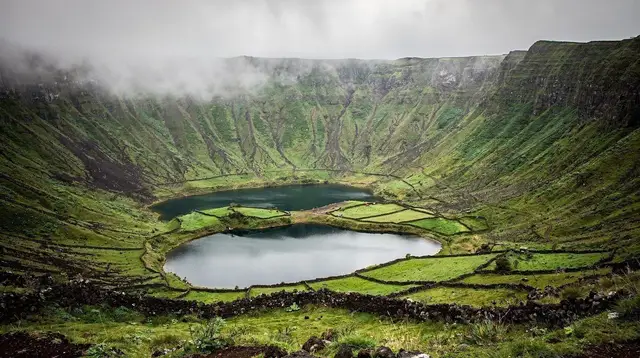
For anyone who wants the archipelago’s signature view - the twin crater lakes of Sete Cidades seen from the rim - without driving there and walking a stretch of trail, a guided e-bike ride out to Sete Cidades is the more active alternative to a standard minibus excursion. The climb from the coast up to the Sete Cidades crater rim is one of the steeper rides on São Miguel, which is exactly the kind of gradient where an electric assist changes a ride from gruelling to genuinely pleasant.
São Miguel: The Island With the Most Cycling Options
São Miguel is the largest and most developed island, and it shows in the range of terrain on offer. Ponta Delgada’s seafront promenade is one of the few genuinely flat, paved stretches in the archipelago, popular with locals on ordinary bicycles for an easy morning or evening ride. Head inland or east, though, and the terrain changes fast: the road toward Lagoa do Fogo climbs into cloud-forest altitude, and the interior roads around the Gorreana tea plantation roll through pasture and hedgerow on a gentler, greener gradient that suits a more relaxed ride.
The crater rim above Sete Cidades remains the benchmark ride for anyone serious about cycling on São Miguel, both for the climb itself and for the payoff at the top, where the lake’s two connected basins - one often described as blue, the other green - sit inside the crater walls. Riders heading further east toward Furnas should expect a longer, harder day, since the road undulates through several ridgelines rather than following a single climb-and-descend profile, and there is no shortcut around that with pedal power alone.
Riders looking for gentler mileage away from the crater climbs have other options too. The coast road running through Ribeira Grande stays close to sea level for longer stretches than most of the island’s interior, and the far eastern corner around Nordeste sees quieter traffic than anywhere else on São Miguel, even though the terrain there is still far from flat. On the south coast, the short climb out to the viewpoint above Vila Franca do Campo rewards the effort with a clear view of the crescent-shaped islet just offshore, one of the more photogenic short rides on the island.
Terceira: Short Loops Around Angra do Heroísmo
Terceira’s interior plateau is gentler than São Miguel’s volcanic spine, which makes it a comfortable island for shorter cycling outings. A two-hour island bike tour is a practical way to see a slice of the countryside around Angra do Heroísmo without committing a full day, and the UNESCO-listed historic centre itself is compact enough to explore on foot before or after a ride rather than by bicycle.
Away from the plateau, the coastal roads dropping toward Praia da Vitória or out toward the vineyards of Biscoitos involve more climbing and less shelter from the Atlantic wind, so a short, guided loop is generally a more comfortable introduction to cycling on Terceira than an ambitious self-planned circuit of the whole island.
Pico, Faial and São Jorge: Quiet Roads, Big Views, Slow Pace
The central group’s three closest islands - Pico, Faial and São Jorge - reward cycling less for speed than for the scenery passing slowly on either side. On Pico, the coastal road through Criação Velha runs alongside the UNESCO-listed vineyard landscape, where black lava-stone walls divide small rectangular plots that have protected vines from salt wind since the fifteenth century. Riding this stretch, rather than driving past it, is one of the better ways to appreciate how much manual stonework the currais represent.
Cycling up Montanha do Pico itself is not an option - the ascent to 2,351 metres is a regulated, on-foot hike from the Casa da Montanha with mandatory registration and a GPS tracker, not a road ride - so anyone drawn to Pico’s volcanic profile without wanting to hike it is better served by a guided island tour covering Pico’s highlights by vehicle, saving the bicycle for the flatter vineyard lanes near sea level.
Faial’s roads around the Caldeira and out toward the 1957-58 Capelinhos eruption site are quieter still, and the short ferry hop between Madalena on Pico and Horta on Faial - the one inter-island crossing in the archipelago that runs reliably all year - makes it possible to combine a short ride on each island without depending on flights. São Jorge is the most physically demanding of the three: its famous fajãs sit at the base of steep cliffs, and the roads down to them are long, narrow descents that must then be climbed back out, which puts them beyond a casual outing for most visitors even with electric assistance.
Flores, Corvo, Santa Maria and Graciosa: Cycling as a Side Activity, Not the Plan
On the smaller and more remote islands, cycling is realistically a side activity rather than something to build a day around. Flores has beautiful, quiet roads past its crater lakes and waterfalls, but rental fleets are limited and the island’s fragile ferry and flight links to Corvo mean logistics deserve more attention than the ride itself. Corvo is small enough that a bicycle can cover much of the inhabited area in an hour, but formal rental options are minimal.
Santa Maria’s drier, gentler landscape is comparatively kind to cyclists, and Graciosa’s small road network around Santa Cruz da Graciosa is easy going, though neither island currently has a bookable cycling excursion in the same way São Miguel or Terceira do. On these four islands, a bicycle is best thought of as something you might find at a guesthouse for a short spin, not a planned activity to research and book in advance.
Renting a Bike or an E-Bike Without a Tour
Independent rental shops cluster in the towns with the most visitor traffic - Ponta Delgada on São Miguel, Angra do Heroísmo on Terceira, and Horta on Faial - and most now carry a mix of standard mountain bikes and e-bikes side by side. Given the terrain, it is worth asking specifically about battery range before committing to a route: a ride that looks short on a map can drain a battery quickly if it involves a long, sustained climb, and running out of assist halfway up a hill in the Azores means a genuinely hard finish.
Booking ahead matters more in July and August, when both guided tours and independent rental stock can sell out on short notice, particularly around popular routes like the Sete Cidades climb. Outside peak season, availability is more relaxed, though when to visit the Azores is worth checking regardless, since weather affects cycling more directly than most other activities in the islands.
Safety, Weather and the Roads Themselves
Azorean roads were built for a small resident population and agricultural traffic, not for cyclists sharing space with rental cars unfamiliar with the terrain. Many rural stretches are narrow, without a shoulder, and wind through blind curves on cliffside or crater-rim sections - conditions that call for high-visibility clothing, daylight riding, and a realistic sense of how much space passing vehicles actually have to give.
Fog is the other recurring hazard, particularly at altitude on São Miguel, Pico and São Jorge, where cloud can roll in and cut visibility sharply within minutes. The local saying about experiencing four seasons in one day is not an exaggeration on a bike: a bright morning start can turn into a cold, wet descent an hour later, so packing a light waterproof layer is worth doing even under a clear sky. See what the weather actually does month by month before setting expectations for a cycling day, and free-roaming cattle on upland pasture roads are a real, recurring hazard on several islands rather than a rural cliché - slow down well before a blind bend on any road bordered by open pasture.
Pairing a Cycling Day With Other Azores Activities
A half-day on an e-bike combines naturally with the rest of a São Miguel itinerary rather than needing a dedicated day of its own. Riders who start early can fold a ride around Sete Cidades into a wider look at the Sete Cidades crater itself, and an afternoon spent recovering in the thermal pools covered in the Azores hot springs guide is a natural way to end a morning of climbing.
Some visitors also stack a short ride with a whale-watching trip departing from Ponta Delgada, since the boat tours leave from the same waterfront area where most rental shops are based. For a broader sense of how a cycling outing fits alongside an island’s other sights in a single day, day trips from Ponta Delgada lay out a few workable combinations.
What to Pack, and Who Should Think Twice
A cycling day in the Azores rewards a bit more preparation than a typical beach or city day. Layers matter more than any single piece of gear, since a climb that starts in bright sun can finish in cloud and drizzle at altitude; the general Azores packing list covers the layering approach that applies just as well on a bike. Sun protection is easy to underestimate at this latitude, particularly on exposed crater-rim climbs with no tree cover to break the glare.
Riders with limited mobility, significant fitness limitations, or health conditions affected by sustained climbing should read the Azores accessibility guide before committing to a longer or more remote route. A guided tour with a support vehicle, where one is offered, is the more forgiving option for anyone unsure how their fitness will hold up against the gradients described throughout this guide.
Cycling as a Family Activity
Families travelling with children can still build a short ride into a trip, though the terrain described throughout this guide applies just as much to smaller riders as to adults. A flat stretch like Ponta Delgada’s seafront promenade, or a short guided loop such as the two-hour ride around Terceira, suits families far better than an ambitious crater climb. The broader Azores with kids guide and the list of family-friendly activities both treat cycling as one option among several rather than a must-do, which matches how most families actually use it: a change of pace on a day that also includes calmer sightseeing.
Cycling vs Renting a Car: Setting Expectations
It is worth repeating the core trade-off plainly, because it is the mistake first-time visitors make most often: cycling in the Azores is an activity, and a rental car remains the practical way to string together a full day or week of sightseeing on any island. The volcanic terrain that makes crater rims and coastal cliffs so dramatic to look at also means climbs are frequent, distances between sights are longer than they appear on a map, and there is no dedicated cycle network connecting one attraction to the next.
A well-planned trip generally uses both: a rental car for covering ground and reaching trailheads or viewpoints across an island’s full itinerary, with one or two dedicated cycling outings - a guided e-bike ride, a short loop near a town, a flat coastal stretch - built in as a change of pace. See common first-time mistakes in the Azores for other assumptions that trip up first-time visitors, and treat a bicycle here the way you would treat any other single activity on a checklist: a highlight of the trip, not its backbone.
tours.cycling-ebike
Verified deep-linked GetYourGuide tours. Book through these links and we earn a small commission at no cost to you.
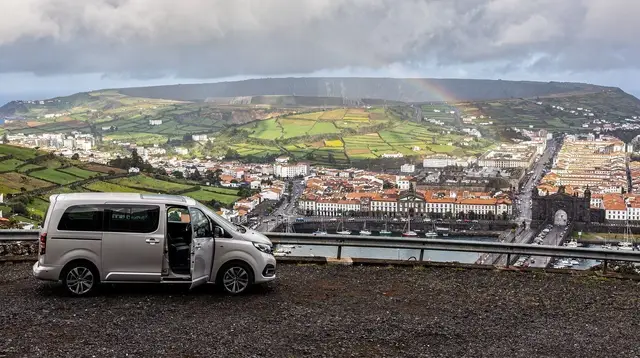
GetYourGuide does not provide a product photo for this activity — the image shows the meeting point, photographed by us.