Swimming in the Atlantic in the Azores
I went into my first Azores trip assuming I more or less understood ocean swimming in the North Atlantic. I’d swum off Brittany, off the west coast of Ireland, even a memorable and slightly reckless afternoon in Cornwall in April. I thought I knew what “cold but doable” felt like. The Azores recalibrated that.
The first time I actually got in, off a rock ledge near Faial, the temperature wasn’t shocking exactly — it was more that it never stopped being cold. In the Mediterranean, or even in the Canaries, a swim in August has a point where your body adjusts and the sea starts to feel almost warm. Here, that point never quite arrives. You adjust to bearable. You don’t get to warm.
That’s the thing nobody tells you clearly enough before you go: the Azores sit in the open North Atlantic, and the Gulf Stream that keeps the air mild here does very little for the water. I’d read enough about the archipelago’s weather patterns to know it doesn’t behave like its southern European cousins, but I still packed like I was going somewhere I’d want to spend an afternoon floating around in a swimsuit. I didn’t use that swimsuit the way I’d imagined.
Rock, not sand
The second recalibration was underfoot, or rather underhand, since most of the time you’re lowering yourself in rather than walking. São Miguel has a few sandy stretches, and so does Faial, but the default entry point across the islands is volcanic rock — basalt shelves, natural steps cut by wave action, sometimes a ladder bolted into the stone by whoever maintains the spot. It’s a completely different relationship with the sea than lying down on sand and wading out gradually. You climb down, you commit, and then you’re in.
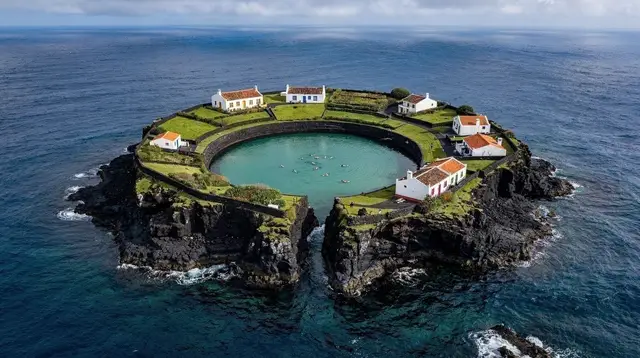
On São Jorge this takes its most dramatic form: the fajãs, those flat lava platforms at sea level that the island is known for, put you right at the waterline with almost no beach to speak of. It’s a striking way to swim — level with the horizon, black rock behind you — but it’s not relaxing in the way a beach day is relaxing. You’re always a little aware of the swell, of where the rock gets slick, of the fact that getting back out takes more coordination than getting in.
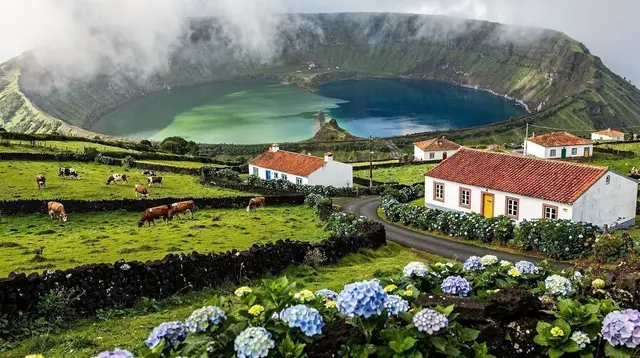
I don’t say any of this to talk you out of it. Some of my best half-hours on that whole trip were spent treading water off a ledge on Pico, looking back at a green slope with cattle on it and, further off, at the outline of Faial across the channel. It’s just a different kind of swimming than a beach holiday trains you to expect, and it rewards adjusting your mental picture before you arrive rather than after.
There isn’t really a “season”
I’d also assumed, the way you do with most of southern Europe, that there’d be a clear window — a few months where the water is genuinely swimmable and the rest of the year where it isn’t. The Azores don’t quite work that way. Late July into September is as good as it gets, and even then “as good as it gets” means cool rather than warm. Outside that stretch, people still swim — I met a few who do it through the winter, briefly and with intent — but it stops being something you’d do on a whim.
What actually shifts more than the water temperature is the sky. The Azores have a local saying about fitting four seasons into one day, and I found it applied just as much to swimming plans as to hiking ones. A flat, sunny morning that looks made for a swim can turn overcast and blustery within an hour, and the sea state can follow it. If you’re weighing when to go for swimming specifically, it’s worth reading up on how the best time to visit question plays out here before you fix dates, because it isn’t the same calculation as picking a Mediterranean beach week.
What I’d actually pack
If I went back knowing what I know now, my bag would look different. A proper wetsuit, not a thin rash guard — most of the people I saw swimming for more than a few minutes at a time were wearing at least 3mm of neoprene, even in August. Reef shoes or old trainers for the rock entries, since bare feet and wet basalt don’t get along. And I’d stop expecting to lie on a towel afterward, because there usually isn’t sand to lie on — you dry off standing on rock, in the wind, which is its own small ritual. There’s a general packing list for the islands that covers the layering side of things, but the swimming-specific gear is easy to overlook if you’re mentally filing this as a beach trip.
I’d also stop treating swimming as the centerpiece of a day and start treating it as something that fits around the real reasons people come here. My best days mixed a short, cold, worthwhile swim with something else entirely — a boat out from Pico, an afternoon on Flores chasing waterfalls, a slow walk around São Miguel’s crater lakes.
If you want the sea experience with company and a bit less improvisation, a boat trip that ends with time in the water — like a Terceira boat tour with a swimming stop — takes the guesswork out of finding a safe entry point, and you might get dolphins alongside you, which is its own reason to go. For a broader sense of what shares that water with you, our whale watching guide and the São Miguel whale and dolphin watching tour are worth a look before you fix your itinerary.
Not every good swim here has to be ocean-facing, either. On a cooler or windier day I traded the coast for the crater lake at Lagoa do Fogo, reachable on a half-day Lagoa do Fogo tour from Ponta Delgada — still cold, but calmer, and a genuinely different feeling than the open Atlantic.
So, worth it?
Honestly, yes — but recalibrate first. This isn’t a swimming holiday in the sense that Greece or Tenerife is a swimming holiday, and if you arrive expecting that, the cold water and rocky entries will read as a disappointment instead of what they actually are: a different, wilder version of getting in the sea. If beaches specifically matter to your trip, it’s worth reading through our roundup of the archipelago’s best beaches and the guide to its natural swimming pools, both of which cover the practical side — access, facilities, which spots suit families — that this piece deliberately leaves out.
If you want to see what’s under the surface rather than just float on top of it, snorkelling and diving here are genuinely excellent, cold water notwithstanding. And if you’re still building your picture of how these nine islands differ from each other, nine islands in one sentence each and what nobody tells you about Azores weather are two of the posts I wish I’d read before my first trip.
Frequently asked questions about swimming in the Azores
Is the water warm enough to swim in the Azores?
Not in the way you’d expect from a Mediterranean or Canary Islands trip. Even at the height of summer the Atlantic here rarely climbs much past the mid-teens Celsius, and outside of July-August it drops further. Bring a wetsuit if you plan to stay in for more than a quick dip.
What’s the best time of year to swim in the Azores?
Late July through September is when the water is at its least cold and the sea is usually calmest, which is also when most visitors try it. It’s still not warm — it’s just the least cool it gets.
Are there sandy beaches in the Azores?
A few, but they’re the exception rather than the rule. Most of the coastline is volcanic rock, and swimming here usually means stepping off basalt into deep water rather than wading in from sand.
Is it safe to swim in the open ocean in the Azores?
It can be, but conditions change fast and vary a lot by spot — swell, currents, and slippery rock entries are the real risks, more than cold water or marine life. Ask locally before swimming anywhere unfamiliar, and never swim alone off an exposed point.
Do I need a wetsuit to swim in the Azores?
For anything beyond a short splash, yes. A 3mm or thicker wetsuit is what most people who swim regularly here actually wear, even in summer.
Which islands are best for ocean swimming?
São Miguel, Faial, and Pico all have accessible rock platforms and a handful of sheltered coves. São Jorge’s fajãs add a different texture again — flat lava shelves right at the waterline. None of them behave like a classic beach destination.
Is the Azores a beach holiday destination?
Not in the conventional sense. People come here for volcanoes, whales, and green landscapes, and swimming is something you fit in around that rather than the main event.
tours.beaches-natural-pools
Verified deep-linked GetYourGuide tours. Book through these links and we earn a small commission at no cost to you.
GetYourGuide does not provide a product photo for this activity — the image shows the meeting point, photographed by us.