Graciosa in 2 Days: A Slow-Travel Itinerary
Graciosa does not try to compete with the rest of the Azores, and that is exactly why some travellers seek it out. It is the smallest island of the central group, classified as a UNESCO biosphere reserve, and as of today it has zero bookable excursions listed anywhere online for this island — no boat trips, no guided caves, no jeep tours. What it has instead is a single volcanic caldera to descend into, a compact harbour town ringed by white windmills, and roads quiet enough that two days feel closer to five.
Why Two Days Is the Right Amount of Time for Graciosa
Graciosa can be circled by car in well under two hours with no stops at all, which tempts some visitors into treating it as a half-day detour. That undersells it. Two full days give you enough slack to descend into the Furna do Enxofre without checking a clock, wander Santa Cruz da Graciosa twice — once in the flat light of afternoon, once at the golden hour when the windmills catch the sun — and still have an entire morning free for whichever stretch of coastline looked good from the car window the day before.
This itinerary assumes you already have a rental car reserved, since Graciosa has no meaningful public transport network connecting its villages. If you have not sorted that yet, do it before you land: read car rental in the Azores and driving in the Azores first, because availability on a small island can be limited, especially in July and August.
Getting to Graciosa and Getting Around
Most visitors reach Graciosa by air, usually connecting through Terceira or São Miguel on SATA Air Açores; see inter-island flights on SATA for how routings and frequencies usually work. A ferry connection exists as well, but the wider network that links the whole central group — Terceira and Graciosa included — only runs from June to September, and even then it is worth double-checking timetables rather than assuming a crossing is guaranteed; inter-island ferries in the Azores covers this in more depth. If your dates fall outside summer, plan to fly rather than build the trip around a ferry that may not be running.
Once you land, collect your car near the airport and head straight to Santa Cruz da Graciosa, the island’s small main town and the obvious base for both nights. From there, everything in this itinerary is a short drive away — nothing on Graciosa requires more than twenty or thirty minutes behind the wheel.
A word on the weather before you set off: the old Azorean line about “four seasons in one day” applies here as much as anywhere in the archipelago. Graciosa’s mild, humid, ocean climate means a bright morning can turn to a passing shower and back to sun within the same walk, so build in flexibility rather than fixing hard times for outdoor stops. For general context on what to expect month to month, best time to visit the Azores is useful background reading before you pack.
Day 1: Santa Cruz da Graciosa and the Descent Into Furna do Enxofre
Spend the morning of your first day settling into Santa Cruz da Graciosa. It is a small, unhurried harbour town, and the point here is not to tick off sights but to let the pace of the place set your own. Walk the waterfront, find a café, and get your bearings before driving anywhere.
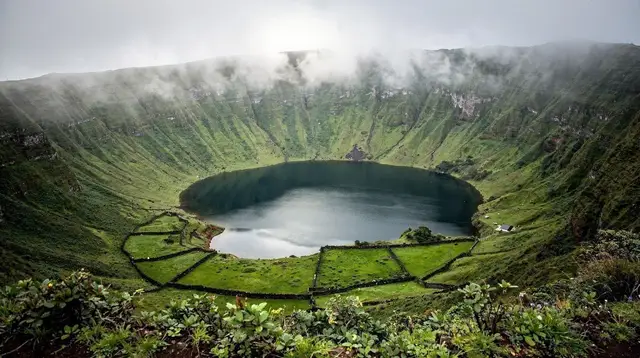
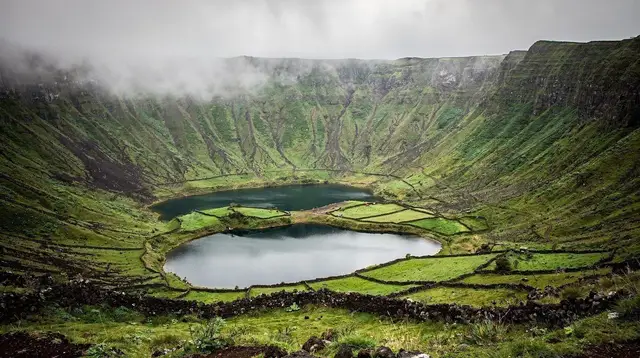
By early afternoon, head inland and up toward the Caldeira da Graciosa, the volcanic crater that dominates the island’s interior, to reach the Furna do Enxofre. This is the reason most visitors add Graciosa to a longer Azores itinerary in the first place: it is the largest volcanic cave in Europe, reached by a stepped descent into the crater floor, opening onto an underground lake and drifting sulphur fumaroles that give the cave its name. It is a strange, slightly theatrical place — cool, echoing, and lit in a way that makes the descent feel like a small expedition rather than a quick photo stop.
Give yourself at least an hour here, more if you enjoy lingering underground; there is no ticket booth to rush you and no tour group timetable to fall in behind. For background on how the cave formed and what else the island’s volcanic geology explains, the Furna do Enxofre guide and Azores lava caves are both worth reading before you go down, since there is little signage on site to fill in the geological story.
Because the cave and the surrounding caldera sit within the wider Azores Geopark network, this stop also doubles as an easy introduction to the volcanic forces that shaped every island in the archipelago, not just Graciosa. It is a good one to reflect on slowly rather than photograph and move on from.
Return to Santa Cruz da Graciosa for the evening. Dinner options are limited compared with São Miguel or Terceira, and that is part of the deal — a short menu, fresh local fish, and an early night are the norm here rather than the exception.
Day 2: Windmills, Coastline, and the Art of Doing Nothing
Your second day has no single headline stop, and that is deliberate. Start by driving the roads around Santa Cruz da Graciosa to see the island’s white windmills, small stone-and-lime structures that still punctuate the landscape above the town. There is no formal circuit or visitor centre; the point is simply to drive slowly, stop wherever a windmill or a stretch of coastline catches your eye, and take photographs without a schedule pressing you along. This is arguably the single best use of a full day on Graciosa — not because there is a checklist of sights, but because there isn’t one.
Spend the rest of the day working your way around the island’s edges by car: a coastal viewpoint here, a quiet swimming spot there, a return pass through the caldera rim if the light has changed since yesterday. Because Graciosa has no bookable excursions listed online, nothing about this day depends on a reservation, a meeting point, or a departure time — you can genuinely improvise it hour by hour, which is unusual anywhere else in the Azores.
If you are flying out later in the day, build your return to the airport around whatever time you actually have left rather than the other way round; Graciosa rewards travellers who let the island set the pace rather than trying to impose one on it.
Where to Stay and What to Budget
Accommodation on Graciosa is modest by design: a handful of guesthouses and small hotels, mostly concentrated in and around Santa Cruz da Graciosa, with little in the way of large resorts or chain hotels. Book ahead in July and August, when rooms are genuinely limited, but outside peak summer you can usually arrange something with only a few days’ notice.
| Day | Focus | Pace |
|---|---|---|
| Day 1 | Santa Cruz da Graciosa town + Furna do Enxofre | Unhurried, one main stop |
| Day 2 | Windmills, coastal roads, free exploration | No fixed plan |
Budget-wise, Graciosa is one of the cheaper stops in the archipelago simply because there is less to spend money on: no paid tours, no entrance-fee attractions beyond the cave itself, and food that leans toward simple, local, and inexpensive rather than tourist-priced. For a general sense of what a daily budget looks like across the islands, see daily budget in the Azores; Graciosa will typically sit toward the lower end of that range once your flights and car rental are already accounted for.
Pairing Graciosa With the Rest of Your Trip
Graciosa works best as an add-on rather than a standalone destination, which is exactly what its bestFor billing suggests: it suits anyone extending a longer Azores trip by one quiet island, not someone planning their entire holiday around it. Most itineraries route through Terceira or São Miguel on the way in or out, which is a natural point to slot in activities that Graciosa itself does not offer.
If your connection runs through Terceira, for instance, that island has its own bookable wildlife encounters, including a chance to go swim alongside wild dolphins off Terceira before or after your Graciosa days. Travellers routing via Pico or building a longer central-group loop often add a traditional whaling-boat-style excursion out of Pico or a private guided tour around Pico’s vineyards and coastline, since Pico and Faial are reachable from the same general leg of a trip.
And if São Miguel bookends your itinerary, an evening soak booked as Furnas hot springs after dark is a fitting, low-key way to close out a trip that started, or will end, with two days of doing very little on Graciosa.
None of this changes what Graciosa itself is: an island you visit precisely because nothing here needs to be booked, scheduled, or optimised. For a broader sense of how Graciosa compares with dedicating more time to a single island versus hopping between several, one island vs. island hopping and which Azores island to visit are useful reads while you are still shaping the rest of your route. If Graciosa is only one stop on a much longer trip, 14 days island hopping in the Azores shows how it can fit alongside the busier islands without feeling like an afterthought.
Common Questions About a 2-Day Graciosa Itinerary
Is two days enough to see Graciosa?
For most travellers, yes. Graciosa is small enough to circle by car in a couple of hours without stops, so two days leaves generous time for the Furna do Enxofre, Santa Cruz da Graciosa, and the coastal roads, without feeling rushed.
Do I need to book the Furna do Enxofre in advance?
There is no online booking system for the cave through this site, since no Graciosa activity is sold through our tour catalogue. You simply drive to the Caldeira da Graciosa area and descend on foot; check locally for current opening hours before you go.
Can I visit Graciosa without a car?
It is possible in theory, but not recommended. Public transport between villages is limited, and the cave, the windmills, and the coastal viewpoints are spread across the island, so a rental car is the practical way to see more than the town centre.
Is Graciosa worth visiting if it has no bookable tours online?
That is largely the point of going. Graciosa has no online catalogue of paid excursions, which keeps it free of tour buses and fixed schedules; you explore at your own pace, on your own timetable, with a rental car and a printed or downloaded map.
How do I get to Graciosa from the other islands?
SATA Air Açores flies to Graciosa year-round, usually connecting through Terceira or São Miguel. Ferries exist too, but the wider network linking the whole central group, Graciosa included, only runs from June to September, so flying is the more dependable option outside summer.
What’s the best month to visit Graciosa?
Summer (June to September) is easiest logistically, since that is when the inter-island ferry network to the central group operates and the weather is statistically driest. Outside those months, flying in is the safer plan and the island is even quieter.
Where should I stay on Graciosa?
Santa Cruz da Graciosa, the island’s small main town, is the natural base: it puts you within a short drive of the Furna do Enxofre, the windmills, and the coast, and has the handful of guesthouses and cafés the island offers.
Is Graciosa suitable as a day trip from another island?
It is possible on paper if flight times align, but it defeats the purpose. Graciosa’s appeal is its unhurried pace, and a same-day return leaves barely enough time to descend into the cave and walk Santa Cruz da Graciosa before rushing back to the airport.
tours.2 days
Verified deep-linked GetYourGuide tours. Book through these links and we earn a small commission at no cost to you.
GetYourGuide does not provide a product photo for this activity — the image shows the meeting point, photographed by us.