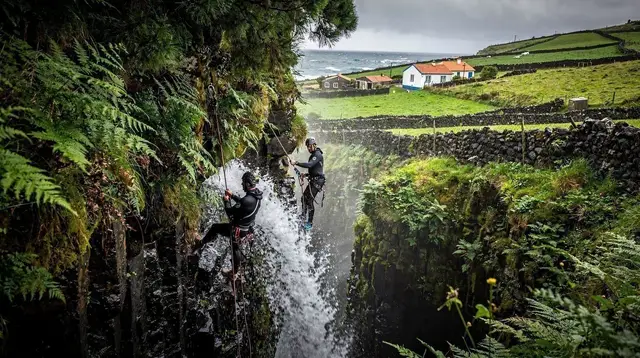
Coasteering in the Azores: Cliffs, Jumps and Ocean Swims
What is coasteering in the Azores and where can you do it?
Coasteering combines scrambling along volcanic sea cliffs, cliff jumps and open-water swims in the Atlantic, and in the Azores it is offered almost exclusively on São Miguel, notably around Caloura. It is a different activity from canyoning, which takes place in the archipelago's inland ravines rather than on the coast.
Stand at the edge of a volcanic ledge on the south coast of São Miguel, wetsuit zipped, waves folding against black rock below, and you’ll understand why coasteering has become one of the archipelago’s signature adrenaline activities. It’s not hiking, not swimming, not climbing — it borrows a bit of each and strings them together along the coastline itself, where the Atlantic meets rock that cooled from lava a few hundred thousand years ago.
What Coasteering Actually Is in the Azores
Coasteering is a guided progression along a rocky shoreline that mixes scrambling over rock, traversing ledges just above the waterline, jumping from small cliffs into the sea, and swimming stretches of open water between sections of rock. In the Azores, the volcanic coastline supplies exactly the terrain the sport wants: sharp basalt platforms, sheltered coves, and clean drop-offs into deep water rather than a gently shelving beach.
It is worth being precise about what coasteering is not, because the confusion is common and the two activities are easy to mix up on a quick scan of a tour listing. Coasteering happens on the coast, following the shoreline at sea level. Canyoning in the Azores, by contrast, happens inland, descending freshwater ravines and waterfalls by abseil, slide and jump, on some of the same islands but in completely different terrain, usually with different operators.
Both combine scrambling and jumping into water, and both ask for a reasonable level of fitness and comfort with heights and cold water — but a canyoning trip will not put you anywhere near the ocean, and a coasteering trip will not take you up a forested ravine.
Coasteering is also distinct from diving in the Azores and snorkelling in the Azores, which are about observing marine life below the surface rather than moving along the rock above it, and from the archipelago’s natural swimming pools, which are calm, often lava-rimmed pools meant for simple bathing rather than an active traverse with jumps. If your idea of a good afternoon is floating in a still volcanic pool with a book nearby, that guide is the one to read instead of this one.
Where to Go Coasteering: São Miguel and the Caloura Coast
Coasteering in the Azores is, in practice, a São Miguel activity. The island’s south coast around Caloura, a small fishing village a short drive from Ponta Delgada, has become the main base for operators, thanks to a shoreline of low volcanic cliffs, sheltered inlets and reliably deep water close to the rock — good for jumps without excessive risk of shallow landings.
a full coasteering session along São Miguel’s volcanic coastline typically launches from this stretch, combining a coastal walk-in with the scrambling and swimming sections once the group reaches the water. A similar format is run as a coasteering outing based specifically around the Caloura shoreline, and a third option is offered as a guided coasteering experience departing from Caloura itself — useful if you’re already staying nearby or building a day around Ponta Delgada.
Other islands have volcanic coastlines that look, on paper, just as suited to the sport — the cliffs around Faial or the fajã shorelines of São Jorge come to mind — but as of this review, coasteering is not run there as a regular bookable tourist activity. If your itinerary includes those islands, treat coasteering as a São Miguel activity to schedule specifically, rather than something you’ll stumble on wherever you land.
How a Coasteering Trip Actually Runs
Most Azores coasteering trips follow a similar shape, whichever operator you book with:
| Stage | What happens | Typical time |
|---|---|---|
| Briefing and gear fitting | Safety talk, wetsuit, helmet and buoyancy aid fitted | 15–20 minutes |
| Coastal approach | Walk or scramble to the first entry point | 10–20 minutes |
| Traverse and swim sections | Scrambling along ledges, swims between coves, guided jumps of increasing height | 60–90 minutes |
| Exit and debrief | Final swim to an exit point, gear return | 15–20 minutes |
A full outing usually runs two to three hours door to door, with the active water time making up most of that. Groups are kept small and led by a guide who reads the swell in real time, choosing which jumps to open and which to skip depending on the day’s conditions — this is one of the clearest reasons to book a guided trip rather than attempt anything similar unguided, since the same coastline that looks calm from a cliff top can hide a strong surge at water level.
Difficulty is usually pitched as moderate: you don’t need climbing experience, but you do need to be a confident swimmer, comfortable jumping from a few metres into open water, and reasonably fit for scrambling over uneven, sometimes slippery volcanic rock. Wetsuits, helmets and buoyancy aids are standard issue on a proper operation; bring your own swimsuit, a towel, water shoes if you have them, and a way to keep your phone and wallet dry back at the meeting point rather than in a pocket.
Coasteering Compared with Other Azores Water Adventures
Coasteering sits in a specific niche among the archipelago’s water-based activities, and travellers comparing options before booking often want the differences laid out side by side.
| Activity | Where it happens | What it involves | Best guide |
|---|---|---|---|
| Coasteering | Sea-level volcanic cliffs, mainly São Miguel/Caloura | Scrambling, cliff jumps, ocean swims | This page |
| Canyoning | Inland ravines and waterfalls | Abseiling, sliding, jumping in freshwater | Canyoning in the Azores |
| Diving | Offshore reefs and seamounts | Scuba below the surface, marine life focus | Diving in the Azores |
| Snorkelling | Shallow coastal water | Surface swimming, no scrambling or jumps | Snorkelling in the Azores |
| Natural pool swimming | Lava-rimmed coastal pools | Calm bathing, no traverse or jumps | Azores Natural Swimming Pools |
| Surfing | Exposed swell beaches | Riding waves, board-based | Surfing in the Azores |
If the appeal is specifically the mix of movement, height and open water rather than diving underwater or riding a wave, coasteering is the activity that delivers it. Travellers weighing up a broader spread of options can also browse Azores boat tours for a lower-intensity way to see the same coastline from the water rather than in it, or check best beaches in the Azores for calmer alternatives on a day when the swell rules coasteering out.
Best Time of Year for Coasteering
Coasteering in the Azores runs mainly from late spring through early autumn, when sea temperatures are more comfortable and the swell along the south coast of São Miguel tends to be gentler than in winter. That said, the Azores’ local saying that the islands see “four seasons in one day” applies just as much to the coast as it does inland — a calm, sunny morning can give way to a squally afternoon within hours, so any specific date’s conditions are worth confirming with the operator close to departure rather than assumed from the calendar alone.
For a fuller picture of how conditions shift across the year, see Azores weather month by month and best time to visit the Azores.
Outside the main season, some operators reduce frequency or pause trips altogether when swell and water temperature make the activity less enjoyable or less safe; a rainy-day fallback and a flexible itinerary are worth building in regardless of when you travel, particularly if coasteering is a highlight rather than a maybe.
Safety, Fitness and Who Should Try It
Coasteering is an active-adventure category, not an extreme-sports one, but it is still an ocean activity and deserves a realistic self-assessment before booking:
- Swimming ability: you should be a confident swimmer in open water, since sections between rocks and after jumps require sustained swimming rather than a quick doggy-paddle to the edge.
- Fitness and mobility: scrambling over uneven, wet volcanic rock uses different muscles and balance than flat-ground hiking; some upper-body strength for pulling yourself out of the water helps.
- Comfort with heights and cold water: jumps are usually modest in height and optional in their upper range, but hesitating at the edge is common and normal — guides work at the pace of the group.
- Health conditions: heart conditions, recent injuries, or a fear of open water and enclosed wetsuits are worth discussing with the operator before booking rather than on the day.
- Minimum age: most operators set a minimum age in the young-teens range; check the specific listing, since requirements vary.
A guided trip with a certified operator supplies wetsuits, helmets and buoyancy aids as standard, and the guide’s job includes reading the day’s swell and skipping or rerouting sections that look unsafe — this is the main reason coasteering here is booked as a guided activity rather than attempted independently along an unfamiliar volcanic shoreline.
What to Pack
| Bring | Usually provided |
|---|---|
| Swimsuit worn under clothing | Wetsuit |
| Towel and dry change of clothes | Helmet |
| Water shoes, if you own a pair | Buoyancy aid |
| Reef-safe sunscreen | Guide and safety briefing |
| Reusable water bottle | Photos, on some trips |
| Dry bag or a way to secure valuables at base | — |
Leave passports, large cash amounts and anything you can’t afford to lose in a locker or at your accommodation rather than carrying them to the coast — most meeting points don’t have secure storage on site.
Booking Tips
Coasteering slots fill up faster in July and August, when São Miguel sees its highest number of visitors chasing the same handful of good-weather windows; booking a few days ahead rather than the same morning improves your odds of getting the departure time you want. If your schedule allows flexibility, ask the operator whether they can move your slot in case of poor swell rather than cancelling outright — many will offer a reschedule instead of a straight refund when conditions on the day make the coastline unsafe.
Pair a coasteering morning with a lower-key afternoon: a walk around Ponta Delgada, a visit to Sete Cidades, or simply drying off with a relaxed sunset boat trip along the coast to see the same cliffs from a very different vantage point. Travellers building a longer São Miguel stay around active mornings and easier afternoons can start from São Miguel in 3 days and slot a coasteering session into whichever day the forecast looks calmest.
For more of the island’s water-based adventure options in one place, browse the coasteering and adventure category hub, and if the ocean isn’t cooperating on your dates, surfing in the Azores and a beginner-friendly first surf lesson make a reasonable substitute that tolerates a bit more swell.
Coasteering in the Azores: Your Questions Answered
What is the difference between coasteering and canyoning in the Azores?
Coasteering moves along the coastline itself — volcanic sea cliffs, rock ledges and open ocean — combining scrambling, cliff jumps and swims in the Atlantic. Canyoning happens inland, descending freshwater ravines and waterfalls by abseil and jump. They share a taste for scrambling and jumping into water, but the terrain, the operators and often the islands are different.
Which island is best for coasteering in the Azores?
São Miguel is the island where coasteering is actually offered as a bookable activity, with most trips departing from the Caloura coast on the island’s south shore. Other islands may have suitable volcanic coastline, but coasteering is not a regular tourist activity there.
Do I need to know how to swim to go coasteering?
Yes. Coasteering includes stretches of open-water swimming between rocks and after jumps, so operators expect participants to be comfortable swimming in the sea, usually with a wetsuit and buoyancy aid for support rather than as a substitute for basic swimming ability.
Is there a minimum age or fitness level for coasteering?
Most Azores operators set a minimum age in the early teens and ask for reasonable fitness and confidence in open water, since the activity involves scrambling over uneven volcanic rock and swimming against a live Atlantic swell. Exact minimums vary by operator, so check the specific tour’s requirements before booking.
What should I wear and bring for a coasteering trip?
A swimsuit under quick-dry clothing, a towel, and shoes that can get wet and gripped rock are the essentials; most operators supply wetsuits, helmets and buoyancy aids as part of the trip. Bring reef-safe sunscreen, water, and a dry bag or leave valuables at your accommodation.
Is coasteering in the Azores safe?
Reputable operators run coasteering with certified guides, helmets, wetsuits and buoyancy aids, and they read the swell and cancel or reroute a trip when conditions are unsafe. As with any Atlantic ocean activity, some risk from waves, rocks and currents remains, which is why guided trips rather than self-guided coasteering are the norm here.
What is the best time of year for coasteering in the Azores?
Coasteering runs mainly from late spring through early autumn, when sea conditions are calmer and water temperatures more comfortable, though the Azores’ fast-changing Atlantic weather means any single day’s swell and visibility should be confirmed with the operator close to your date rather than assumed from the season alone.
How long does a coasteering trip in the Azores last, and what does it cost?
Most São Miguel coasteering trips run around two to three hours, including a safety briefing, gear fitting and the coastal route itself, with prices typically in the range of a half-day adventure activity. Exact duration and price depend on the operator and the specific departure, so check the current listing before booking.
tours.coasteering-adventure
Verified deep-linked GetYourGuide tours. Book through these links and we earn a small commission at no cost to you.
GetYourGuide does not provide a product photo for this activity — the image shows the meeting point, photographed by us.